
Last updated November 4, 2026
 Wrought iron
 Wood & steel frame
 Farm & ranch
 Sliding driveway gates
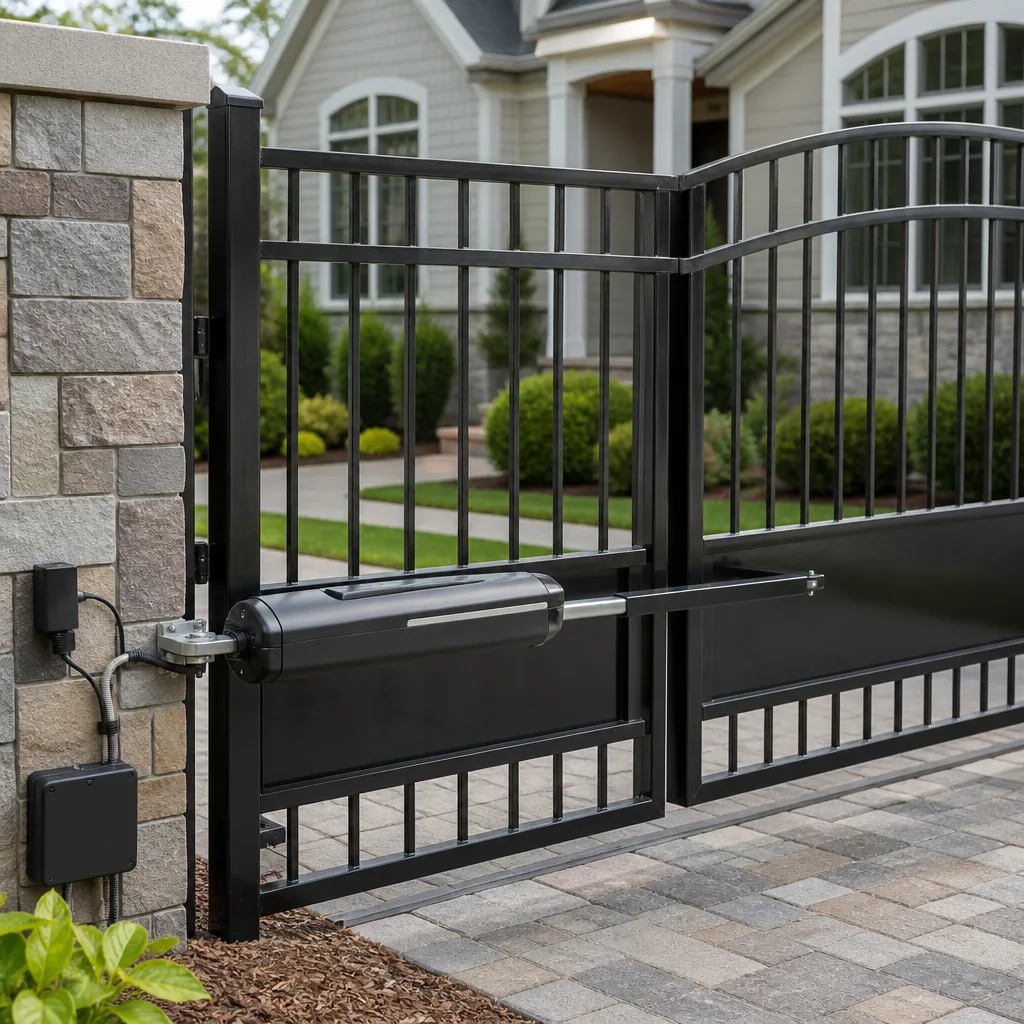 LiftMaster operators
Free on-site gate assessment - hinges, posts, and your LiftMaster or Nice gate operator checked before anything is quoted
The assessment is free and the quote is the invoice.
Get your free estimateSeasonal Gate Repair Care for Laguna Niguel: Year-Round Homeowner’s Guide
Most Laguna Niguel homeowners assume a mild climate means less gate maintenance. The opposite is true. This city’s alternating marine-layer humidity and dry inland heat creates expansion-contraction cycles that stress every hinge, weld, sensor, and control board year-round, without the obvious seasonal cues colder climates provide. A gate that works fine in March can bind in August or short out in November, and the failure usually looks sudden when it has actually been building for months. This guide maps the real stress periods in Laguna Niguel and tells you exactly what to inspect, what to seal, what to adjust, and when to call a specialist. This is the guide we wish every property owner read before their gate stopped moving.
Quick Answer
Seasonal gate care in Laguna Niguel means aligning maintenance with four actual stress periods: June Gloom condensation, summer heat expansion, Santa Ana wind loading, and winter rain-driven soil shift. Homeowners should seal operator enclosures before June, lubricate hinges and set gap clearances before summer, torque hinge bolts after October winds, and check post alignment after winter rains. Most tasks take under an hour per season and prevent the majority of repair calls we see across gate systems in this region.
Styles & brands we work with
- Wrought iron
- Wood & steel frame
- Farm & ranch
- Sliding driveway gates
- LiftMaster operators
Table of Contents
- June Gloom: The Corrosion Season Nobody Plans For
- Summer Heat: Expansion Cycles and Duty-Cycle Stress
- Santa Ana Winds: The Hinge Fatigue Season
- Winter Rain: Soil Shift and Post Alignment
- A Four-Season Maintenance Checklist for Laguna Niguel
- Seasonal Care for Specific Operator Brands
- Common Mistakes to Avoid
- When to Call a Professional
June Gloom: The Corrosion Season Nobody Plans For
From late May through July, Laguna Niguel sits under a marine layer that rolls in most mornings and burns off by afternoon. That daily condensation cycle is harder on gate electronics than most people realize. The overnight cool-down draws moisture onto every exposed surface, and the morning sun warms enclosures just enough to pull that moisture inside through vents, knockouts, and worn gaskets. An operator enclosure that stays damp for two or three hours a day, five days a week, for six weeks straight will eventually corrode a control board or sensor terminal. We see more phantom sensor faults and intermittent operator failures emerge from June Gloom than from any single weather event all year.
What to do before the marine layer settles in:
- Inspect the operator enclosure gasket. A cracked or flattened gasket lets humid air in. Replace it before June if it shows any stiffness or compression set.
- Check the weep holes or drain ports on the bottom of the enclosure. Many operators have them, and they get clogged with insect debris or dust. Clear them with a thin wire, not a drill.
- Tighten cable glands and conduit fittings where they enter the enclosure. A loose gland is a direct path for condensation to follow the wiring right onto the board.
- Wipe down exposed sensor lenses with a dry microfiber cloth. Condensation film on a photo-eye lens can cause false obstruction signals that behave like a failing sensor.
- Verify that the control board shows no white or green fuzz on any terminal or solder joint. If it does, the corrosion has already started and needs professional cleaning before it spreads.
This is also the best time of year to test safety edges and sensor alignment. The humidity affects both sides of a sensor pair slightly differently, and an edge that worked in April can drift enough by June to stop the gate mid-travel. For properties in the hillside neighborhoods around Laguna Niguel, June Gloom often lingers longer in shaded canyons than on open ridges, which matters if your operator sits on a north-facing side of the property.
Summer Heat: Expansion Cycles and Duty-Cycle Stress
Once the marine layer disappears in August, Laguna Niguel gets sustained daytime heat that changes how gates behave. Steel expands. Aluminum expands faster. Weld joints take on thermal stress, hinge clearances tighten, and swing gate leaves that cleared fine in May start dragging or binding. Homeowners usually blame the operator for this. It is rarely the operator’s fault. A swing arm pushing against a binding hinge draws two to three times normal current, and that overload is what trips the thermal protection or burns out a capacitor.
The specific heat-related checks for Laguna Niguel gates:
- Measure swing gate clearance at the root hinge and at the latch post. With the gate closed, you want consistent gap along both vertical edges. If the gap is tighter at the top than the bottom, the leaf has sagged or the post has moved. Correcting this before summer peak heat prevents the binding that kills swing operators.
- Lubricate hinge pins and pivot points with a dry-film or silicone lubricant. Avoid grease. Grease traps dust and bakes into a paste in August heat. A dry lubricant reduces friction without building up residue.
- Check that the operator’s duty cycle matches the gate’s weight and cycle frequency. All operators list a duty cycle in the manual, and residential swing arms with high cycle counts in summer heat will hit thermal shutdown faster than they would in cooler weather. If your gate runs more than 20 full cycles a day in August, you need to verify the operator is rated for that load at that ambient temperature.
- Examine limit switches and travel stops. Heat expansion can shift a closed-position stop by a quarter inch, and that shift affects how firmly the gate seats. A gate that stops short is a security gap. A gate that over-travels stresses the arm and the post.
- Listen for a change in motor pitch. A swing operator that sounds noticeably higher-pitched or labored in hot weather is working against mechanical resistance, not an electrical fault. That resistance is almost always in the hinge line, not the motor.
Summer is also the season to think about shade. An operator enclosure bolted to a south-facing concrete or stucco column absorbs direct sun all afternoon. Enclosure surface temperatures can exceed 130 degrees on a 90-degree day, and that heat transfers to the board. A simple metal shade panel, positioned an inch off the enclosure with an air gap, drops internal temperature enough to extend component life meaningfully. It is not elegant, but it works.
Santa Ana Winds: The Hinge Fatigue Season
Santa Ana events in Laguna Niguel run from roughly September through November, with gusts that push swing gates far harder than normal operation ever does. A standard residential swing gate is a large flat surface, and a 40-mph gust can put hundreds of pounds of momentary load on the hinge line. Repeated gusts over a 48-hour wind event create a fatigue cycle that no gate sees the rest of the year. This is the single most predictable cause of hinge wear in this region, and the damage does not show up during the wind. It shows up weeks later, when a hinge pin shears or a leaf sags far enough to drag on the ground.
Wind-loading checks for October and November:
- With the gate in the open position, lift each leaf from the free end. More than a quarter inch of vertical movement at the latch post means hinge pin wear has already begun. Tighten the hinge bolts first. If movement persists, the pin or bushing is worn.
- Inspect every hinge bolt and bracket for loosening. Santa Ana loading works bolts loose slowly. A bolt that is finger-tight in November is one wind event away from letting the leaf shift enough to bind at the latch.
- Check the operator arm attachment points at both ends. Wind loading transfers through the arm into these bolts. If they loosen, the arm flexes under load and eventually cracks the mounting plate.
- Look for paint cracks or rust lines radiating from weld joints at the hinge. That is a fatigue indicator. A tiny crack in the paint skin often means the weld underneath is already micro-fractured, and the joint needs a professional inspection before it progresses to an outright failure.
- Test the wind-release function if your operator has one. Some swing operators include a wind-release clutch or pressure-release setting that lets the gate move slightly under extreme gusts. Verify it engages at the correct setting rather than letting the gate hammer against the stops.
Properties in exposed hillside areas of Laguna Niguel, particularly those with gates facing east-west across a canyon, see significantly more wind-related fatigue than sheltered valleys. If you live on a ridge, inspect hinge hardware twice during wind season rather than once, and do the second check after the first major Santa Ana event rather than waiting until the season ends.
Winter Rain: Soil Shift and Post Alignment
Laguna Niguel sits on a mix of clay-heavy soil and decomposed granite, and the winter rain cycle does something predictable to gate posts: it wets the clay, the clay expands, and then it dries and contracts. Over a winter with several wet-dry cycles, gate posts can move enough to change the gate’s geometry. A gate that latched cleanly in October can sit a half inch out of alignment by February, and that shift puts abnormal stress on the hinges, the latch, and the operator.
After each major rain period, or at least once in January or February, walk through these checks:
- Check the reveal gap between the gate leaf and the latch post. If the gap has closed on one side and widened on the other, the post has rotated or tilted. Document it. A post that continues moving through successive rain events will eventually bind the gate completely.
- Test the auto-reverse and safety edges on a wet day, not a dry one. Moisture affects how photo-eyes and edge sensors read contact. A gate that reverses properly in dry conditions may behave differently when the sensor face is wet or the safety edge is saturated. Test both closing force and obstruction response after rain.
- Inspect the base of each post for exposed aggregate or a visible gap between the concrete footing and the surrounding soil. A developing gap means water is getting under the footing. In clay soil, that accelerates movement. Compact the soil and consider regrading so water drains away from the post base.
- Run the gate through a full open-close cycle and watch the bottom rail clearance. If the clearance changes by more than a half inch through the travel path, the gate leaf or the post has shifted, and continued operation will accelerate wear on every other component.
- Check the operator arm angle. A swing arm that now points slightly uphill or downhill relative to its mounting plane means the operator post has shifted independently of the gate post. The arm needs realignment before the angle causes binding at mid-travel.
Hillside properties in Laguna Niguel deserve extra attention here. Slopes concentrate runoff along fence lines, and a post at the bottom of a slope collects far more water than one on flat ground. If your gate sits at a low point on the property, French drains or minor regrading near the post footing will do more for gate longevity than any lubrication or adjustment you perform.
A Four-Season Maintenance Checklist for Laguna Niguel
Predictable weather is the advantage Laguna Niguel gives you. You can schedule gate maintenance with the same reliability you schedule pool service or termite inspection. Here is the season-by-season framework we recommend to every homeowner we meet.
Spring (March – May): Reset After Rain
- Re-torque all hinge and bracket bolts after winter soil movement has stabilized.
- Lubricate hinge pins, pivot points, and the latch mechanism with a dry-film lubricant.
- Test all safety sensors and the auto-reverse function.
- Wipe down the operator circuit board enclosure and check for moisture stains from winter.
- Run the gate through 5 full cycles and watch for hesitation, grinding, or changes in travel speed.
Late Spring / Early Summer (May – June): Prep for June Gloom
- Replace or condition the operator enclosure gasket.
- Clear weep holes and drain ports.
- Tighten conduit fittings and cable glands.
- Clean photo-eye lenses and check their alignment.
- Verify that no control board terminals show corrosion.
Late Summer (July – August): Heat and Clearance
- Measure gate gap clearance at the root hinge and free end.
- Confirm the gate is not binding through its travel path.
- Listen for an increase in motor pitch that signals mechanical resistance.
- Add or verify shade for south-facing operator enclosures.
- Check that the operator duty cycle is still sufficient for current usage.
Fall (September – November): Wind Season Hardening
- Inspect all hinge pins and bushings for wear after the first Santa Ana event.
- Torque-check hinge bolts, operator arm bolts, and latch hardware.
- Look for paint cracking or rust staining at weld joints.
- Test wind-release or pressure-release settings on the operator.
- Re-measure gate alignment after the first major wind event, not just at season start.
Winter (December – February): Rain and Drainage
- Check post alignment after each significant rain cycle.
- Inspect post bases for soil gaps or exposed footing.
- Test safety edges and photo-eyes on wet days.
- Verify bottom rail clearance stays consistent through the travel path.
- Fix drainage issues at the post base before the next rain cycle.
You will notice that none of this requires specialized tools beyond a socket set, a level, and a flashlight. Half an hour per season prevents the majority of serious failures. The rest is knowing what to look for, which this guide now gives you.
Seasonal Care for Specific Operator Brands
Different operator manufacturers handle Laguna Niguel’s conditions differently. In our work on electric gate repair across this region, we see consistent failure patterns tied to specific brands and specific seasons. Knowing your system’s tendencies helps you inspect the right thing at the right time.
Viking Swing and Slide Operators
Viking operators are common on heavier residential and commercial gates in Laguna Niguel. They are built with substantial gearboxes, but the limit switch assembly sits in a position vulnerable to condensation during June Gloom. Check limit-switch terminals for corrosion before summer starts. During Santa Ana season, Viking arms on heavy gates absorb wind loading through the mounting plate, so torque-check those bolts after the first wind event. Viking systems respond well to regular duty-cycle reviews because they are often oversized for the gate they run, which is fine until it is not: an oversized operator pushing a binding gate does not alarm as quickly as a smaller unit would, so heat season demands more careful listening for changes in motor sound.
Ghost Controls Swing Operators
Ghost Controls units are popular on residential Laguna Niguel gates where the operator is mounted on a post rather than in-ground. The control board enclosure is generally well-sealed, but the battery connections and the actuator arm pivot are where seasonal issues concentrate. In summer heat, the actuator arm can develop increased resistance if the internal lubrication has aged. During winter rain, check that the enclosure drain stays clear and that no moisture accumulates at the battery compartment seal. Ghost Controls systems with remote keypads need the keypad face cleaned before June Gloom, since condensation can cause intermittent input failures that look like a dead keypad.
DoorKing Slide Operators
DoorKing is the operator we see most often on multi-unit and commercial access points in Laguna Niguel. These chain-driven slide systems have two seasonal weak points: the chain tension and the limit nut travel. Heat expansion loosens chain tension slightly, and a loose chain increases shock loading when the gate stops and starts. Check chain tension in late summer. During rainy periods, DoorKing operators need a clear, unclogged drain path through the base of the chain tray, because standing water in the chain track accelerates sprocket wear and rusts the chain pins.
Elite Slide and Swing Operators
Elite gate operators are less common in Laguna Niguel residential settings but show up regularly on ranch-style properties and light commercial gates. Their seasonal weakness is the circuit board potting and relay sockets. In June Gloom conditions, an unplugged or partially seated relay can develop oxide on the contact faces, leading to intermittent gate movement. Reseating relays once a year, ideally in May, prevents a failure that often gets misdiagnosed as a bad board. In heat, verify that Elite swing arms have the correct pressure setpoint: a setting that worked in spring can be too stiff when thermal expansion changes the gate leaf’s resting position.
Across all four brands, the seasonal pattern is the same: condensation hurts electronics, heat hurts mechanical clearances, wind hurts fasteners and hinges, and rain hurts posts and drainage. The brand simply tells you where to look first.
Common Mistakes to Avoid
- Ignoring June Gloom condensation until the gate fails. By the time a control board shorts from corrosion, the damage has been developing for weeks. A May enclosure inspection costs nothing and catches the problem when it is still just moisture on a terminal.
- Lubricating hinges with grease instead of a dry-film lubricant. Grease attracts dust in Laguna Niguel’s dry summer heat and bakes into a paste that increases friction. A dry lubricant keeps the hinge free without building up residue.
- Assuming a binding gate means the operator is failing. Most binding in summer is mechanical: the hinge has sagged, the post has shifted, or the gate leaf has expanded in heat. The operator draws more current and shuts down, but replacing or repairing the operator without fixing the hinge problem just kills the next operator faster.
- Waiting until after Santa Ana season to check hinge bolts. The fatigue accumulates during the wind events, not after. Checking once after the first major wind event gives you a baseline, and the damage you catch then is always less severe than what you find in December.
- Only testing safety sensors in dry weather. Photo-eyes and safety edges behave differently when wet. If you only verify auto-reverse on a dry Sunday afternoon, you are not testing the condition the gate will actually face during a winter rain cycle.
- Forgetting the post when troubleshooting the gate. The post is the foundation of the entire system. In Laguna Niguel’s clay soil, a gate that drags or binds is often responding to a post that moved, not a gate component that wore out. Fixing the gate without addressing the post guarantees the problem returns.
- Running a residential operator beyond its duty cycle in summer. Heat derates duty cycle. If the gate cycles more often than the operator’s rating under normal conditions, it is exceeding the rating in August, and thermal shutdown is a question of when, not if.
When to Call a Professional
Many seasonal maintenance tasks are simple inspections you can do yourself. But there are points where the right call is to bring in someone who does gate work every day. Call a specialist if you find weld cracks at hinge points, if a post shows visible movement through more than one rain cycle, if the operator’s circuit board shows moisture or corrosion, if a swing arm is binding and you cannot identify the mechanical cause, or if the gate trips a breaker or GFCI outlet. Any of these is a sign that the problem has moved beyond adjustment and into repair territory. Prairie Gate Repair offers free estimates in Laguna Niguel, covering gate repair across all the major operator brands. Call (855) 382-6561 if something in this guide turns up a problem you do not want to handle alone.
See the difference
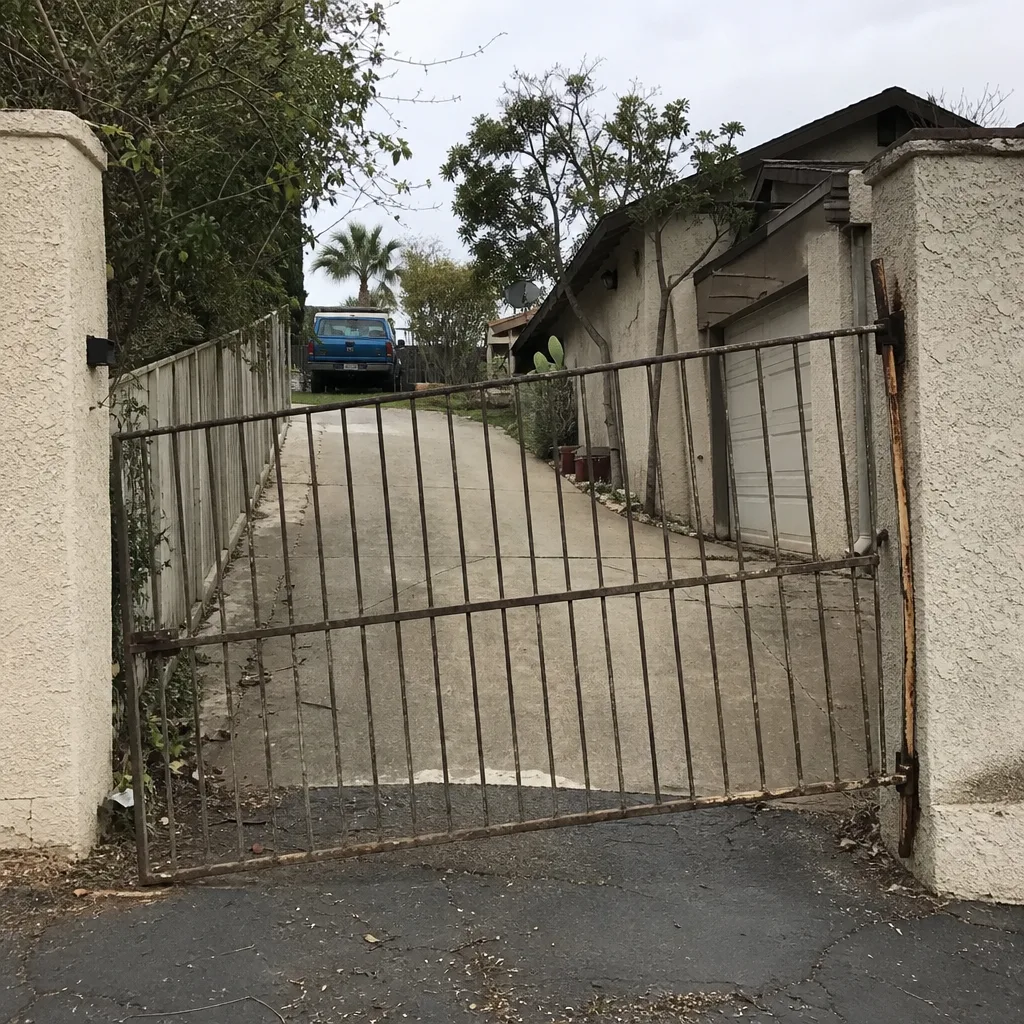 Before
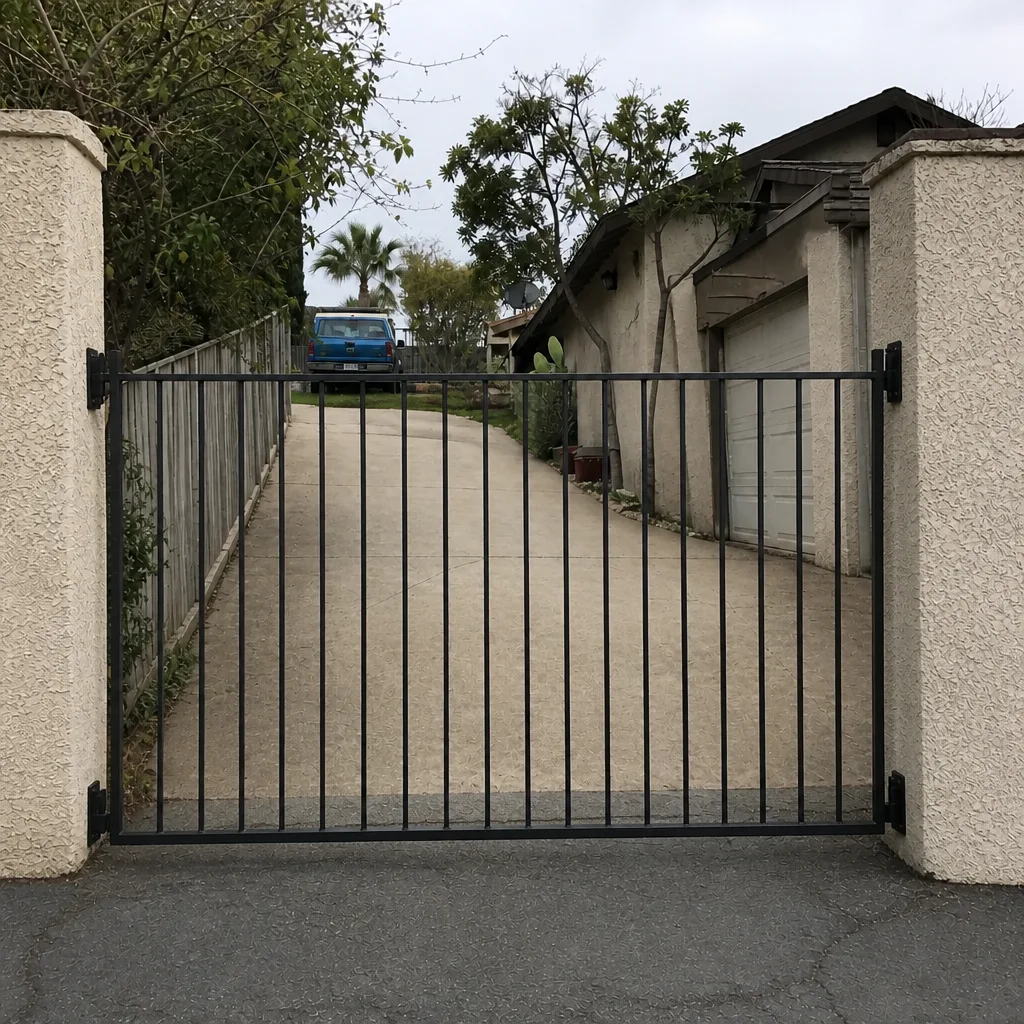 After
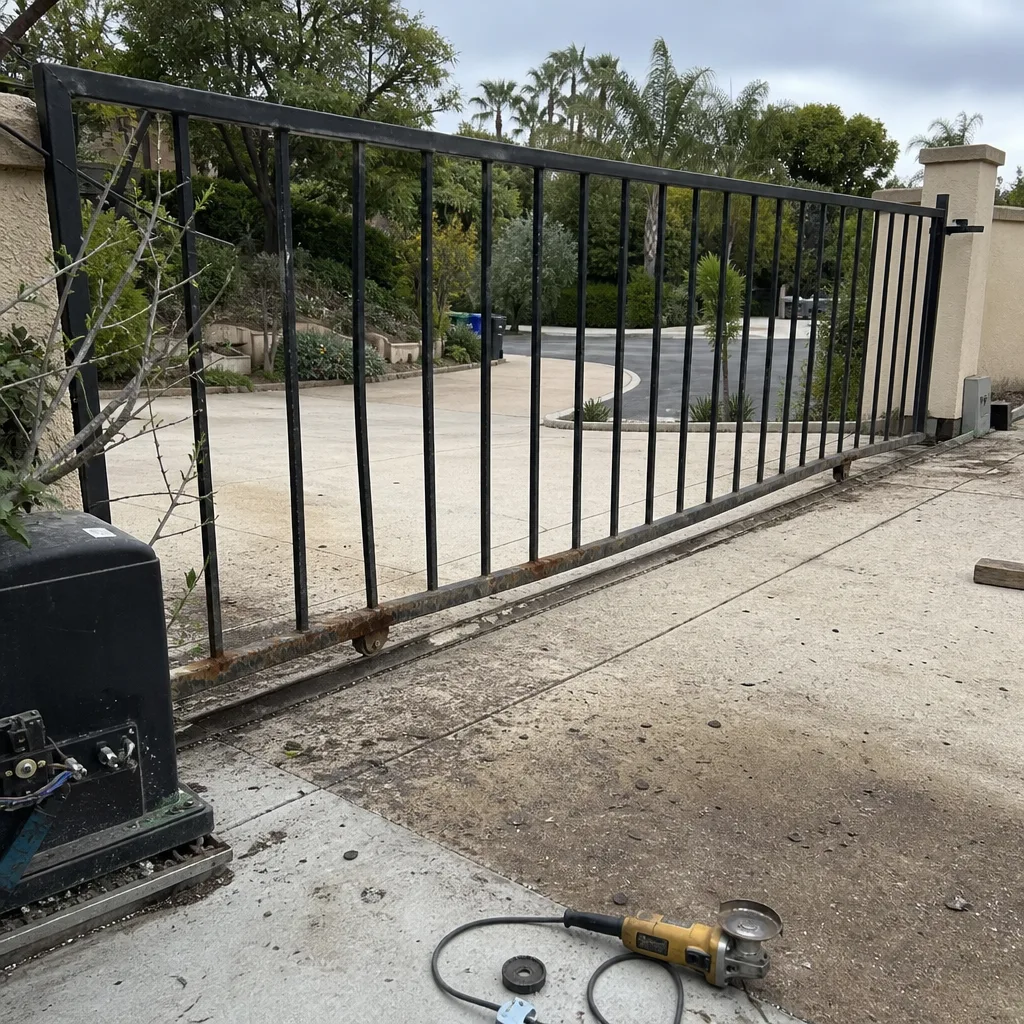 Before
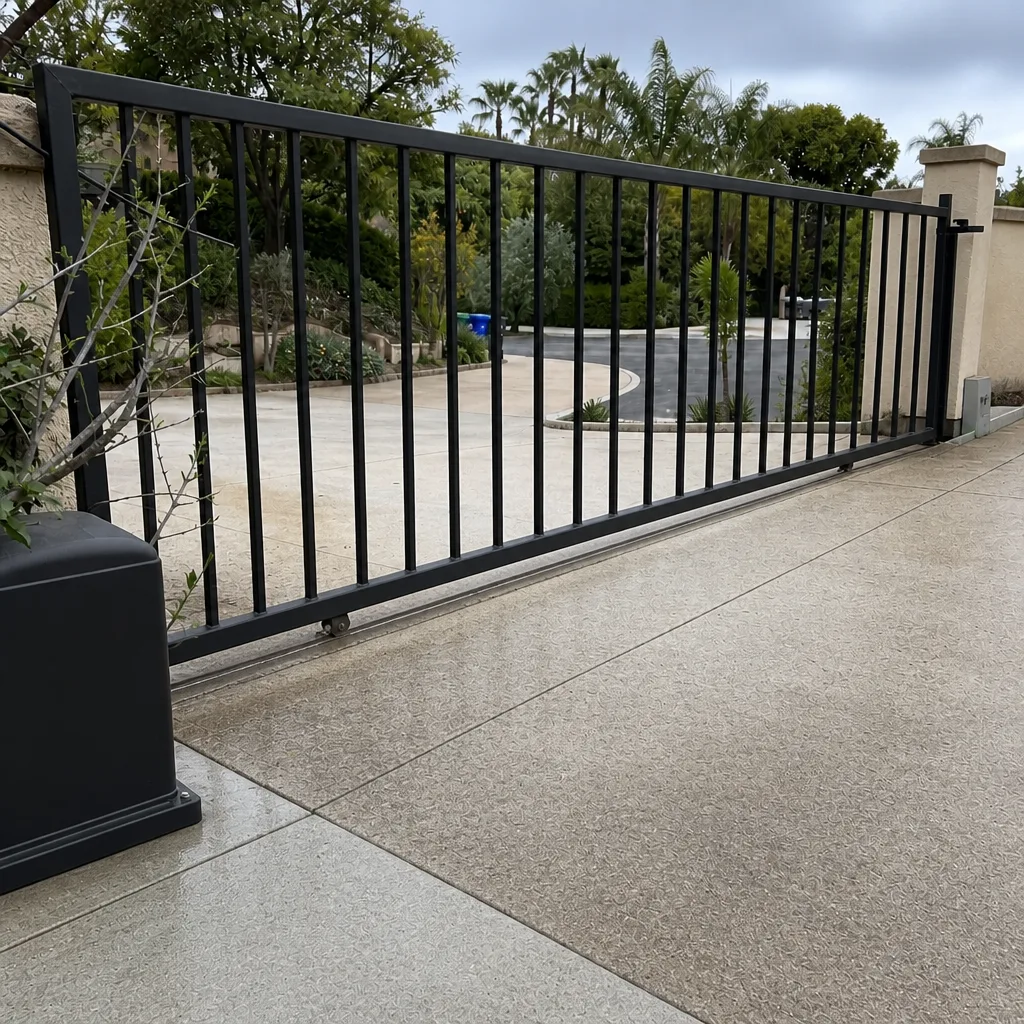 After
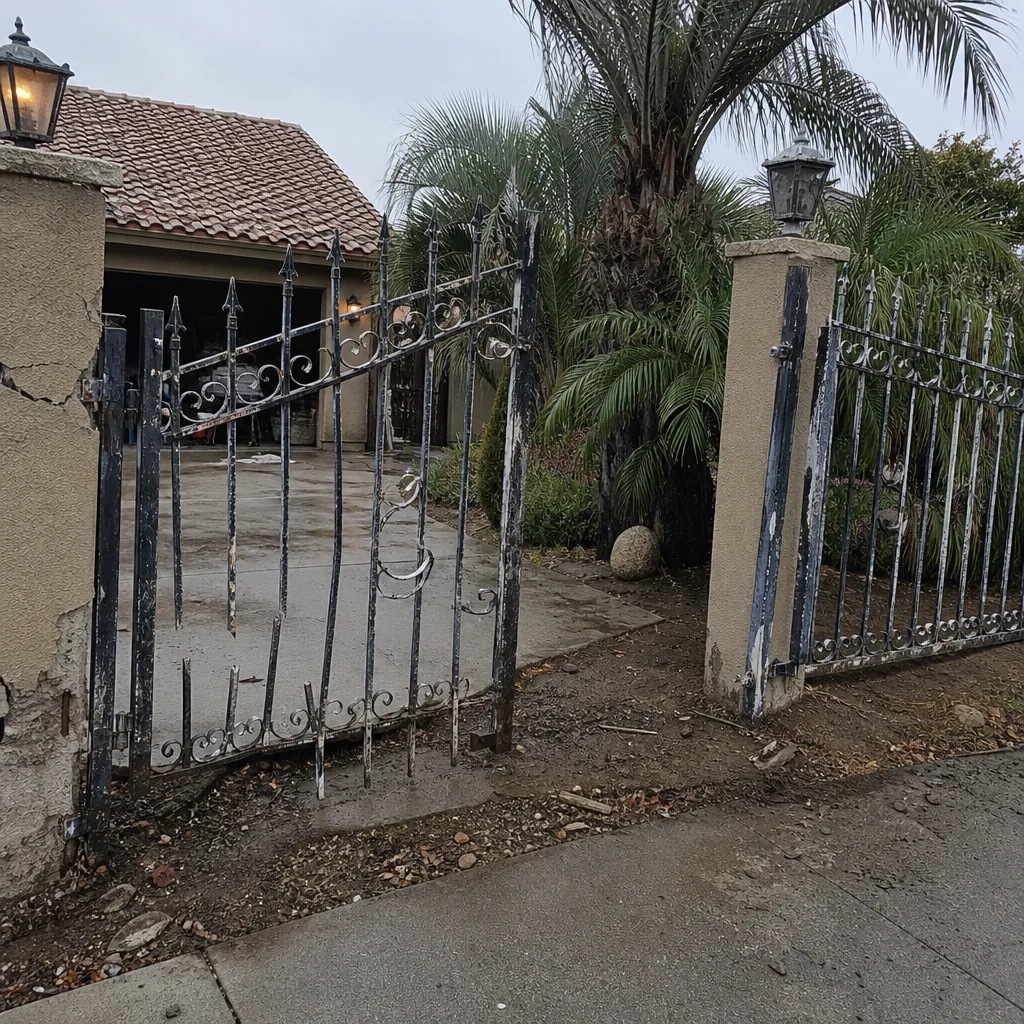 Before
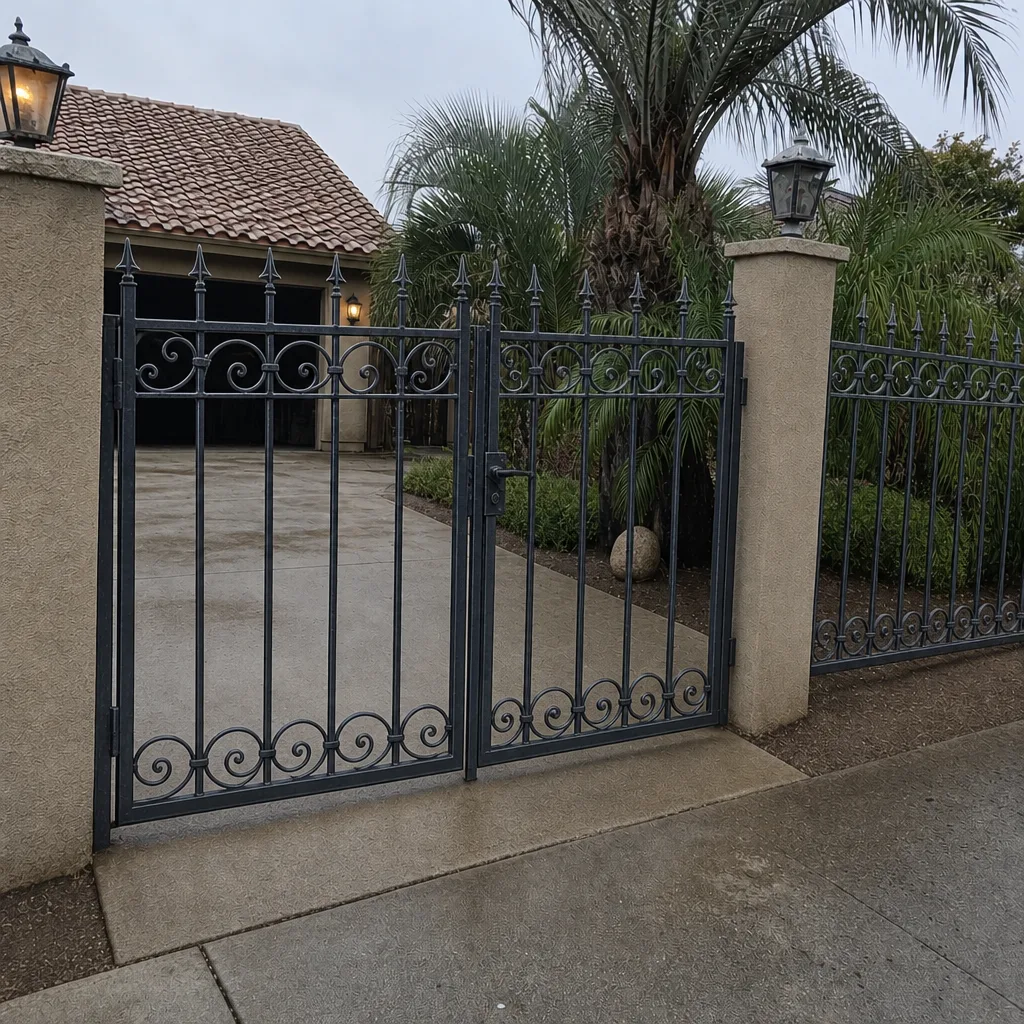 After
Frequently Asked Questions
Four seasonal checks per year, aligned with the local weather cycles, is the right cadence. You are looking for different things each season: corrosion in June Gloom, binding in summer heat, loose hardware after Santa Anas, and post movement after winter rain. Each check takes under an hour, and together they catch the failures that would otherwise become repair calls. For a professional inspection with a written report, call (855) 382-6561 and we will schedule a visit.
Yes, and it is one of the most consistent seasonal problems we see in Laguna Niguel. The daily condensation cycle draws moisture into operator enclosures, and over weeks that moisture corrodes control board terminals, sensor connections, and relay contacts. The failure often appears weeks after the marine layer ends, so homeowners do not connect the problem to its cause. Sealing the enclosure and checking for moisture in May prevents most of this damage. If you see corrosion already forming, electric gate repair is the next step before a board fails outright.
Thermal expansion. Gate leaves, hinges, and posts all expand in heat, and if clearances were tight in spring, they are gone by August. A swing gate that is even slightly sagged will bind in summer when the expanded leaf has nowhere to go. The fix is usually hinge adjustment or post realignment, not operator replacement. Measure the gap clearance at the root hinge and at the latch post, and if it is closing up, call us for a proper diagnosis at (855) 382-6561.
Yes, particularly if your property sits on an exposed ridge or east-west canyon line in Laguna Niguel. Wind loading pushes hundreds of pounds of force against the gate leaf, and that force transfers through the hinge bolts and operator arm. The damage is fatigue-driven, which means it accumulates silently and shows up later as a sagging leaf or a sheared hinge pin. Checking hinge hardware and operator arm bolts after the first major wind event is the most important preventive step you can take in fall. We can handle that check as part of a seasonal visit.
Check the reveal gap between the gate leaf and the latch post. If the gap is narrower at the top and wider at the bottom, the post has tilted. Look at the base of the post for a visible gap between the concrete footing and the soil, which means water has been getting under the footing. If the gate has started dragging or binding at the free end, the post movement is probably the cause. In Laguna Niguel’s clay-heavy soil, this is common on hillside properties. Post realignment is a structural fix, not a hinge adjustment, and it is worth professional attention.
Most inspection tasks in this guide are designed for homeowners: measuring clearances, checking bolts, listening for changes in motor sound, and watching for corrosion. But repairs are a different matter. Anything involving the operator’s internal wiring, a cracked weld, or a shifted post is not a DIY job and can be dangerous if handled incorrectly. The rule is simple: inspect it yourself, but let a specialist fix what you find. For a free estimate on any repair in Laguna Niguel, call (855) 382-6561. We answer 24/7. Fast dispatch from 7am to 7pm, Sunday through Friday.
The Bottom Line
Laguna Niguel does not have four traditional seasons, but it has four distinct stress cycles that gate owners can plan around. June Gloom attacks electronics with condensation. Summer heat attacks mechanical clearances through expansion. Santa Ana winds attack hinges and fasteners through fatigue loading. Winter rain attacks posts through soil movement. Each season has a short list of specific checks, and doing them on schedule prevents the majority of gate failures in this region. The homeowners who treat gate maintenance as a seasonal rhythm, like gutter cleaning or irrigation timing, rarely face surprise repairs. The ones who wait for failure inherit bigger problems and bigger invoices. A working gate is a predictable gate, and predictability comes from looking at the right component at the right time.
Written by the team at Prairie Gate Repair, serving Laguna Niguel since 2013.