
Last updated November 4, 2026
 Wrought iron
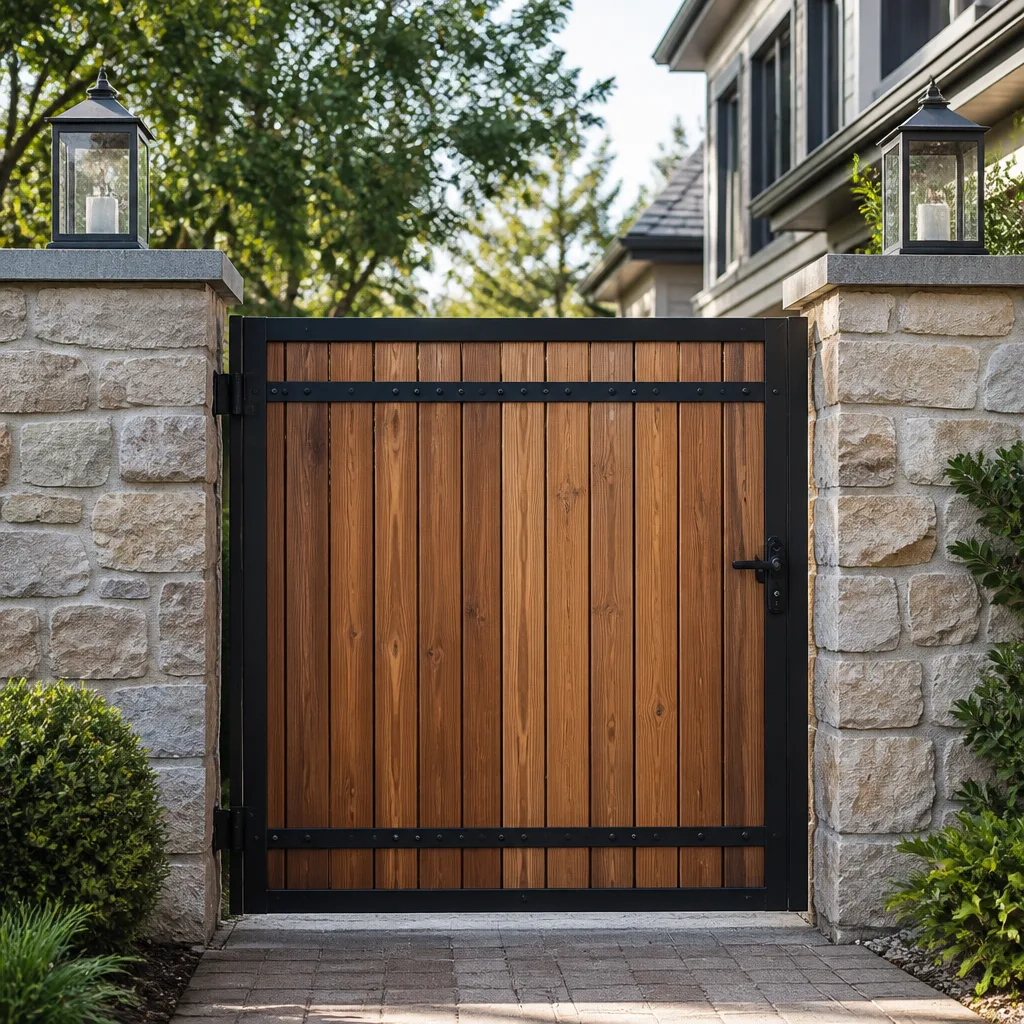 Wood & steel frame
 Farm & ranch
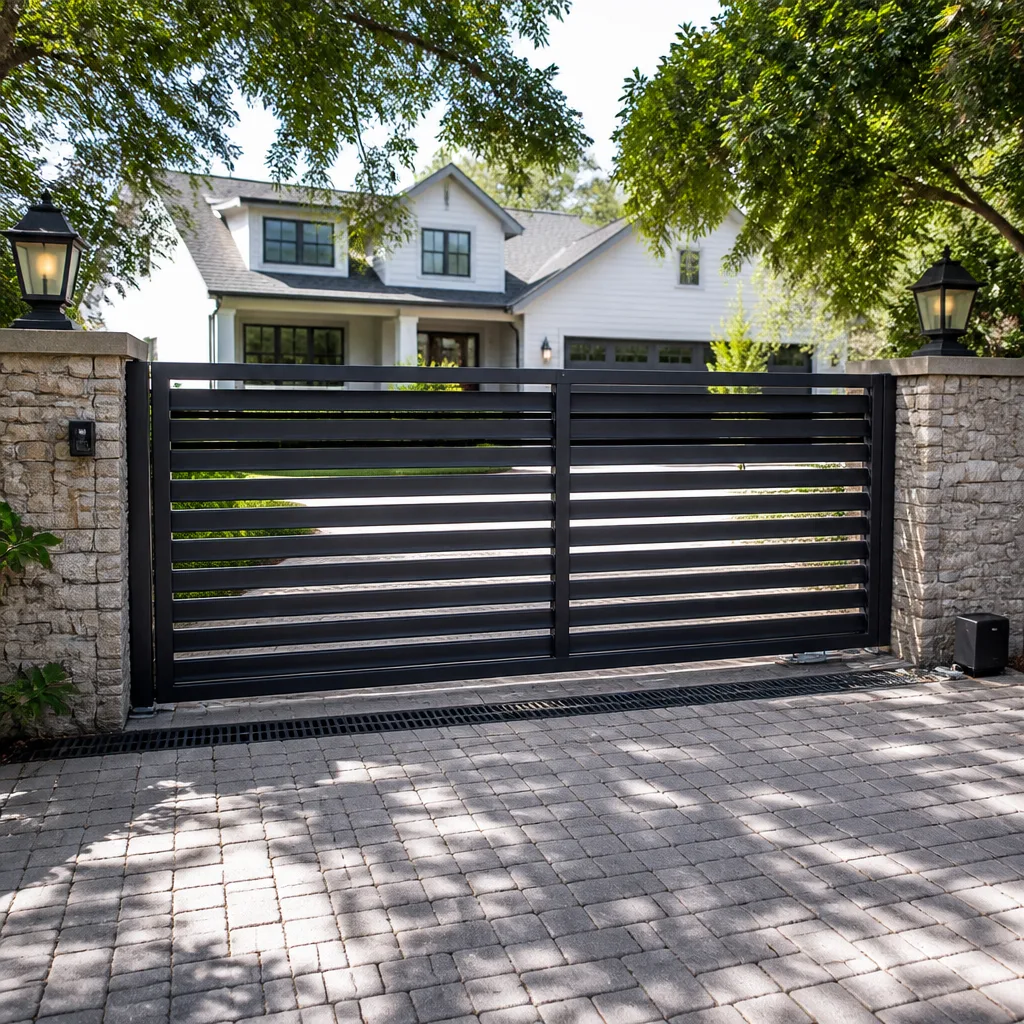 Sliding driveway gates
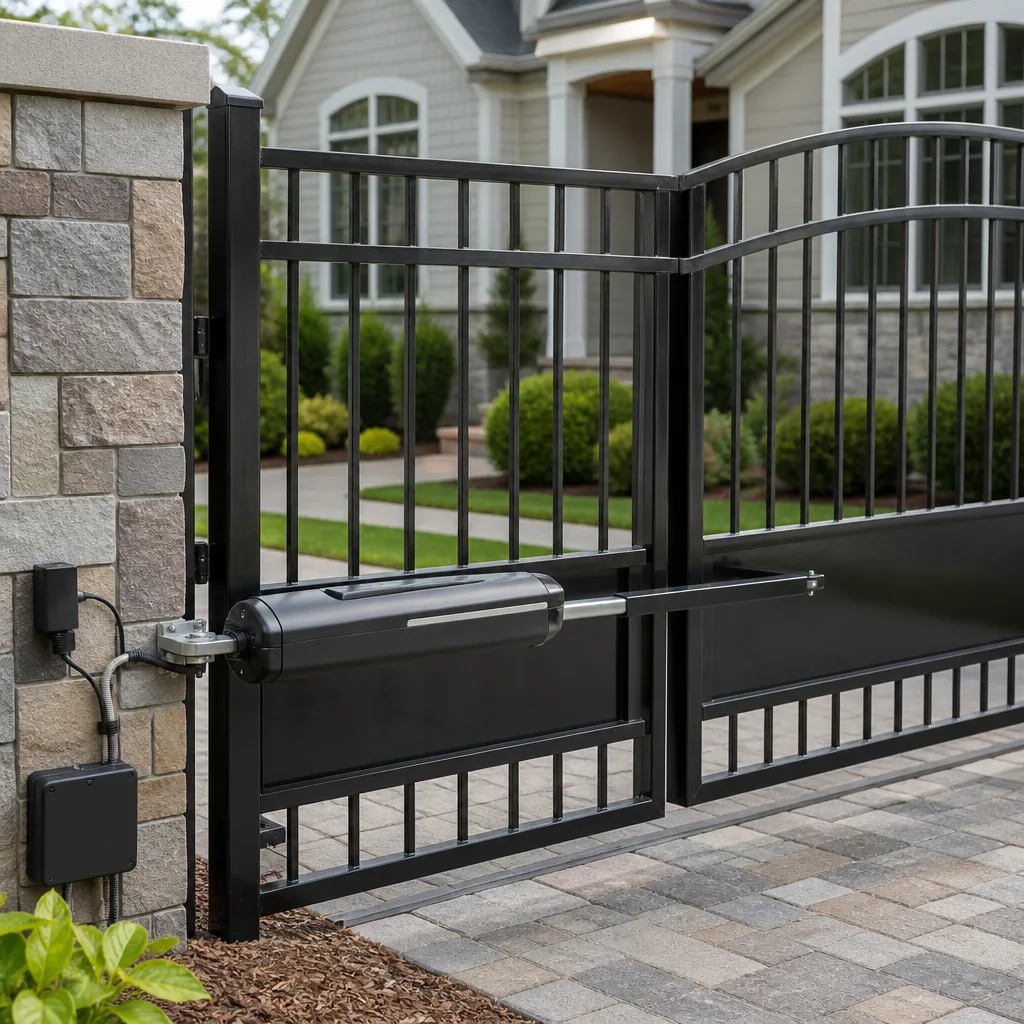 LiftMaster operators
Free on-site gate assessment - hinges, posts, and your LiftMaster or Nice gate operator checked before anything is quoted
The assessment is free and the quote is the invoice.
Get your free estimateDIY vs Professional Gate Repair: The Laguna Niguel Homeowner’s Decision Guide
Replacing a dead gate operator battery is a legitimate DIY task. Adjusting the limit switches on that same operator to fix incomplete travel is not, and getting it wrong can burn out the motor and void the warranty, turning a $12 fix into a $600 problem. This guide draws the line by repair category, not by how handy you consider yourself. A Laguna Niguel homeowner who knows exactly which failures are safe to touch, and which ones demand a trained technician, saves money without gambling with a half-ton of moving metal. What follows is the decision framework we use when friends ask us whether they should open the panel or pick up the phone.
Styles & brands we work with
- Wrought iron
- Wood & steel frame
- Farm & ranch
- Sliding driveway gates
- LiftMaster operators
Quick Answer
Some gate repairs are genuinely DIY-friendly: replacing remote batteries, cleaning photo-eye lenses, lubricating hinges, and clearing debris from the track. But anything involving the operator’s control board, limit switches, internal wiring, hydraulic pressure, or a gate that has come off its track should go to a licensed professional, because those failures carry warranty, safety, and code implications. In Laguna Niguel, the practical rule is: if the repair involves opening the motor housing, touching wiring, or lifting the gate leaf, call a specialist.
Table of Contents
- The Failure Type, Not Your Skill Level
- Repairs You Should Always DIY
- Repairs You Can DIY With the Right Information
- Repairs That Always Require a Professional
- Warranty Implications: What Unauthorized Adjustments Actually Void
- Safety Classification: Stored Energy and Crush Risk
- The Hidden Cost of a Failed DIY Attempt
- Tools and Information: What Legitimate DIY Actually Requires
- Common Mistakes to Avoid
- When to Call a Professional
- Frequently Asked Questions
- The Bottom Line
The Failure Type, Not Your Skill Level
Most DIY-versus-professional discussions start from the wrong place. They ask “How good are you with tools?” when the real question is “What failed, and what happens if the repair goes wrong?” Gate systems break in predictable ways. A gate that won’t open because the remote’s coin-cell battery died is a completely different animal from a gate that opens halfway and stops because a limit switch is misreporting the leaf position. One is a battery swap. The other is a calibration job that can destroy the operator if done incorrectly.
In Laguna Niguel, where automated driveway gates are standard on hillside properties and larger lots east of the 5, most homes run one of a handful of operator brands. We work on electric gate repair systems from LiftMaster, FAAC, Mighty Mule, and Elite, and each brand has its own control logic. A homeowner who understands that logic can safely handle surface-level maintenance. A homeowner who doesn’t, and who opens the control board to “just take a look,” is about to turn a simple diagnosis into a complicated one.
The decision framework has three tiers, and we’ll walk through each:
- Always DIY: Failures with no stored energy, no wiring, and no risk of making the gate unsafe.
- Conditional DIY: Failures that are mechanical but where incorrect adjustment creates downstream damage.
- Professional only: Failures involving control boards, limit logic, hydraulic pressure, track derailment, or access control wiring.
Most gate problems land in tiers two and three. That’s not gatekeeping. That’s the geometry of a 400-pound steel leaf moving on a motorized arm.
Repairs You Should Always DIY
These are the gate repair equivalents of changing a smoke detector battery. They’re safe, they take minutes, and a professional would tell you not to pay someone to do them. In Laguna Niguel, where the mild, dry climate keeps most mechanical components from seizing the way they do in humid or freezing environments, these basic tasks cover most of what a homeowner will ever need to touch.
- Replacing remote control batteries: Dead remotes are the most common “broken gate” call we get, and the fix is a $4 battery from any grocery store in Laguna Niguel. If the remote’s LED doesn’t light, replace the battery before assuming the operator failed.
- Cleaning photo-eye lenses: Safety sensors get dusty, especially near dirt easements and landscaped areas. A soft cloth fixes most intermittent reversing problems.
- Lubricating hinges and pivot points: A dry hinge groans and moves slower. White lithium or silicone spray on the hinge pins and wheels takes five minutes and extends component life.
- Clearing debris from the track: Leaves, small rocks, and landscape gravel find their way into slide-gate tracks. A broom and a quick visual check solve this.
- Tightening loose hardware: Bolts on the gate frame and post brackets work loose over time. A socket wrench handles this, provided the gate is disconnected from the operator first.
- Checking the battery backup indicator (if visible): Many modern operators have an LED that reports battery status without opening the panel.
None of these tasks require opening the motor housing, touching line voltage, or releasing any mechanism under tension. That’s the line. Cross it, and you’re no longer doing maintenance; you’re doing repair.
Repairs You Can DIY With the Right Information
This middle tier is where homeowners save real money, and where they also do the most damage. These tasks are mechanical rather than electrical, but they require adjustment logic rather than muscle memory. If you can follow a manual and understand what the part is supposed to do, you can handle these. If that description makes you uneasy, skip to the next section.
- Adjusting gate travel limits (with the manufacturer’s procedure, not by feel): Most operators have physical or digital limit controls that tell the gate where to stop. The adjustment itself is often accessible without major disassembly, but the sequence matters. Doing it correctly fixes incomplete travel. Doing it by trial and error can strip the limit gears, which is a teardown repair.
- Replacing a damaged keypad (surface-mount units only): Many Laguna Niguel homes have a wireless keypad on the driveway post. If the keypad is a standalone unit that communicates wirelessly with the operator, replacing it with the same model is plug-and-play. If it’s hardwired into the controller, leave it alone.
- Realigning a photo-eye sensor: If one eye got bumped by a car or a landscaper, you can usually loosen the bracket, re-aim it at the opposite eye, and watch for the alignment LED. This is a visual, zero-voltage task.
- Replacing a gate wheel or roller on a slide gate (when the gate is fully disengaged and supported): Slide-gate wheels wear out, especially on heavier gates. The replacement itself is straightforward, but the gate leaf is heavy. It must be blocked and supported before you unbolt anything.
The common thread: none of these should start with opening the control board. If the adjustment you’re making requires removing the cover from the operator, the task has moved into the next tier.
Repairs That Always Require a Professional
Some failures are classified as professional-only because of wiring. Others because of weight. And a few because the wrong repair creates a gate that passes a visual check and then fails catastrophically later. Here’s the definitive list of what a homeowner in Laguna Niguel should never attempt.
- Control board replacement or repair: The board is the brain of the operator. Diagnosing a board requires understanding the brand’s fault codes and testing inputs with a multimeter. Guessing turns a board replacement into a board-plus-motor-plus-harness replacement.
- Limit switch adjustment that requires opening the motor housing: This is the $12-fix-becomes-$600-problem scenario from the top of this guide. Internal limit switches sit next to rotating assemblies. Wrong adjustment burns out the motor or the board, and it voids the warranty on LiftMaster, FAAC, Mighty Mule, and Elite units.
- Any wiring repair involving line voltage: Gate operators run on household current. Inside the housing, that power is live. This isn’t a low-voltage landscape lighting project.
- Hydraulic operator service: Some Laguna Niguel properties, especially those with long, heavy driveway gates, run hydraulic operators. Hydraulic systems store pressure. Opening a hydraulic line without knowing how to release that pressure safely is an injury risk.
- Track derailment or gate leaf removal: When a slide gate comes off its track, or a swing gate sags off its hinges, the leaf is beyond what a homeowner can safely muscle back into position. This is a two-person, equipment-assisted job.
- Access control integration: Intercoms, card readers, vehicle detection loops, and telephone entry systems talk to the operator’s board through low-voltage wiring that is easy to cross. A crossed pair doesn’t just fail; it can send voltage into a board that isn’t rated for it.
- Any repair on a commercial gate: Commercial access points in Laguna Niguel are governed by a different set of expectations for uptime and liability. Property managers shouldn’t have maintenance staff opening commercial operators, period.
That’s most of what a gate repair call actually involves. The DIY window is smaller than most people expect, and that’s by design. Gate manufacturers don’t design these systems for field serviceability by end users, because the liability math doesn’t work.
Warranty Implications: What Unauthorized Adjustments Actually Void
Here’s a fact most Laguna Niguel homeowners don’t learn until after a claim is denied: gate operator warranties are conditional. They cover manufacturing defects. They don’t cover damage caused by unauthorized internal adjustments, and they don’t cover failures caused by non-OEM parts installed by non-certified technicians. Here’s what that means in practice, by brand.
LiftMaster
LiftMaster warranties cover the operator’s control board and motor against defects for a set period from the date of installation. But the warranty language specifically excludes failures resulting from “unauthorized modifications or repairs.” Opening the housing and adjusting the limit cams counts. If the motor burns out after a homeowner adjustment, the claim is dead on arrival.
FAAC
FAAC builds professional-grade operators, primarily hydraulic and electromechanical, used on heavier gates. Their warranty documentation requires installation and service by qualified technicians. Homeowner attempts at internal service void coverage without question. FAAC operators also run on higher torque, which raises the stakes for an incorrect limit setting.
Mighty Mule
Mighty Mule is the DIY-friendliest of the brands, marketed specifically to homeowners. But even Mighty Mule’s warranty voids if a non-OEM control board is installed or if the operator is modified beyond its rated use. The brand’s accessibility doesn’t extend to internal electronics.
Elite
Elite gate operators are common on mid-sized residential and light commercial gates. Like FAAC, their warranty assumes professional installation and service. A homeowner who opens the panel to “fix a clicking sound” and causes board damage will pay out of pocket.
The pattern: every major brand draws the line at the control board. External tasks are fine. Internal adjustment is not. In our experience, most warranty rejections for Laguna Niguel gate operators come from exactly one scenario: a homeowner or handyman opened the housing, adjusted something, and the operator failed within a month. By the time we see it, the owner has lost the warranty and the repair budget.
Safety Classification: Stored Energy and Crush Risk
Gate repair has two safety dimensions that other home repairs don’t. The first is stored energy. The second is crush risk. Both are present even when the gate is completely disconnected from power, which is why “I’ll just unplug it first” isn’t the safety strategy people think it is.
Stored energy
A swing gate leaf weighs hundreds of pounds. When it’s connected to an operator with a worm gear, that gear holds the weight. If you unbolt the operator arm while the gate is at mid-travel, the leaf can swing freely, and a 400-pound leaf doesn’t stop because your shin is in the way. Slide gates have similar energy in their momentum on a downhill slope.
Hydraulic operators add pressurized fluid to that equation. Opening a hydraulic fitting without releasing system pressure correctly can spray fluid at high velocity and cause injury. This is not a warning label on a ladder. This is a genuine, documented hazard class.
Crush risk
Gate safety standards exist because automated gates have killed people. The photo-eye sensors and reversing edges aren’t optional accessories; they’re the only thing standing between a moving gate and a child or pet. Any repair that disables, bypasses, or misaligns those safety devices creates a gate that moves without knowing what it’s about to hit. Every major operator brand, including all four we work on, uses force-sensing or obstruction-detection logic tied to those safety devices. Homeowners who “just want the gate to close all the way” and disable a sensor are creating a hazard, not solving one.
The Hidden Cost of a Failed DIY Attempt
The visible cost of a botched repair is the part that broke. The hidden cost is the diagnosis that got harder. This isn’t a theoretical concern; it’s a specific pattern we see in Laguna Niguel households where a well-intentioned homeowner tried a repair, made it worse, and then called us.
When a gate operator fails, a technician begins with a differential diagnosis: test the board, test the motor, test the limit switches, test the safety devices. The process relies on reaching each component without interference. But when a homeowner has already adjusted the limit cams, swapped wires on a hunch, or re-tensioned something that shouldn’t be touched, the diagnostic picture changes. The technician now has to first determine what was changed, then determine whether that change masked the original failure or created a new one.
That additional diagnostic work isn’t free. It adds labor hours to the repair, and it sometimes forces part replacement that would not have been necessary. A stripped limit gear, for example, is sometimes the only physical record of an incorrect DIY adjustment, and the operator now needs a new gear assembly on top of the original repair. The $12 fix is now a $600 problem, and the homeowner paid for both the part and the labor to undo the mistake.
Tools and Information: What Legitimate DIY Actually Requires
If a repair lands in the “conditional DIY” tier, it’s not enough to own a socket set. You need the right documentation and the right baseline tools. Here’s the honest list.
Documentation
- The manufacturer’s installation and service manual for your specific model: Not a generic YouTube video. Model-specific manuals include limit adjustment sequences, wiring diagrams, and torque specs that generic videos get wrong.
- The operator’s model number and serial number: These are on a label inside the operator housing, which means opening the housing, which means power off. Write them down once so you never have to open the panel to identify the unit again.
- The original installation company’s contact information: If the gate was installed when the house was built, that’s often not a gate specialist. But the installation company may have left a wiring diagram that matches what’s actually in the ground.
Tools
- A multimeter: For testing continuity on non-line-voltage circuits only. If you don’t know the difference between AC, DC, and continuity modes, the multimeter is not for you to use on a gate operator.
- A non-contact voltage tester: For confirming power is off inside the operator before any internal work. This is the minimum safety tool.
- Gate support stands or solid blocking: For any task that requires unbolting an operator arm or lifting a leaf. Home Depot and Lowe’s in Laguna Niguel sell contractor-grade support stands.
- The correct lubricants: White lithium for metal-on-metal hinge points, silicone spray for rollers and plastic components. WD-40 is not a gate lubricant.
If the repair requires a tool you don’t own and wouldn’t use again for another purpose in a year, that’s a signal. The cost of the tool usually covers most of a professional service call, and the professional brings one that’s been used a thousand times.
Common Mistakes to Avoid
- Opening the control board to “just look.” The board holds nothing you need to see for a surface-level diagnosis. Opening it and touching a wire or a capacitor makes the problem worse and voids the warranty.
- Adjusting limit switches by trial and error. Each brand has a specific sequence. Guessing strips gears and burns motors. If the manual isn’t in front of you, don’t adjust anything.
- Disabling a photo-eye because the gate keeps reversing. The gate is reversing because the eye is dirty, misaligned, or sensing an obstruction. Bypassing it fixes the symptom and creates a crush hazard on a Laguna Niguel driveway.
- Using the wrong lubricant. Grease on a slide gate track collects dirt and makes the problem worse. WD-40 dries out hinges. Match the lubricant to the material.
- Ignoring the disengage mechanism. Every operator has a manual release so the gate can be moved by hand. Ignoring it and fighting the operator arm is how homeowners bend brackets and shear bolts.
- Assuming a dead remote means a dead operator. Replace the remote battery first. It’s the cheapest possible fix, and it’s the failure half the time.
- Calling a general handyman for an operator problem. Gate operators are brand-specific machines. A handyman who services fifty trades doesn’t have the brand documentation or the diagnostic history for your specific unit. Prairie Gate Repair works on LiftMaster, FAAC, Mighty Mule, and Elite systems specifically, which means the diagnosis starts from the brand’s own logic instead of guesswork.
When to Call a Professional
If the gate won’t move and the remote battery isn’t the issue, call. If the gate moves but stops mid-travel, call. If the gate reverses when it should close, call. If the gate groans, grinds, or shudders, call. If the gate came off its track or the leaf is sagging, call. If you opened the operator housing and saw something that sparked, smoked, or didn’t match your expectation, call immediately and don’t touch it again.
Specific scenarios where a professional is the only sensible choice in Laguna Niguel: control board replacement, internal limit adjustment, hydraulic service, track derailment, access control wiring, any repair on a commercial gate, and any repair where the gate is the primary security barrier for the property. Prairie Gate Repair offers free estimates in Laguna Niguel. Call (855) 382-6561. We answer 24/7. Fast dispatch from 7am to 7pm, Sunday through Friday.
Frequently Asked Questions
Gate repair pricing is set per job by written estimate after we look at the gate. A simple diagnosis call, a hinge replacement, a photo-eye realignment, and a control board replacement all land at different price points. In our experience serving Laguna Niguel, homeowners who call at the first sign of a problem pay less than homeowners who wait until the gate stops moving entirely, because early failures are usually component-level fixes rather than full-operator replacements. Call (855) 382-6561 for a free estimate. The price is quoted and agreed before any work starts.
Only if you have the manufacturer’s exact procedure for your model in front of you and the adjustment doesn’t require opening the motor housing. If it does require opening the housing, the task is professional-only and an incorrect adjustment can burn out the motor and void the warranty. Most Laguna Niguel homeowners are better off calling for this one.
Yes, if the repair involves internal adjustment, non-OEM parts, or any modification to the control board. LiftMaster, FAAC, Mighty Mule, and Elite all exclude unauthorized internal service from warranty coverage. External maintenance like lubrication, debris clearing, and remote battery replacement does not void coverage.
Based on the calls we take in this area, the most common reported problem is a gate that won’t open from the remote, and the most common cause is a dead remote battery or a photo-eye that needs cleaning. When those are ruled out, the next most common failures are limit switch drift and control board degradation, both of which require a professional.
Neither is inherently easier; they fail in different ways. Swing gates put more stress on hinges and operator arms, while slide gates collect debris in the track and wear out rollers and wheels. A professionally installed gate of either type, on level ground like most Laguna Niguel properties, should run for years with basic homeowner maintenance.
In Laguna Niguel, where many homes have automated gates as a feature, a functioning gate is part of the property’s appeal. A gate that doesn’t work or works poorly reads as deferred maintenance. We recommend a professional inspection and any necessary repair before listing, not because a broken gate kills a deal, but because a working gate photographs better and doesn’t give a buyer a negotiation lever.
The Bottom Line
The DIY-versus-professional decision for gate repair isn’t about your confidence with tools. It’s about the failure type. Dead remote battery? Fix it yourself. Dirty photo-eye? Clean it. Track debris? Clear it. But the moment the repair involves the operator’s internals, the control board, hydraulic pressure, or a gate leaf that weighs more than you do, the math flips. The failure is no longer about saving a service call. It’s about not voiding a warranty, not creating a crush hazard, and not turning a $12 fix into a $600 problem. A Laguna Niguel homeowner who understands that line gets a working gate and keeps the rest of the money in their pocket.
Written by the team at Prairie Gate Repair, serving Laguna Niguel since 2013.
See the difference
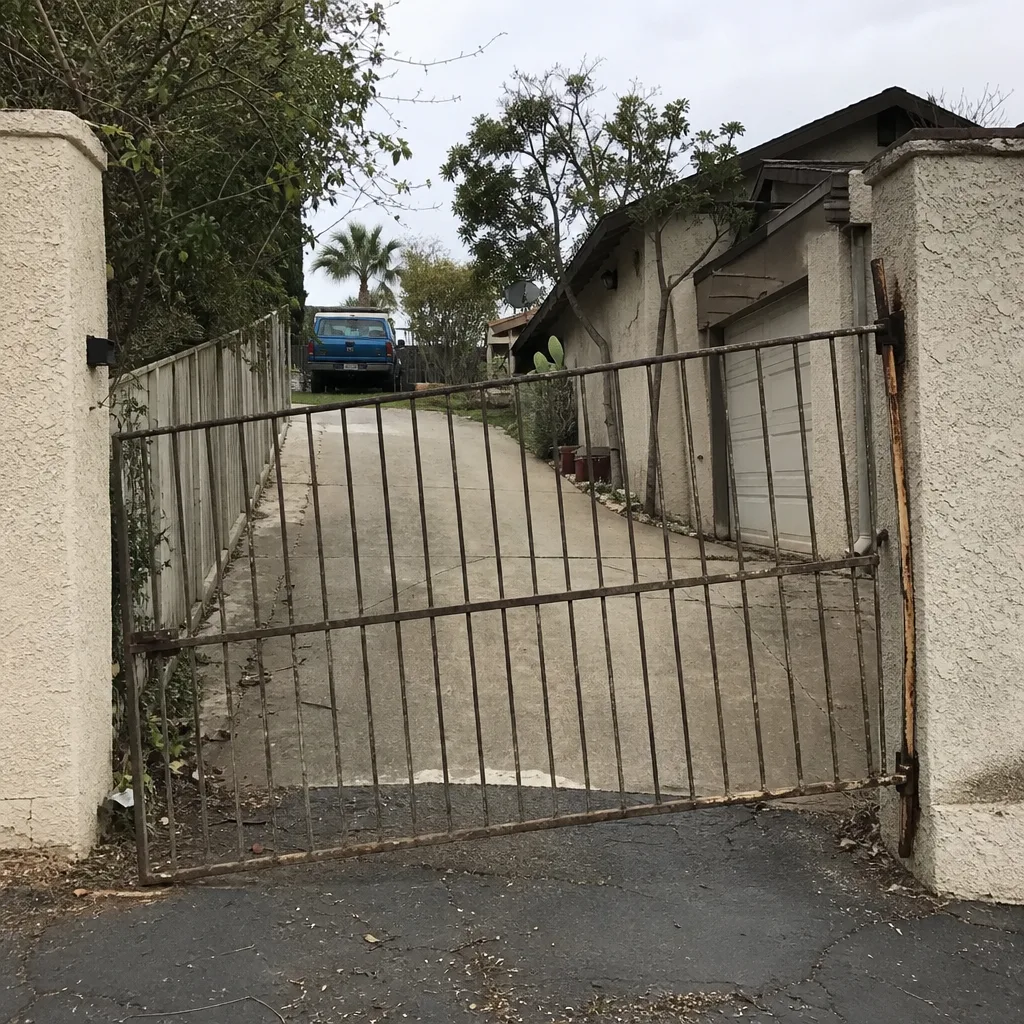 Before
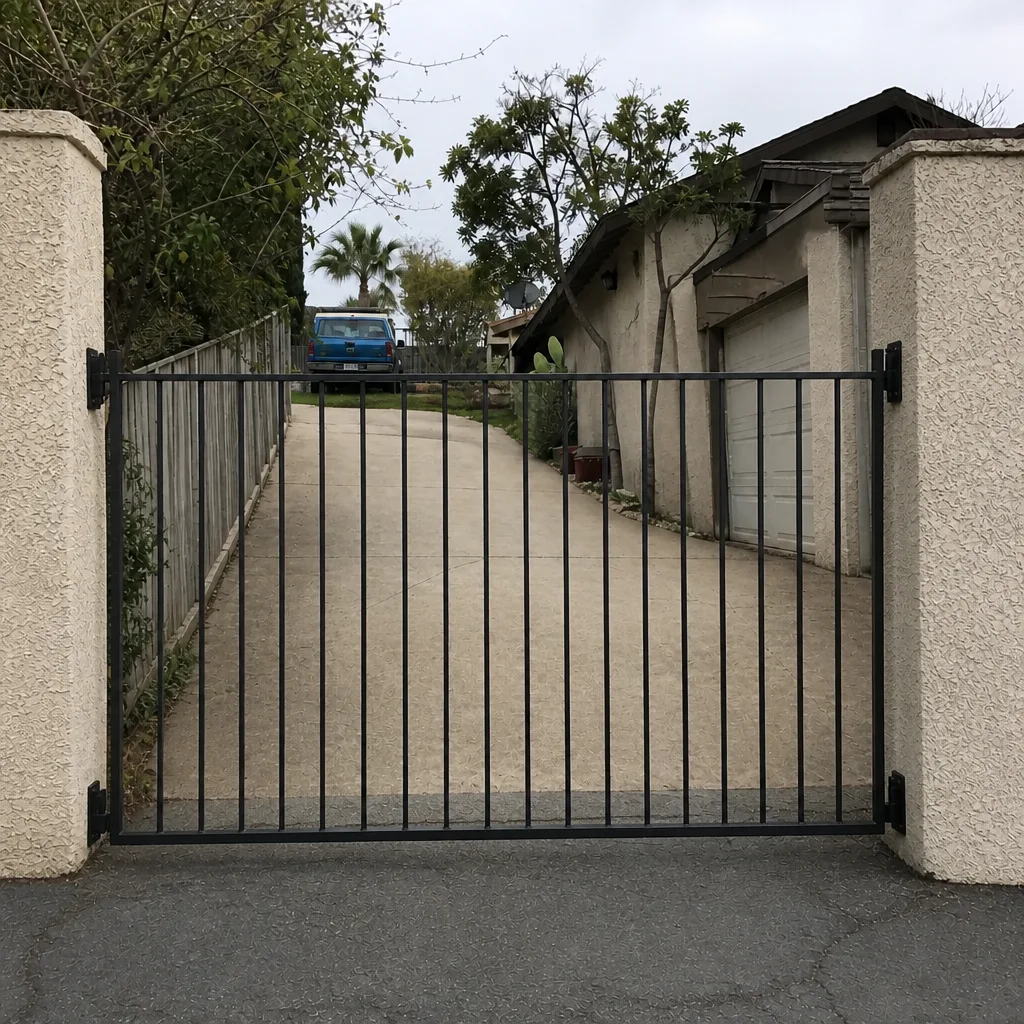 After
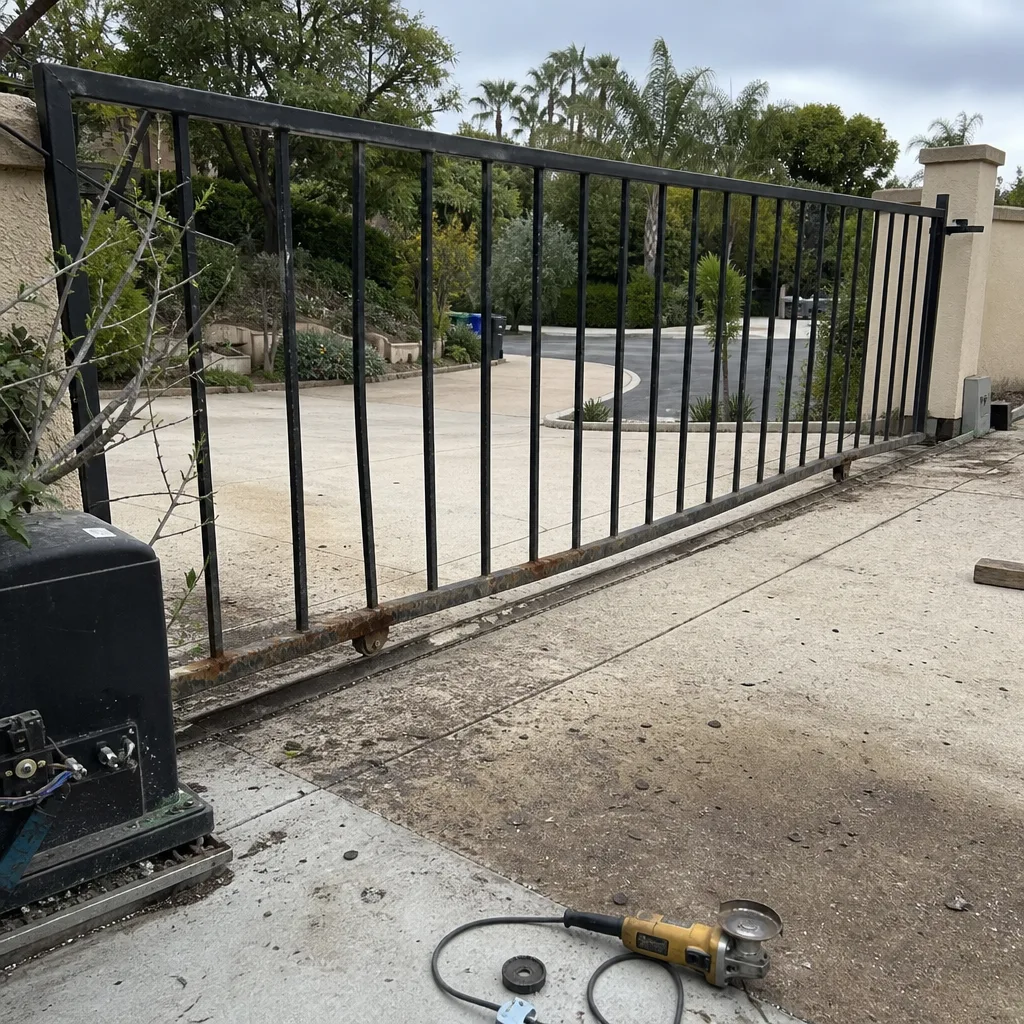 Before
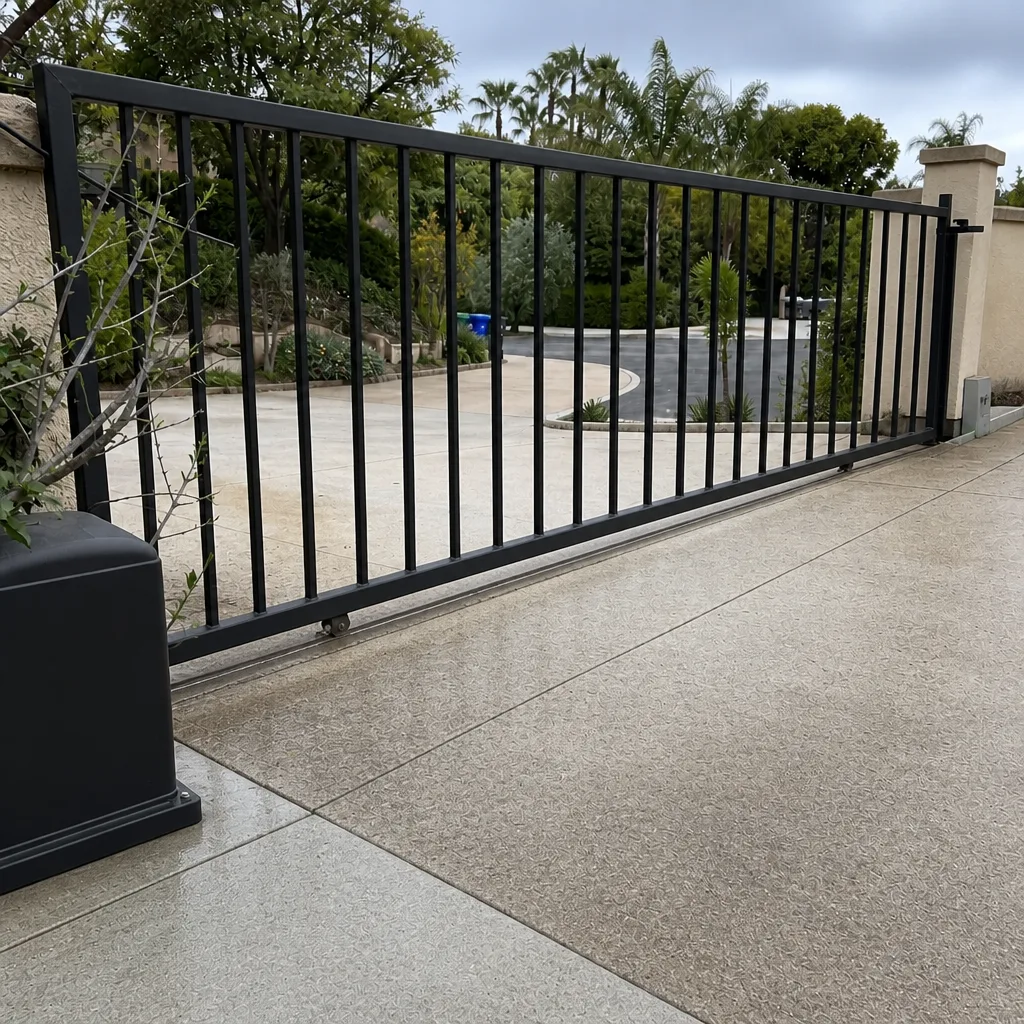 After
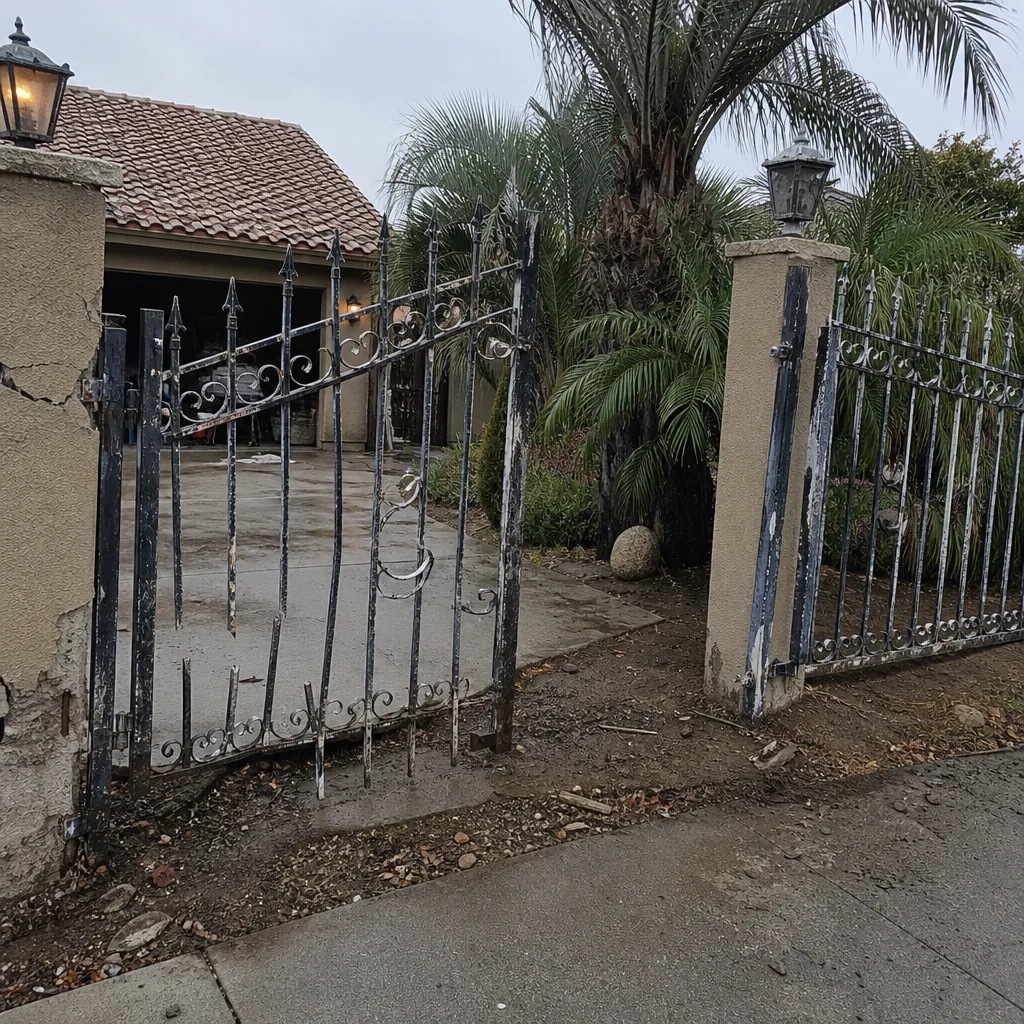 Before
 After