
Last updated November 4, 2026
 Wrought iron
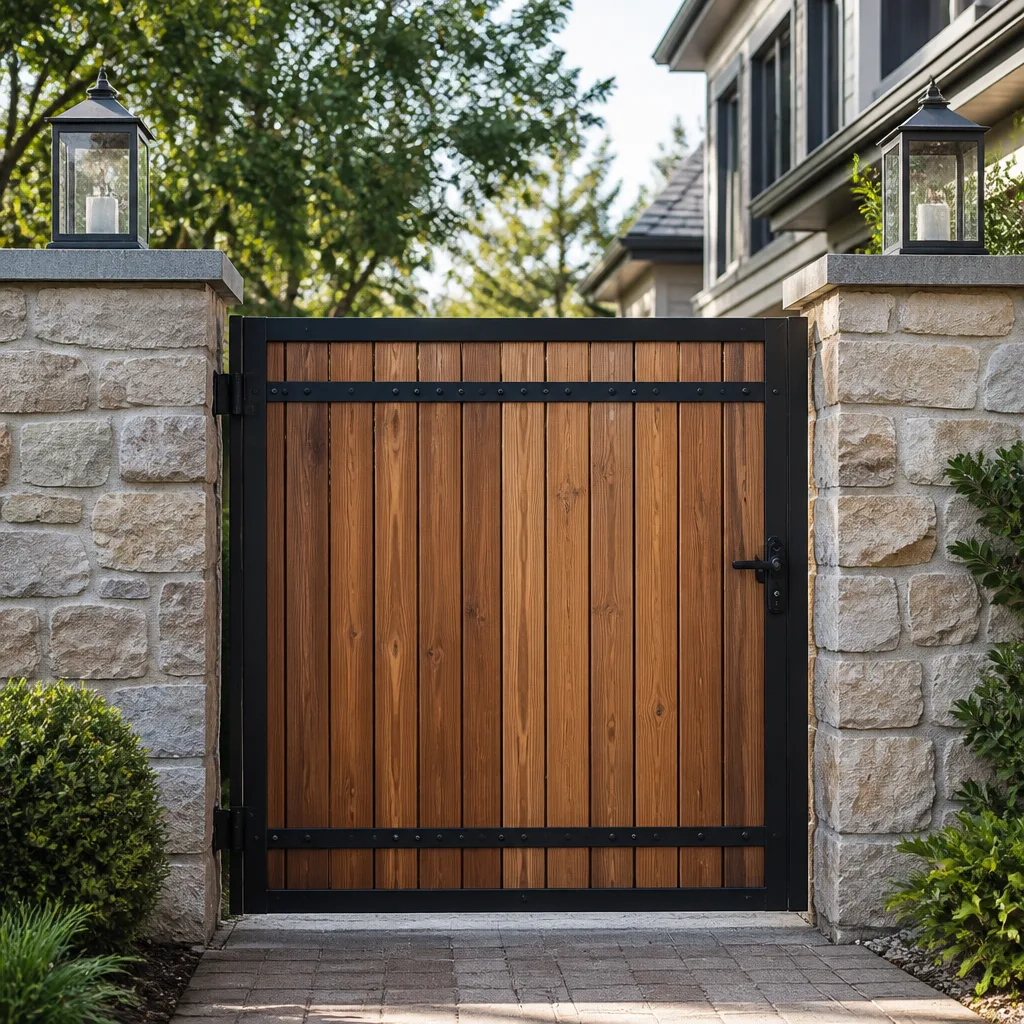 Wood & steel frame
 Farm & ranch
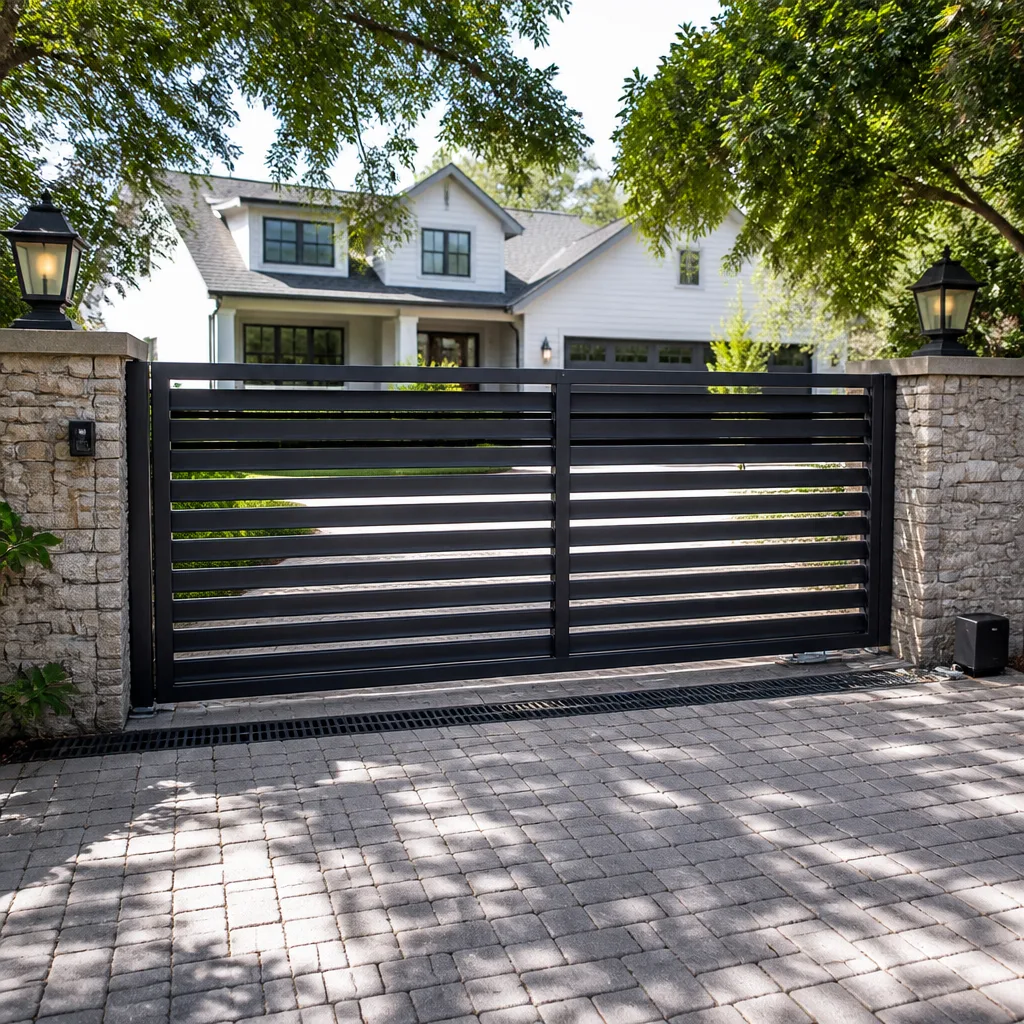 Sliding driveway gates
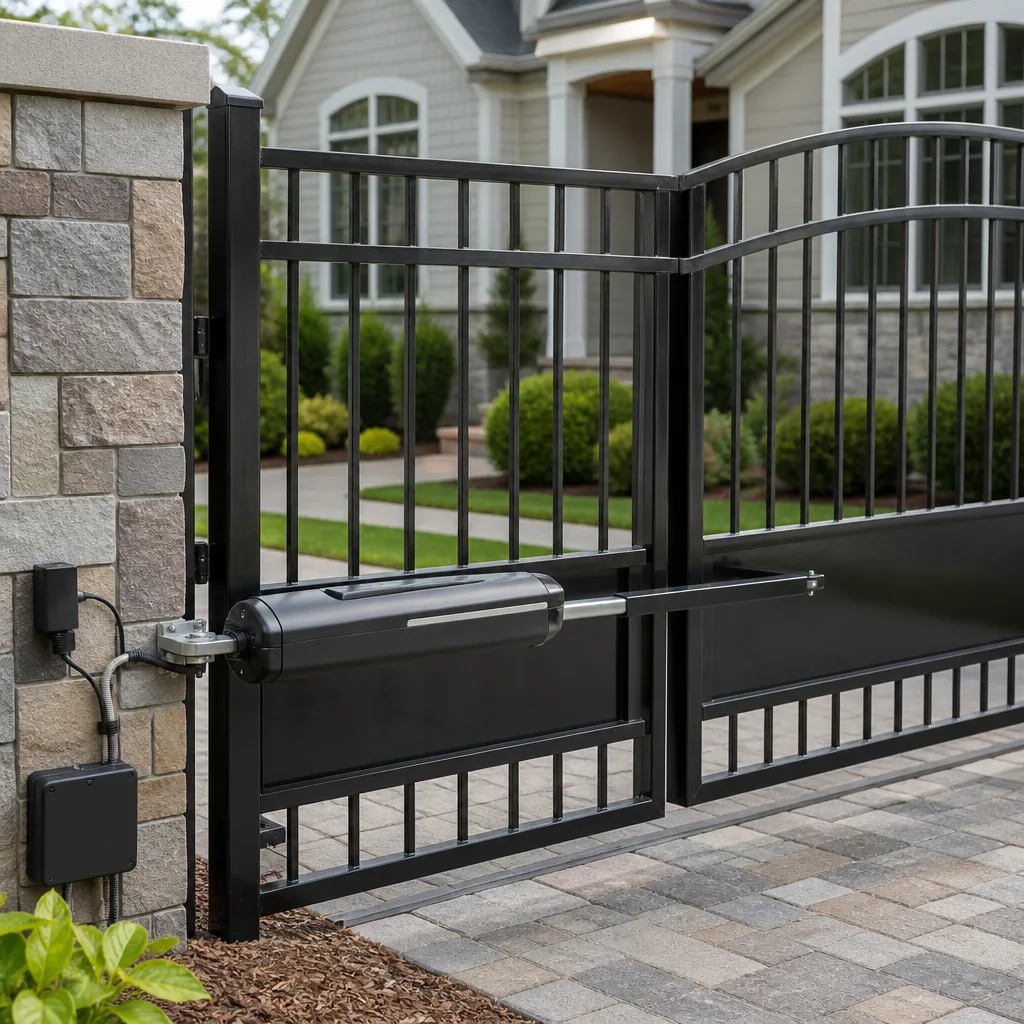 LiftMaster operators
Free on-site gate assessment - hinges, posts, and your LiftMaster or Nice gate operator checked before anything is quoted
The assessment is free and the quote is the invoice.
Get your free estimateGate Repair Emergency Preparedness Guide for Laguna Niguel Homes
Most Laguna Niguel homeowners assume a gate emergency means the gate won’t open. The real miss is that half the serious problems are the gate that won’t close, or the one that partially opens and then stalls at the worst possible moment. Santa Ana wind season turns a minor misalignment into a broken hinge or a bent track within an afternoon. And when a wildfire evacuation order hits, a gate that struggles to open is no longer an inconvenience. It’s a safety problem with a clock running. This guide gives you a clear-eyed way to prepare for gate emergencies before they happen, written from the perspective of a specialist who works on gates in Laguna Niguel and surrounding neighborhoods every week.
Styles & brands we work with
- Wrought iron
- Wood & steel frame
- Farm & ranch
- Sliding driveway gates
- LiftMaster operators
Quick Answer
Gate repair emergencies in Laguna Niguel rarely come out of nowhere. They cluster around two trigger events: Santa Ana wind damage that stresses hardware and causes power interruptions, and wildfire evacuation scenarios where seconds matter. The single most important preparation step is knowing how to manually release your specific gate operator in the dark. The second is documenting your operator brand, model, and installer before you need that information under pressure.
Table of Contents
- Santa Ana Wind: The Gate Killer Laguna Niguel Actually Faces
- Manual Release: The Skill Every Gate Owner Must Have
- Battery Backup Systems: What They Actually Cover
- Wind Damage Triage: Securing a Damaged Gate Without Making It Worse
- Emergency Contact Preparation: Cut Diagnostic Time in Half
- Preventive Upgrades That Reduce Wind-Related Failure
- The Wildfire Evacuation Scenario: A Gates-Open Plan
- Common Mistakes to Avoid
- When to Call a Professional
- Frequently Asked Questions
Santa Ana Wind: The Gate Killer Laguna Niguel Actually Faces
If you live in Laguna Niguel, you already know what Santa Ana winds do to the hillsides and the power lines. What most residents don’t think about is what those same winds do to driveway gates. A sustained Santa Ana event pushes against a closed gate with relentless force. Every gust loads the hinges, the horizontal rails, and the operator arm. Over hours, a gate that was slightly out of balance becomes a gate that has popped a hinge weld or stripped the operator’s gear teeth.
The failure pattern is consistent. Wind loads cause the gate panel to flex. That flex transfers stress to the mounting hardware. The first thing to fail is usually the hinge, followed by the operator bracket, and then the operator itself if the wind keeps punishing it. This is why gate repair calls in Laguna Niguel spike dramatically two to three days after a major wind event. Homeowners wake up, try to open the gate, and find it’s binding or making a grinding sound that wasn’t there before.
There’s also the power angle. Santa Ana winds have a well-earned reputation for taking out overhead lines. When power drops, every automated gate in the neighborhood reverts to manual operation by default. If you don’t know how to put your gate into manual mode, you’re locked in or locked out until the utility restores service. This is why wind preparation matters as much as post-wind repair.
What wind actually does to a gate in this climate:
- Hinge fatigue: repeated stress cycles loosen bolts and wear bushings.
- Operator strain: the motor pushes against wind resistance, drawing more current and overheating.
- Limit switch drift: the wind knocks the open and closed positions slightly out of calibration.
- Debris impact: palm fronds, branches, and construction material get blown into the track or hinge zone.
- Power disruption: voltage sag or straight-up outages cause the operator to stop mid-cycle.
The gates most likely to fail during wind events are the ones that have been due for maintenance anyway. A hinge that was already loose in August becomes a broken hinge in October. A chain that had slack in September becomes a derailed chain when the wind hits it sideways. Preparation for wind season is mostly about eliminating the backlog of small things before they compound.
Manual Release: The Skill Every Gate Owner Must Have
The manual release on a gate operator is the mechanical override that disconnects the gate from the motor so you can push it by hand. During a power outage or an operator failure, this is the difference between getting your car out and being stuck in your driveway. Every homeowner in Laguna Niguel should know where their manual release is and how to use it before an emergency. The problem is that the release mechanism varies by brand, and residential installations span several manufacturers.
On most Linear residential operators, the manual release is a red T-handle or a pull cord located directly on the operator arm or the gear housing. You pull the handle, and the gate disengages from the gear train. On FAAC hydraulic operators, you’ll typically find a manual release lever on the operator itself, often requiring a key or a flip of a small toggle. BFT systems often use a keyed release cylinder mounted near the operator, while Viking operators commonly have a clearly marked red release knob that rotates to disengage.
The critical point is not just knowing where the release is. It’s knowing what the release does once activated. A swing gate that disengages from the operator can swing freely. In a strong wind, a free-swinging gate becomes a heavy sail that can slam shut or swing open hard enough to damage the hinges. If you need to put a gate in manual mode during a wind event, you should secure the gate in whatever position is safest once you’ve opened or closed it manually.
What to know about your manual release:
- Identify the release type: pull cord, keyed cylinder, T-handle, or rotating knob.
- Practice using it in daylight before you ever need it in an emergency.
- Know which way the gate swings and where it will go if the wind catches it.
- Have a way to secure the gate open or closed once it’s in manual mode, especially during Santa Ana conditions.
- Re-engage the operator carefully once power is restored. If the operator is still damaged, don’t force it.
If you’ve never located the manual release on your gate, do it this week. It’s the single most important piece of emergency knowledge you can have as a gate owner in Laguna Niguel.
Battery Backup Systems: What They Actually Cover
A common assumption among Laguna Niguel homeowners is that a battery backup on a gate operator will keep the gate running like nothing happened during a power outage. That assumption is wrong in ways that matter. Battery backup systems on residential gate operators are designed for a narrow purpose: to open and close the gate a limited number of times over a short window. They are not a generator replacement.
Most residential battery backup kits provide enough capacity for roughly 10 to 20 open-close cycles, depending on the operator’s weight, the gate’s size, and the age of the battery. That may sound like a lot, but an actively used driveway gate in a busy household can cycle 10 times before noon on a normal day. The battery is there to get you through an outage, not to power the gate indefinitely. If the power is out for 24 hours, your backup may be dead by morning.
What battery backup actually covers:
- Short outages: the gate keeps working through a typical Southern California Edison interruption of a few hours.
- Operator safety systems: the battery keeps the safety sensors and the control board powered so the gate will not crush a person or a car.
- Partial operation: the gate opens and closes, but often at reduced speed due to lower current from the battery.
- Limited cycles: the battery is sized for a specific number of cycles, not continuous use.
And what it does not cover:
- Heavy use patterns: a gate that cycles dozens of times a day drains the battery quickly.
- Long outages: a multi-day outage means you’ll need the manual release.
- Weak or old batteries: batteries age. A three-year-old battery will not deliver its rated capacity.
- External accessories: keypads, intercoms, and some loop detectors may not be on the backup circuit.
Our practical advice for Laguna Niguel homes: check your battery backup annually. If you can’t remember when it was installed, assume it’s due for service. And during a Santa Ana wind event that may knock out power, expect to use the manual release eventually. This is where electric gate repair preparation pays off: a properly maintained operator with a healthy battery gives you the largest practical window before you have to go manual.
Wind Damage Triage: Securing a Damaged Gate Without Making It Worse
When a gate is damaged by wind, the first instinct many homeowners have is to force it. Someone pulls on the gate to close it fully. Someone else hits the remote three times to see if the operator will straighten things out. Both actions can turn a repairable problem into a replacement-level problem. Here’s the triage sequence we recommend for Laguna Niguel homes dealing with post-wind gate damage.
- Stop operating the gate. If the gate is binding, making a grinding sound, or visibly out of alignment, do not cycle it with the operator. You’re adding load to components that are already damaged.
- Assess the attachment points. Look at the hinges and the operator mounting bracket. If either is cracked, bent, or loose, the structural integrity of the gate is compromised. A gate that’s partially supported by a broken hinge can fall.
- Put the operator in manual mode. Use the manual release to disconnect the motor. This prevents the operator from trying to cycle a damaged gate and burning itself out.
- Secure the gate in a safe position. If the gate is in danger of swinging freely, block it or tie it off. A heavy gate swinging in the wind is a serious injury hazard and can damage whatever it hits.
- Document the damage. Take photos from several angles. Note what you see: cracked welds, bent rails, loose mounting hardware, operator error codes.
- Call for a proper diagnosis. Even if the gate opens again, the underlying cause hasn’t been addressed. A technician who knows your brand can spot the failure chain, not just the most obvious symptom.
One thing we’ve seen repeatedly in Laguna Niguel after wind events is a homeowner forcing a gate closed and then discovering the next morning the operator burned out because it was fighting a misaligned track all night. The damage could have been a simple bracket replacement. After the forced operation, it became a motor replacement. The lesson: when a gate is damaged, stop operating it and get eyes on it.
Emergency Contact Preparation: Cut Diagnostic Time in Half
When your gate fails and you call a repair service, the first five minutes of the phone call matter. A technician who knows your operator brand, model, and installation history can come prepared with the right parts and the right diagnostic approach. A technician who shows up blind has to spend time identifying the system from scratch. This is where Prairie Gate Repair‘s brand-specific approach changes the outcome. We work on LiftMaster, FAAC, BFT, Linear, Viking, Ghost Controls, DoorKing, Elite, and Mighty Mule systems specifically. When a Laguna Niguel homeowner tells us they have a Viking operator with a swing gate and a recent error code, we can narrow the diagnosis before we even arrive.
Document this information now, while your gate is working:
- Operator brand: Linear, FAAC, BFT, Viking, LiftMaster, or whatever brand is mounted in your driveway.
- Model number: usually on a sticker on the operator or its control board.
- Serial number: same location, helps with parts lookup.
- Installer name: the company that put the gate in, if you have it.
- Date of installation: approximate is fine. It helps with warranty and parts age.
- Recent service history: what’s been done, when, and by whom.
- Power source: is the operator hardwired to a breaker, on a solar panel, or on a dedicated circuit?
- Gate type and approximate weight: swing or slide, wood or steel, roughly how heavy.
Write this down on paper and tape it inside a cabinet near the garage door, and save a photo of it on your phone. If your power is out and you’re trying to describe your gate to a technician on the phone, having the brand and model in front of you saves time and frustration.
Preventive Upgrades That Reduce Wind-Related Failure
Not all gates are equally vulnerable to Santa Ana conditions. A well-installed, properly maintained gate will ride out a wind event with minor wear. A gate with the wrong hardware or missing reinforcement will fail repeatedly. If you’re in Laguna Niguel and your gate has been through a few wind seasons, these are the upgrades that measurably reduce future emergency calls.
Heavy-duty hinges. Many residential gates use builder-grade hinges that are undersized for the gate panel. Upgrading to heavier hinges with stronger welds and better bushings spreads the wind load and reduces fatigue failure.
Welded steel reinforcement. Wood gates and thin-walled steel gates flex under wind load. Adding a steel frame or cross-bracing behind the gate panel stiffens it, which reduces the torsion sent into the operator arm.
Proper operator sizing. An undersized operator fighting a heavy gate in the wind draws excessive current, runs hot, and eventually fails. Matching the operator to the actual gate weight and wind exposure of your site is critical. Some homeowners in higher-elevation Laguna Niguel neighborhoods with consistent wind exposure benefit from upgrading to a more robust operator.
Mechanical stops or drop rods. A gate that can over-travel past its closed position puts bending stress on every component. Mechanical stops give the gate a firm rest point, which matters when wind is pushing against it.
Surge protection. Power fluctuations during wind events can damage control boards. A simple surge suppressor on the operator circuit is cheap insurance against a fried board.
Annual torque and alignment check. A gate that’s aligned and balanced puts almost no extra load on the operator. A gate that’s a quarter-inch out of alignment puts constant strain on every component. Once a year, have the gate checked before Santa Ana season arrives.
The Wildfire Evacuation Scenario: A Gates-Open Plan
Laguna Niguel sits in a region that has seen wildfire evacuation orders in recent memory. When an evacuation happens, traffic on streets bottlenecks quickly. Every second at the end of your driveway counts. If your gate opens normally, you’re out in 18 to 25 seconds. If the power is out and you can’t find the manual release, that number grows quickly, and panic makes it worse.
The preparation for this scenario is simple: your gate should never become the thing that delays you. Here’s the plan every household should have.
- Practice a manual release drill. Once, in daylight, put your gate in manual mode and open it by hand. Then re-engage. This builds muscle memory so the process is automatic under stress.
- Know your backup status. If you have a battery backup, confirm it works. If you don’t, assume the gate will go manual during a power outage and plan accordingly.
- Have a flashlight near the operator. Not in the house, not in the garage. Near the operator. When the power is out at night, a flashlight standing by the gate saves time.
- Leave the gate open during an active wildfire threat. If an evacuation is likely but not yet ordered, some homeowners choose to leave their gate open. This is a calculated decision: an open gate lets you leave quickly, but it also lets anyone else in. Weigh that for yourself. If you do leave it open, disable the operator or secure the gate so the wind doesn’t slam it.
- Know who to call if the gate fails. In a worst-case scenario where the gate binds mid-evacuation, you need a number you can call for immediate guidance. Call (855) 382-6561. We answer 24/7. Fast dispatch from 7am to 7pm, Sunday through Friday.
The point is not to live in fear of the gate. It’s to make the gate a non-issue when a real emergency hits. Preparation removes the variables. That’s what this guide is for.
Common Mistakes to Avoid
- Forcing a gate that’s binding. This is the most common mistake we see in Laguna Niguel after wind events. A binding gate has an underlying cause. Forcing it turns a bracket into a motor replacement.
- Ignoring a gate that’s a few inches out of alignment. Small misalignments grow. A gate that’s a quarter-inch off today will be an inch off after the next Santa Ana, at which point the operator is working against permanent resistance.
- Not knowing the manual release location. Every month, someone waits until the power is out to look for their manual release. By then, it’s often dark, windy, and stressful. Know where it is now.
- Assuming battery backup means unlimited operation. Battery backup has real limits. If you expect it to power the gate through a multi-day outage, you’ll be disappointed.
- Skipping the pre-wind-season check. Santa Ana winds arrive every year in Laguna Niguel, yet many gates never get a maintenance visit. That’s a choice that leads directly to emergency calls at the least convenient time.
- Not documenting operator details. Calling for repair without knowing the operator brand or model forces the technician to spend time identifying the system on site, and may mean a return trip with parts.
- Trying to weld or repair a wind-damaged hinge yourself. A gate hinge is a load-bearing component under significant stress. An improper repair can fail catastrophically. This is work for someone who does gates specifically.
When to Call a Professional
Some gate issues are simple enough to handle yourself, like re-engaging a manual release or clearing debris from the track. Many are not. Call a professional when you see cracked or broken hinges, a bent gate rail, an operator that makes grinding or clicking sounds, a control board that shows error codes repeatedly, or a gate that has shifted so far out of alignment that it won’t close fully. Also call if your gate fails during a power outage and won’t re-engage when power returns. In Laguna Niguel, Prairie Gate Repair offers free estimates. Call (855) 382-6561. We answer 24/7. Fast dispatch from 7am to 7pm, Sunday through Friday.
Frequently Asked Questions
The most common gate emergency in Laguna Niguel is a gate that binds or fails to open properly after Santa Ana wind events. The second most common is a gate that stops operating entirely due to a control board or motor failure, often related to power surges or accumulated heat stress in the operator.
Emergency gate repair costs in Laguna Niguel vary by the specific failure. Simple fixes like a misaligned limit switch or a loose bracket are less expensive than a full operator replacement or a welded hinge repair. The written estimate sets the final price, and it’s quoted and agreed before any work starts. Call (855) 382-6561 for a free estimate.
Yes, same-day service is available. Call (855) 382-6561. We answer 24/7. Fast dispatch from 7am to 7pm, Sunday through Friday.
We repair nine major gate and operator systems specifically: LiftMaster, FAAC, BFT, Linear, Viking, Ghost Controls, DoorKing, Elite, and Mighty Mule. We diagnose by the brand’s own logic, which means faster, more accurate repairs than a general contractor approach.
A battery backup keeps your gate working for a limited number of cycles, typically 10 to 20 open-close operations depending on the system and battery condition. It’s designed for short outages, not multi-day power losses. For longer outages, you’ll need to use the manual release.
Leaving your gate open during an active wildfire threat can save time if an evacuation order comes, but it also creates a security risk. Whether you leave it open is a personal decision based on how imminent the threat is and your specific property. If you do leave it open, secure it against wind and disable the operator so it doesn’t move unexpectedly.
The Bottom Line
Gate emergencies in Laguna Niguel are predictable if you pay attention to the patterns. Santa Ana winds stress gates, battery backups have real limits, and the manual release is the skill that gets you out when everything else fails. The homeowners who handle a gate emergency well are the ones who prepared for it: they know their operator brand, they practice the manual release, they have their technician’s number saved. The door to being that prepared homeowner starts with one action. Call (855) 382-6561 for a free estimate on any repair, maintenance check, or upgrade. We answer 24/7. Fast dispatch from 7am to 7pm, Sunday through Friday.
Written by the team at Prairie Gate Repair, serving Laguna Niguel since 2013.
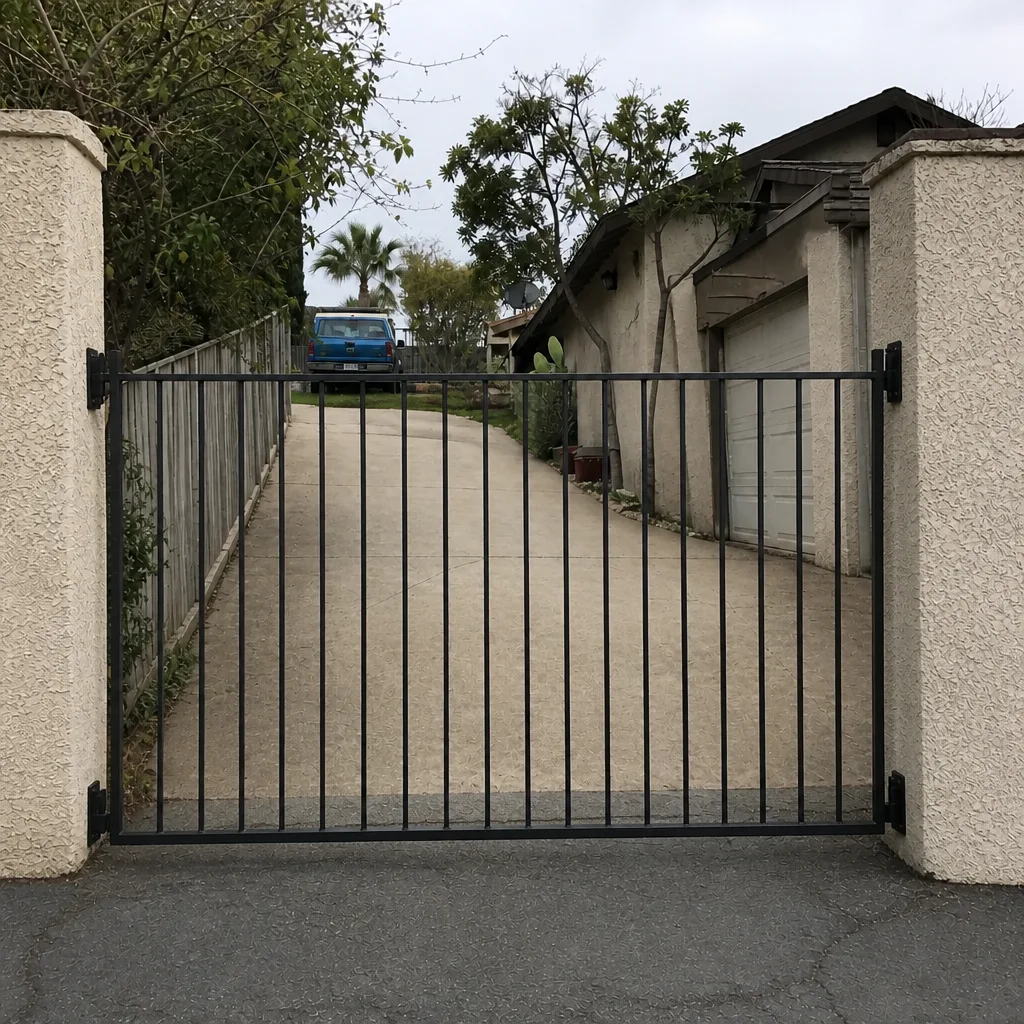
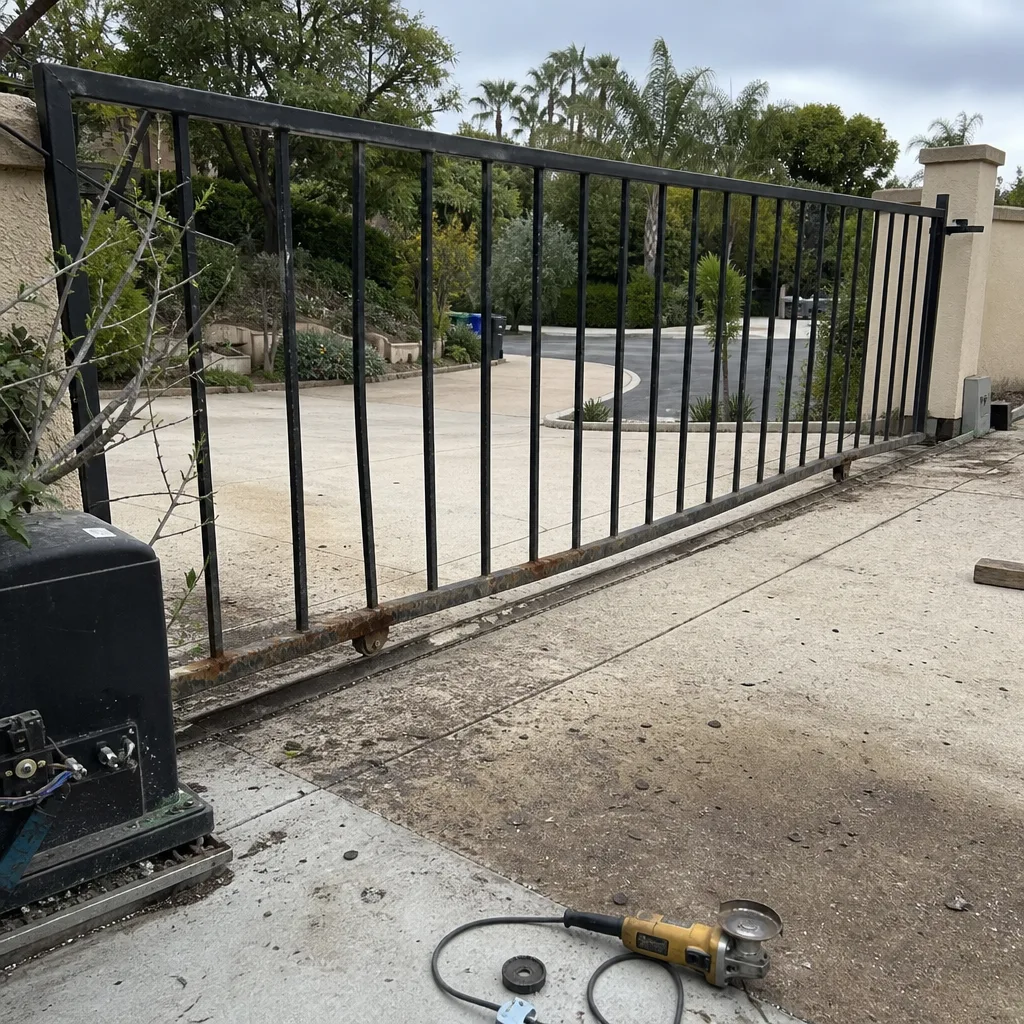
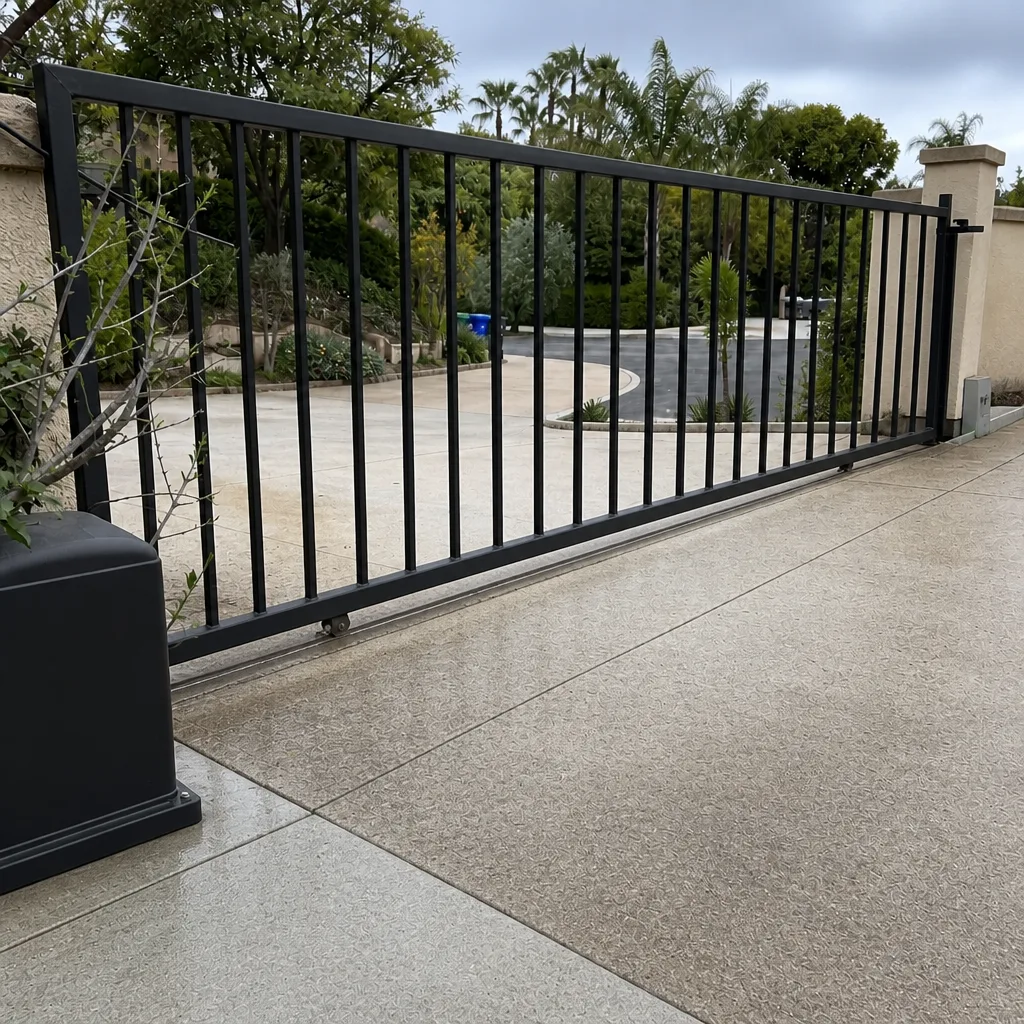
See the difference
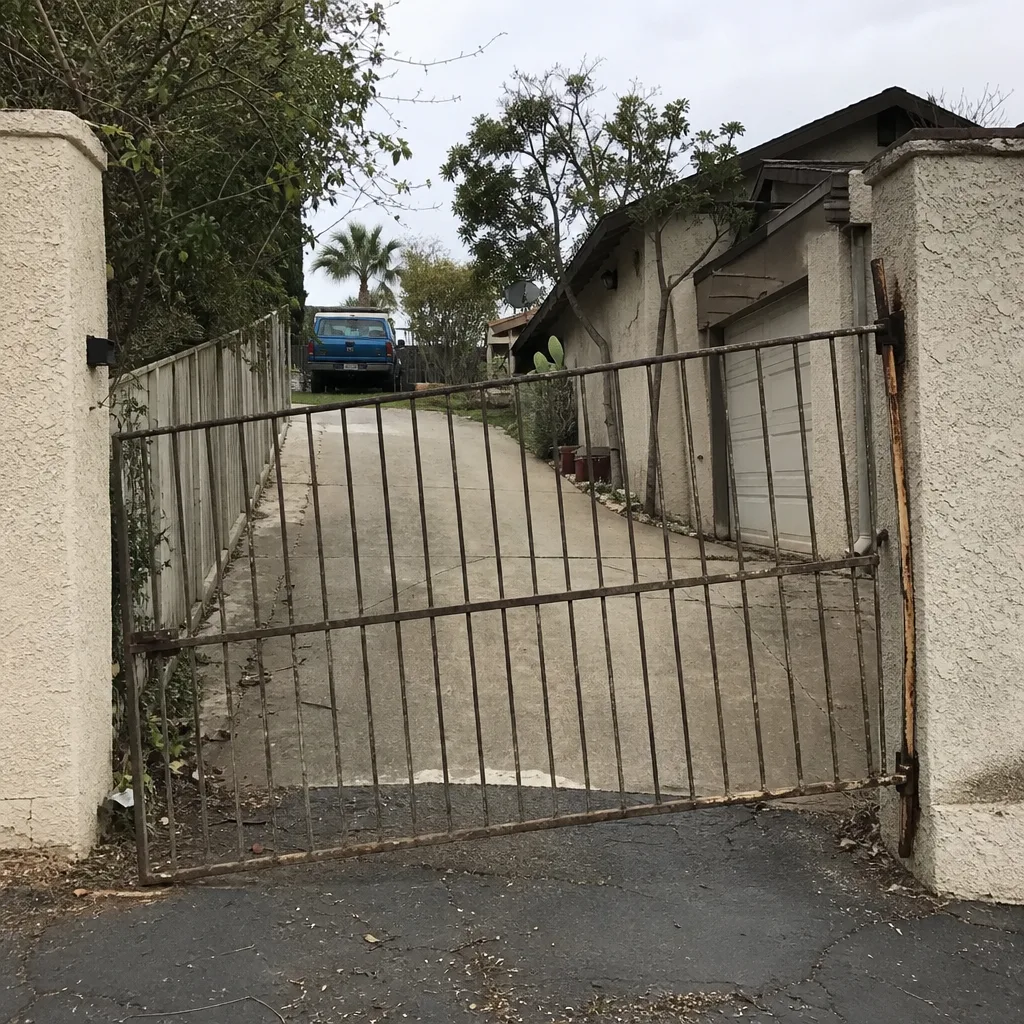 Before
 After
 Before
 After
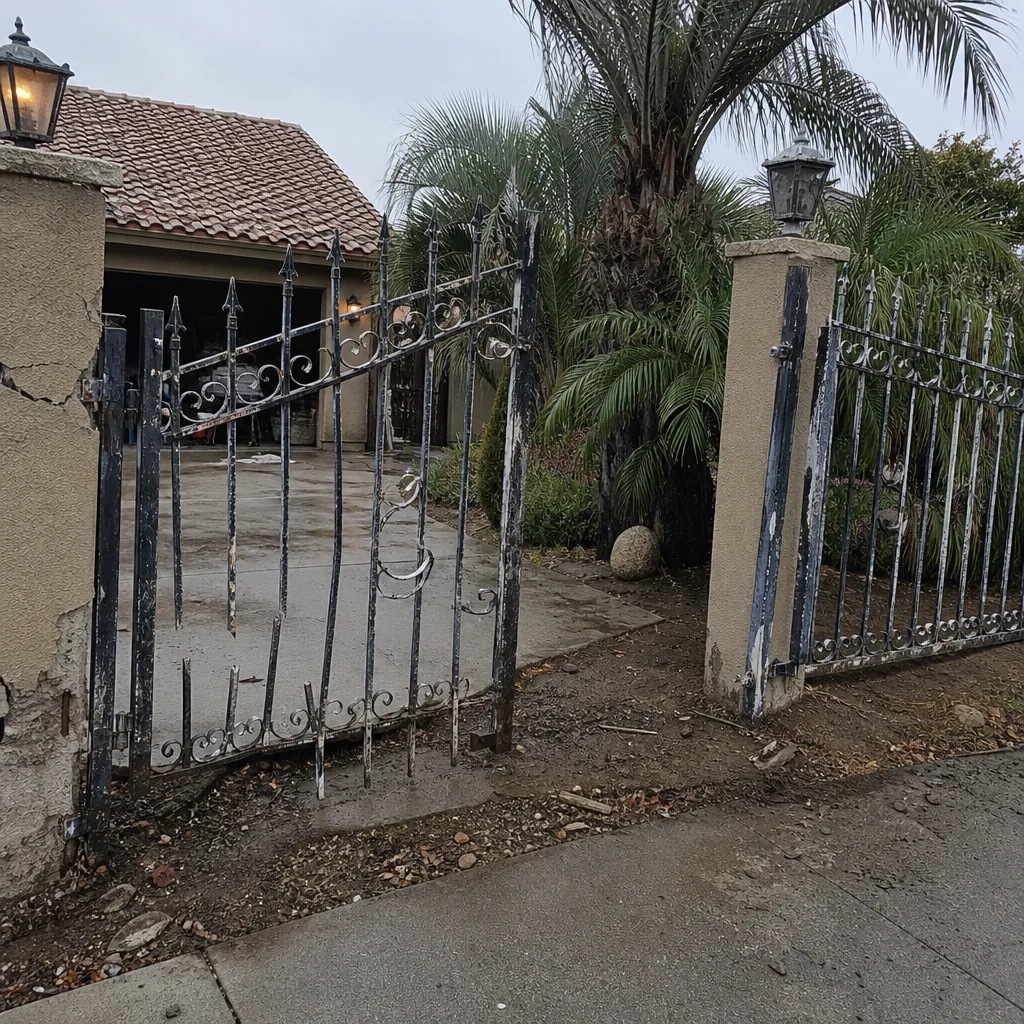 Before
 After