
Last updated November 4, 2026
 Wrought iron
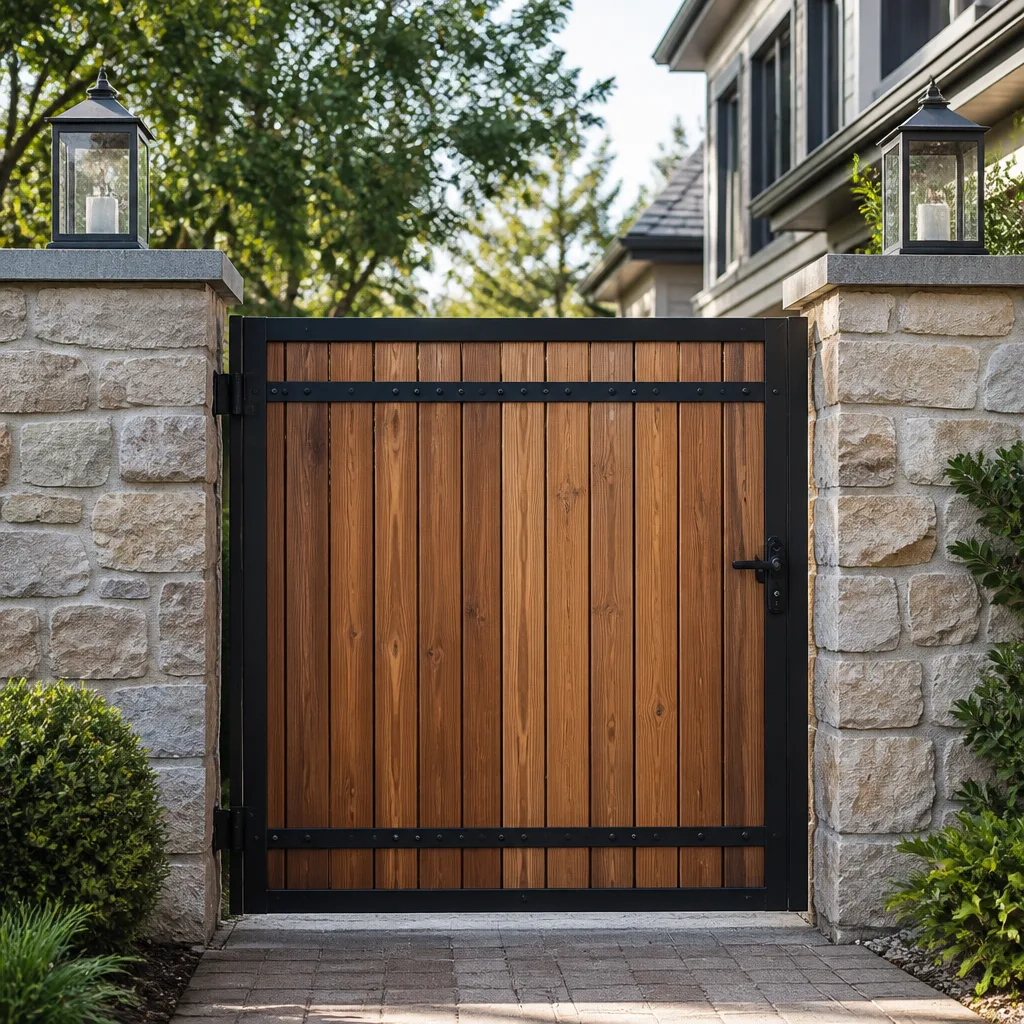 Wood & steel frame
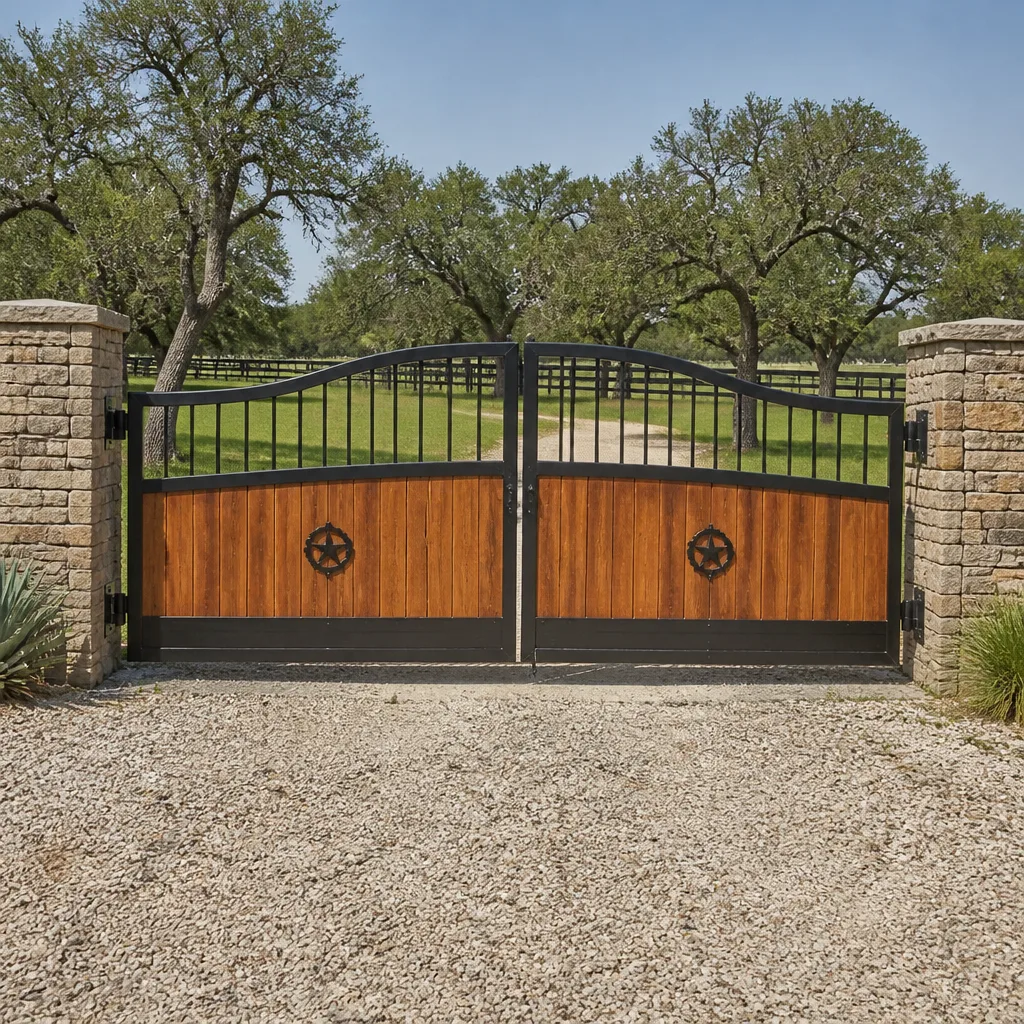 Farm & ranch
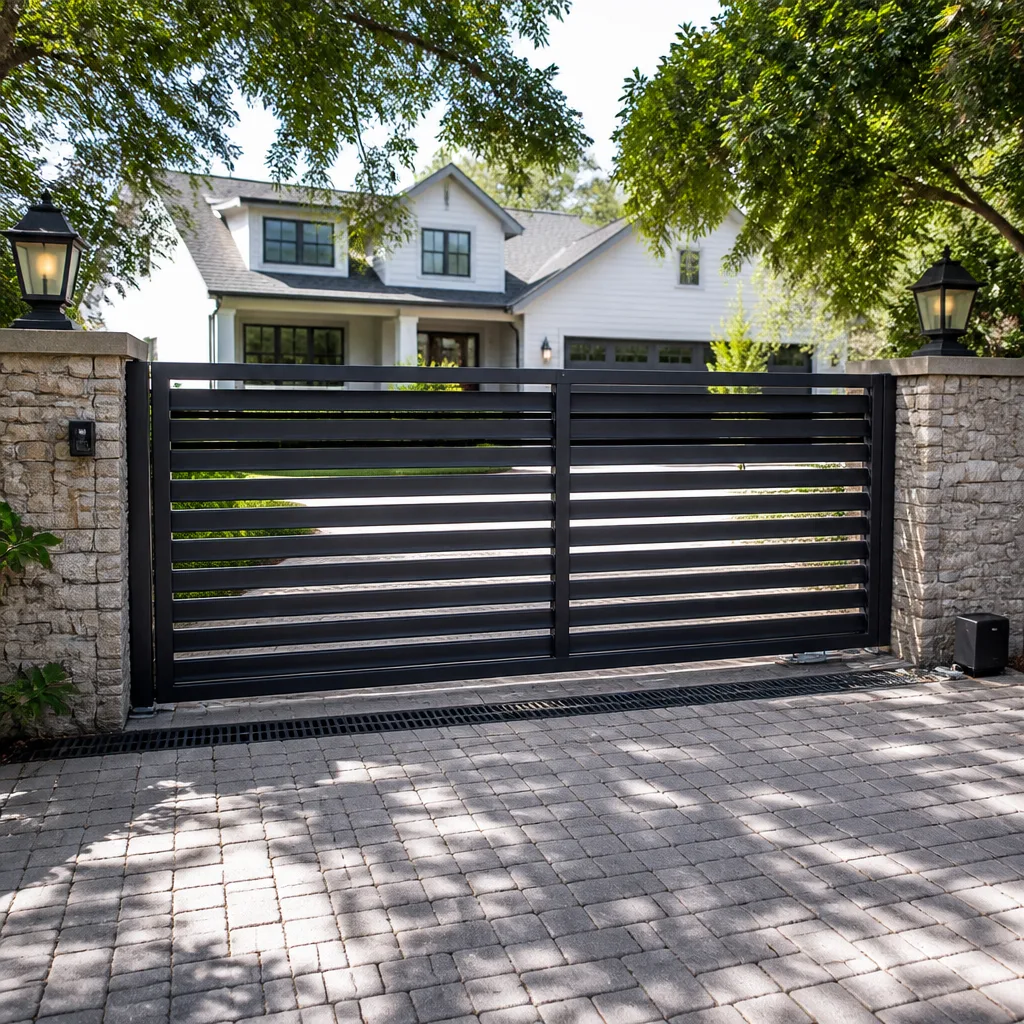 Sliding driveway gates
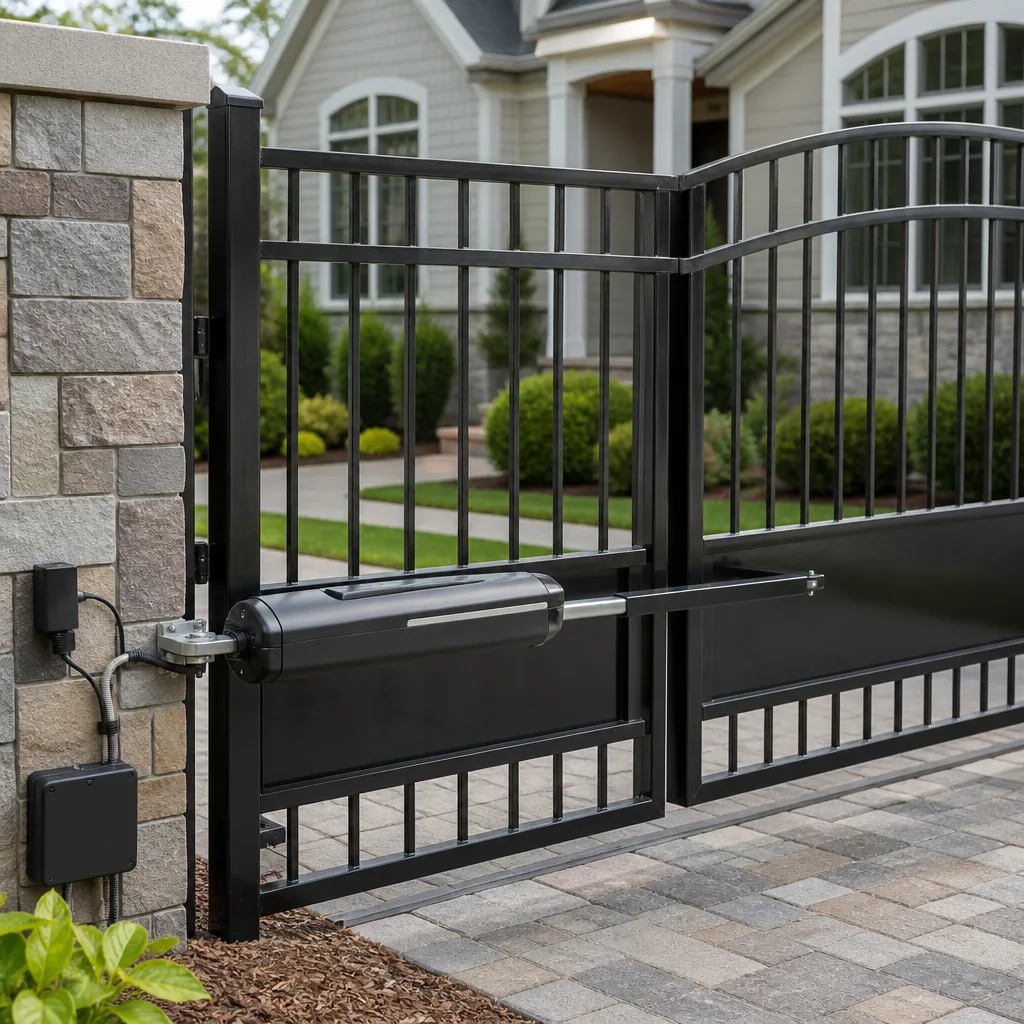 LiftMaster operators
Free on-site gate assessment - hinges, posts, and your LiftMaster or Nice gate operator checked before anything is quoted
The assessment is free and the quote is the invoice.
Get your free estimateGate Repair Permits, Codes & Inspections in Laguna Niguel, CA: What You Need to Know
Here’s something most homeowners don’t realize until it’s too late: the City of Laguna Niguel doesn’t care whether you call it a “repair” or a “replacement.” What matters is what actually changes on the ground. Swap out a gate operator with the identical model, same voltage, same wiring? That’s a repair. Install a different operator with a higher amperage draw, run new low-voltage wiring, or widen the gate opening? That’s an alteration, and it triggers a different set of rules under California Building Code. This guide walks through the exact thresholds, the HOA layer that exists independently of city permits, and what unpermitted gate work means when you eventually sell. Laguna Niguel is a city of planned communities and HOA-governed neighborhoods, which means gate work here has more layers than in an unincorporated area.
Styles & brands we work with
- Wrought iron
- Wood & steel frame
- Farm & ranch
- Sliding driveway gates
- LiftMaster operators
Quick Answer
Most basic gate repairs in Laguna Niguel, such as replacing a hinge, a wheel, a remote, or a like-for-like operator swap, do not require a city permit. A permit becomes necessary when the work involves structural changes to the gate or posts, new low-voltage wiring, a change in electrical load, or a gate height modification. HOA approval is a separate requirement that applies in most Laguna Niguel planned communities, and it is often required before the city will even look at your application.
Table of Contents
- Repair vs. Alteration: The Line That Triggers Permits
- When a Gate Repair or Installation Requires a Permit in Laguna Niguel
- HOA Approval: The Extra Layer in Laguna Niguel’s Planned Communities
- Gate Height Modifications and Site Plan Review
- What Unpermitted Gate Work Shows Up as During a Home Inspection
- Pulling a Permit Yourself vs. Using a Licensed Contractor
- Electrical Permits for Automated Gate Operators
- Common Mistakes to Avoid
- When to Call a Professional
- Frequently Asked Questions
- The Bottom Line
Repair vs. Alteration: The Line That Triggers Permits
The California Building Code draws a functional line between maintenance and construction. A repair keeps the gate working the way it was originally designed. An alteration changes something about how it works, how it draws power, or how it sits on the property. That distinction matters more than most people think, because the City of Laguna Niguel uses it to decide whether a permit application is even necessary.
Here’s the practical way to think about it. If your gate has a worn roller, a bent hinge, or a sensor that stopped responding, and the fix restores the original condition without moving anything structural, you’re almost certainly in repair territory. No permit. If your technician tells you the operator needs to be replaced with a different model that pulls more amps, or that the control board needs a new circuit run from the panel, you’ve crossed into alteration territory. That’s when the paper trail starts.
We see this most often with operator swaps. A homeowner has an old gate opener that finally died, and the replacement model from a brand like FAAC or BFT is more powerful than the original. The amperage draw changes. The wiring that served the old unit may not be rated for the new one. Even though it looks like a simple swap from the outside, the city classifies it as an electrical alteration, not a repair. The homeowner, not the contractor, is typically the party named on a code violation if that work was done without a permit.
When a Gate Repair or Installation Requires a Permit in Laguna Niguel
Let’s be specific, because “check with your city” is not helpful advice. Based on how the City of Laguna Niguel applies California Building Code to gate projects, here are the situations that generally require a building permit:
- New gate installation on a new post or footing. Any time you’re setting posts in concrete, the city wants to review the structural detail.
- Structural modifications to an existing gate or its supports. Widening the gate opening, changing the post size, or adding a pedestrian gate cut into a larger rolling gate.
- New low-voltage wiring for an operator or access system. Running conduit, pulling new wire, or adding a new circuit from the electrical panel to the gate.
- An operator replacement that changes the electrical load. If the new operator draws more amperage than the old one, the circuit must be reviewed.
- Gate height modifications. Raising a gate above its permitted height, or adding a topper or screen that changes the overall profile.
- Any work that affects a fire access lane or required emergency egress. This is more common than people realize, especially in Laguna Niguel communities with gated entries.
What usually does not require a permit: replacing a hinge, a caster wheel, a track cover, a photocell sensor, a loop detector, or a remote. Replacing a control board with the same part number is also a repair. Replacing an operator with the identical model and the identical electrical spec is a repair. The moment the specs change, the classification changes.
If you’re unsure whether your project crosses the line, the safest path is to call the City of Laguna Niguel Building Division and describe the work in plain terms. They’ll tell you whether an application is needed. That call takes ten minutes and costs nothing.
HOA Approval: The Extra Layer in Laguna Niguel’s Planned Communities
Laguna Niguel is one of the most HOA-dense cities in Orange County. Many of the neighborhoods here, from the larger master-planned communities to the smaller gated enclaves, have architectural review committees that govern gate changes. That review operates independently of the city. You can have a fully permitted city process and still be in violation of your HOA’s CC&Rs if you skipped their approval.
The HOA layer matters for a few reasons. Architectural guidelines often restrict gate style, height, materials, and color. Some HOAs only approve specific gate designs for front-facing driveway gates. If you’re replacing a gate in an HOA-governed community, the HOA approval typically needs to happen before the city permit application, because the city will want to see that your project is consistent with the community’s master plan.
There’s another angle people miss. In some Laguna Niguel communities, the HOA owns and maintains the entry gates at the neighborhood boundary, while the homeowner owns and maintains the driveway gate at their own property line. The rules for each are completely different. If the gate that failed is at the community entrance, that’s likely an HOA responsibility, not yours. If it’s the gate across your own driveway, it’s yours, but the HOA still gets a say in what you install.
Before you sign any contract for gate repair or replacement in an HOA community, pull your CC&Rs and read the gate section. If there’s an architectural review process, start it early. It can take weeks, and it runs on the HOA’s timeline, not yours.
Gate Height Modifications and Site Plan Review
Gate height is a separate trigger in Orange County. Most residential zones in Laguna Niguel cap front-yard gates at a specific height, typically six feet, though the exact number depends on your specific zoning district and setback. When a gate exceeds that threshold, the city requires both a building permit and a site plan review, because the gate’s height affects sight lines, privacy, and the streetscape.
We’ve had homeowners tell us they just want to add a decorative topper or a privacy screen to an existing gate. They’re surprised to learn that anything that increases the overall height above the zoned limit triggers the same review as a full gate replacement. The city measures the finished height, not the height of the original structure.
Site plan review means the city looks at the gate in context: how far it sits from the street, how it affects the visibility of the driveway, and whether it creates a hazard for vehicles or pedestrians. In Laguna Niguel, where many lots are on sloped or irregular terrain, the city may also look at how the gate interacts with drainage and slope stability. That means the review process can take longer than a simple over-the-counter permit.
If your gate height modification is part of a larger electric gate repair or replacement project, plan for the site plan review to add time to the schedule. It’s not an impossible hurdle, but it’s not a same-week approval either.
What Unpermitted Gate Work Shows Up as During a Home Inspection
Laguna Niguel is a high-turnover real estate market. Homes sell. Buyers hire inspectors. And when a buyer’s inspector finds gate work that wasn’t permitted, it becomes a negotiation point, a title issue, or a deal-breaker. Here’s what unpermitted gate work actually looks like from the inspection side.
An inspector will check whether the gate operator has a visible, code-compliant electrical connection. They’ll verify that safety edges, photocells, and reverse mechanisms are present and functional. If the operator was installed without a permit, the inspector may flag it as a potential electrical code violation. That flag goes into the inspection report, and it travels to the buyer’s lender, the title company, and the buyer’s insurance underwriter.
Title insurance can get involved in specific ways. If unpermitted work created a lien or a code enforcement action, that has to be disclosed. If the city never signed off on an electrical installation and it later causes damage, the title company may exclude that from coverage. The practical result is that a seller can lose thousands in a renegotiation, or a buyer can inherit a repair obligation they didn’t plan for.
Sale contingencies are the wild card. A buyer who discovers unpermitted gate work can demand the seller obtain retroactive permits before close. In Laguna Niguel, where multiple offers are common but so are contingency-heavy deals, that demand can push a closing back weeks or kill it entirely. The cost of pulling the permit and fixing the work before you list is almost always less than the cost of negotiating it after an inspection.
If you own a gate that was worked on by a previous owner and you don’t know whether it was permitted, the city’s Building Division can pull the permit history for your address. That’s a public records request, and it’s the fastest way to know where you stand before you list or before you do any new work.
Pulling a Permit Yourself vs. Using a Licensed Contractor
California law allows a homeowner to pull a building permit for work on their own primary residence. That’s true in Laguna Niguel too. Whether it’s a good idea for gate work depends on the scope of the project and your tolerance for paperwork.
Here’s a step-by-step for a simple homeowner-pulled permit:
- Confirm the work requires a permit. Call the City of Laguna Niguel Building Division, describe the project, and get a determination in writing if possible.
- Prepare your documents. For most gate projects, you’ll need a site plan showing the gate location, a structural detail for the posts and footing, and, for automated gates, an electrical plan showing the circuit and operator connection.
- Submit the application. The City of Laguna Niguel uses an online permit portal. You’ll create an account, upload your documents, and pay the application fee.
- Wait for plan review. Simple gate permits may be issued over the counter or within a few days. Anything with electrical or site plan review takes longer.
- Schedule inspections. For most gate projects, there are two inspections: one after the posts and footing are set but before concrete is poured, and one after the operator is installed and connected.
- Close the permit. Once the final inspection passes, the permit is closed and the work is officially on record.
The limitation: a homeowner-pulled permit covers work the homeowner is doing themselves or acting as the general contractor for. If you hire a contractor to do the work, that contractor’s license needs to be the one on the permit. That’s where the C-13 fence contractor license comes in. In California, gate installation and structural gate work falls under the C-13 license classification. If you’re hiring someone to do structural gate work or install an operator, and they can’t show you a C-13 license, walk away.
We work as a licensed contractor on gate projects across Laguna Niguel, and in our experience, the permit process goes smoothest when the same company that does the work also files the permit and schedules the inspections. It removes the finger-pointing if something fails inspection.
Electrical Permits for Automated Gate Operators
Automated gate operators are the most common source of permit confusion in Laguna Niguel. The mechanical part of a gate, the hinges and wheels and track, is structural. The operator is electrical. And the electrical side has its own set of rules under the California Electrical Code.
An operator that plugs into an existing outdoor receptacle and draws the same amperage as the old one is usually a straight replacement. No electrical permit. An operator that requires a new dedicated circuit, a new subpanel, or new low-voltage wiring from the house to the gate is an electrical installation. That requires an electrical permit, and in Laguna Niguel, electrical permits for gate operators are often pulled as part of the building permit rather than as a standalone filing.
The brands we see most often in Laguna Niguel driveways, FAAC, BFT, Linear, and Viking, all make operators with different power requirements. A Viking operator for a heavy commercial-style gate draws far more than a residential Linear operator for a light driveway gate. If you’re upgrading from a light-duty residential unit to a heavier commercial-grade one, the electrical load changes, and the wiring that was fine for the old unit may not be adequate for the new one. That’s exactly the kind of change that triggers a permit review.
Safety is the underlying reason the city cares. Gate operators have to include the proper safety edges, photocell sensors, and reverse mechanisms. The California Electrical Code requires specific safety features on any automated gate, and the permit process is how the city verifies they’re installed. That’s a good thing. A gate that crushes a car because the safety edge wasn’t wired correctly is a liability nobody wants.
From the operator to the hinge, an automated gate is a system. The permit process makes sure the whole system, mechanical and electrical, was installed to code. It’s not bureaucracy for its own sake. It’s the paper trail that protects you when something goes wrong.
Common Mistakes to Avoid
- Assuming a “repair” never needs a permit. A like-for-like swap is a repair. A swap that changes the amperage draw, the wiring, or the post structure is an alteration. If the specs changed, the classification changed.
- Skipping HOA review because the city didn’t require it. In Laguna Niguel’s planned communities, HOA approval and city permits are two separate gates. Passing through one doesn’t mean you pass through the other.
- Hiring an unlicensed contractor because the permit is “their problem.” The permit is tied to the property, not the contractor. If the contractor disappears, the unpermitted work is still on your record at resale.
- Replacing an operator without checking the circuit rating. The old wire may not be sized for the new operator. That’s an electrical code issue waiting to be flagged on an inspection.
- Raising a gate height without checking the zoning cap. Even a decorative topper can push a gate over the limit and trigger a site plan review.
- Letting unpermitted work ride until the house is under contract. The cost of fixing it before you list is almost always less than the cost of fixing it under a buyer’s deadline.
- Pulling a homeowner permit for work a contractor is doing. The permit holder has to be the one doing the work. Mixing those roles creates a paper trail problem if something fails inspection.
When to Call a Professional
Some gate work is homeowner-sized. Oiling a hinge, replacing a remote battery, even swapping a photocell, those are within reach for a motivated DIYer. But the moment the project touches wiring, post structure, or operator replacement, the risk tolerance changes. A gate operator is a high-tension, high-weight mechanical system connected to live electrical current. Getting the mechanical side right and the electrical side wrong is still a failed job. And a failed gate operator is a safety hazard for anyone in the driveway, not just the person who installed it.
If your project requires a permit, the professional you hire should be able to pull it themselves, schedule the inspections, and close it out. Prairie Gate Repair offers free estimates in Laguna Niguel and works on operators from FAAC, BFT, Linear, and Viking, so we can tell you up front whether your specific replacement crosses the permit threshold. Call (855) 382-6561. We answer 24/7. Fast dispatch from 7am to 7pm, Sunday through Friday.
Frequently Asked Questions
It depends on whether the new opener is the same model and electrical spec as the old one. A like-for-like replacement is a repair and does not require a permit. A replacement that changes the amperage draw or requires new wiring is an alteration and does require a permit. Call (855) 382-6561 for an exact assessment of your situation, estimates are free.
Pull your CC&Rs and look for the architectural review section. Most Laguna Niguel HOAs require approval for gate replacement, gate style changes, or any modification visible from the street. The HOA approval process runs independently of the city permit process, so plan for both. If you’re not sure where to start, your HOA management company can point you to the right form.
Yes, if the work is on your own primary residence and you are doing the work yourself or acting as the general contractor. If you hire a licensed contractor, the permit should be in the contractor’s name. A C-13 fence contractor license is the classification for structural gate work in California.
An inspector may flag it during the buyer’s inspection, which can lead to a price renegotiation, a demand for retroactive permits, or a deal falling through. The cost of permitting the work before you list is almost always less than the cost of negotiating it after an inspection.
Only if the operator requires a new circuit, new wiring, or a change in electrical load. A plug-in operator that replaces an identical model on an existing circuit is a repair. Anything beyond that is an electrical installation with its own permit requirements under the California Electrical Code.
Simple over-the-counter permits for basic gate repairs can be issued in a few days. Projects that require site plan review or electrical review take longer, typically several weeks. The City of Laguna Niguel’s Building Division can give you an estimated timeline when you submit your application. Call (855) 382-6561 if you want help navigating the process.
The Bottom Line
Gate permits in Laguna Niguel are not a bureaucratic maze. They’re a clear set of thresholds. Repair versus alteration, structural versus cosmetic, like-for-like versus changed spec. If your project stays on the repair side of those lines, you won’t need a permit. If it crosses over, you will, and the HOA layer in Laguna Niguel’s planned communities means there’s often a second approval to secure. The best time to figure all this out is before the work starts, not after the inspector shows up at your buyer’s request. If you have a gate project and you’re not sure where it falls, call (855) 382-6561 for a free estimate. We answer 24/7. Fast dispatch from 7am to 7pm, Sunday through Friday.
Written by the team at Prairie Gate Repair, serving Laguna Niguel since 2013.
See the difference
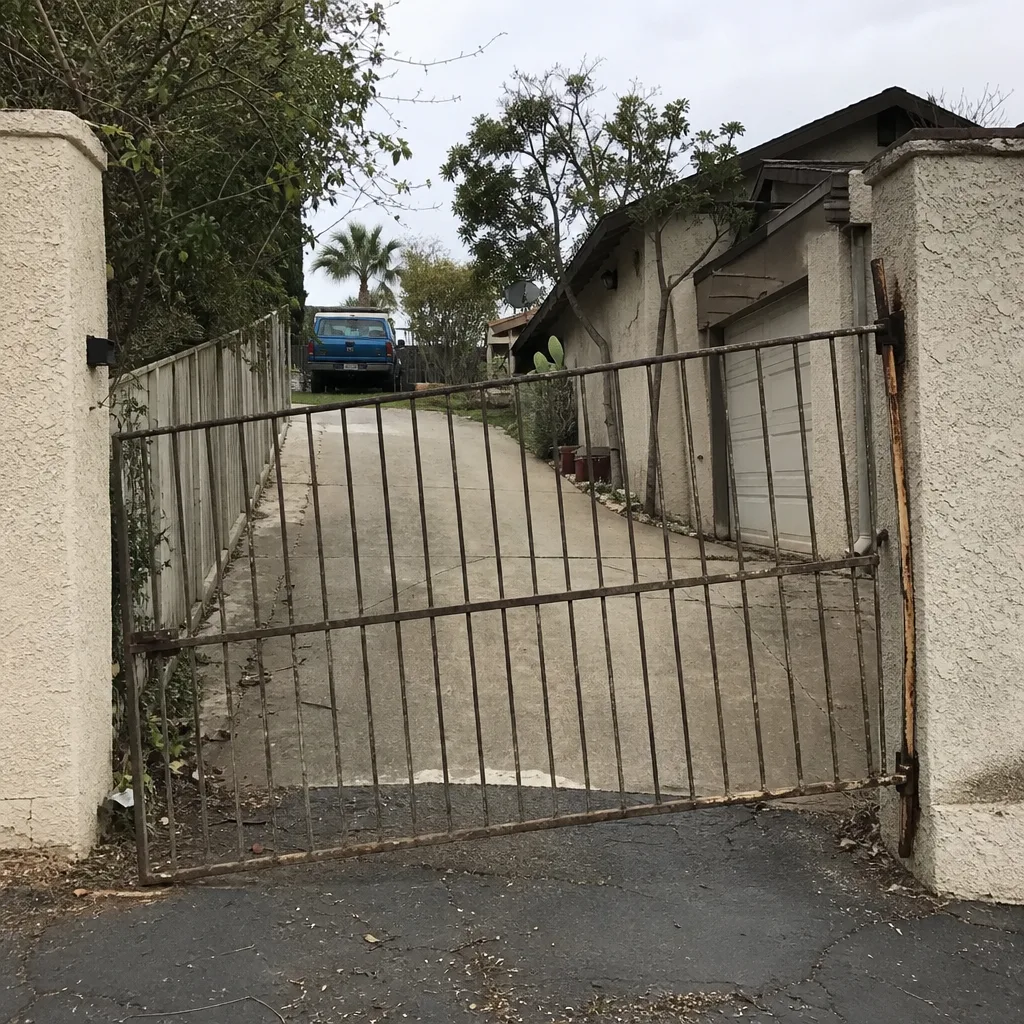 Before
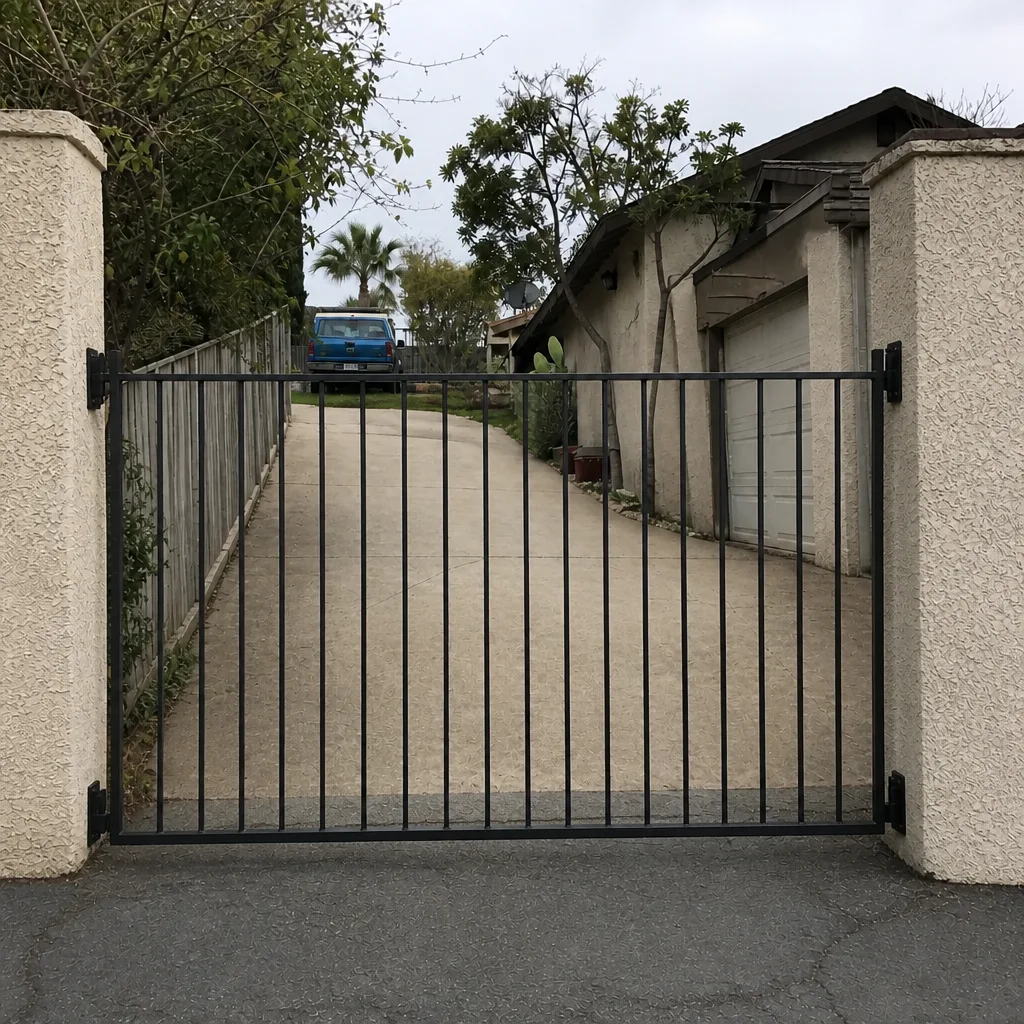 After
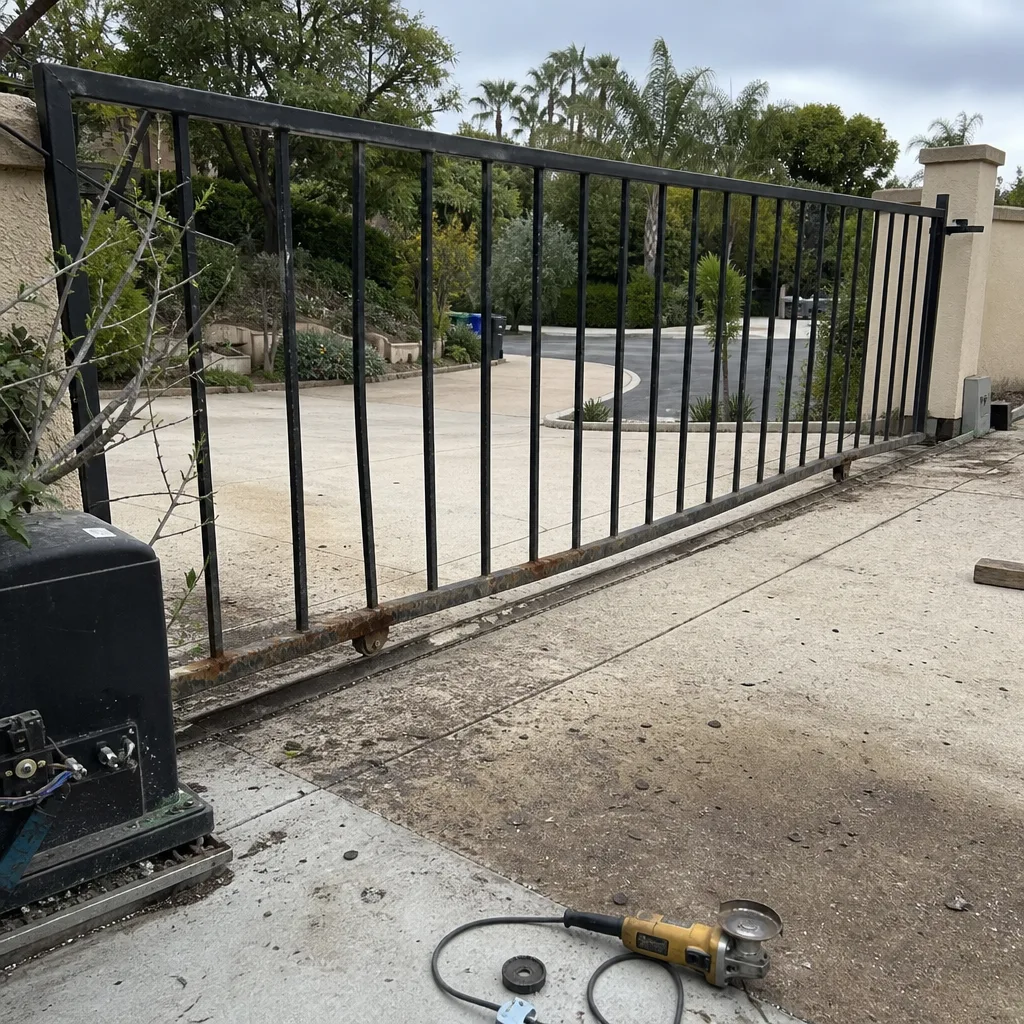 Before
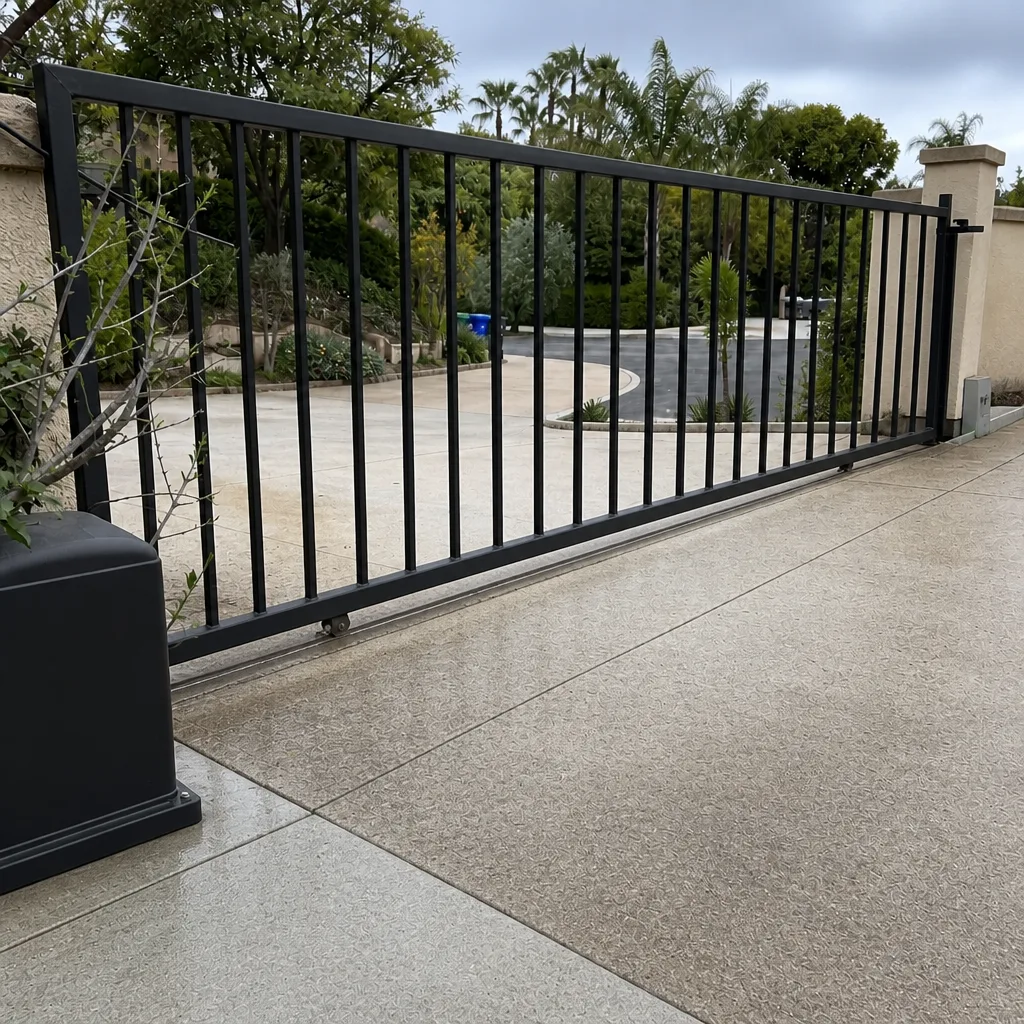 After
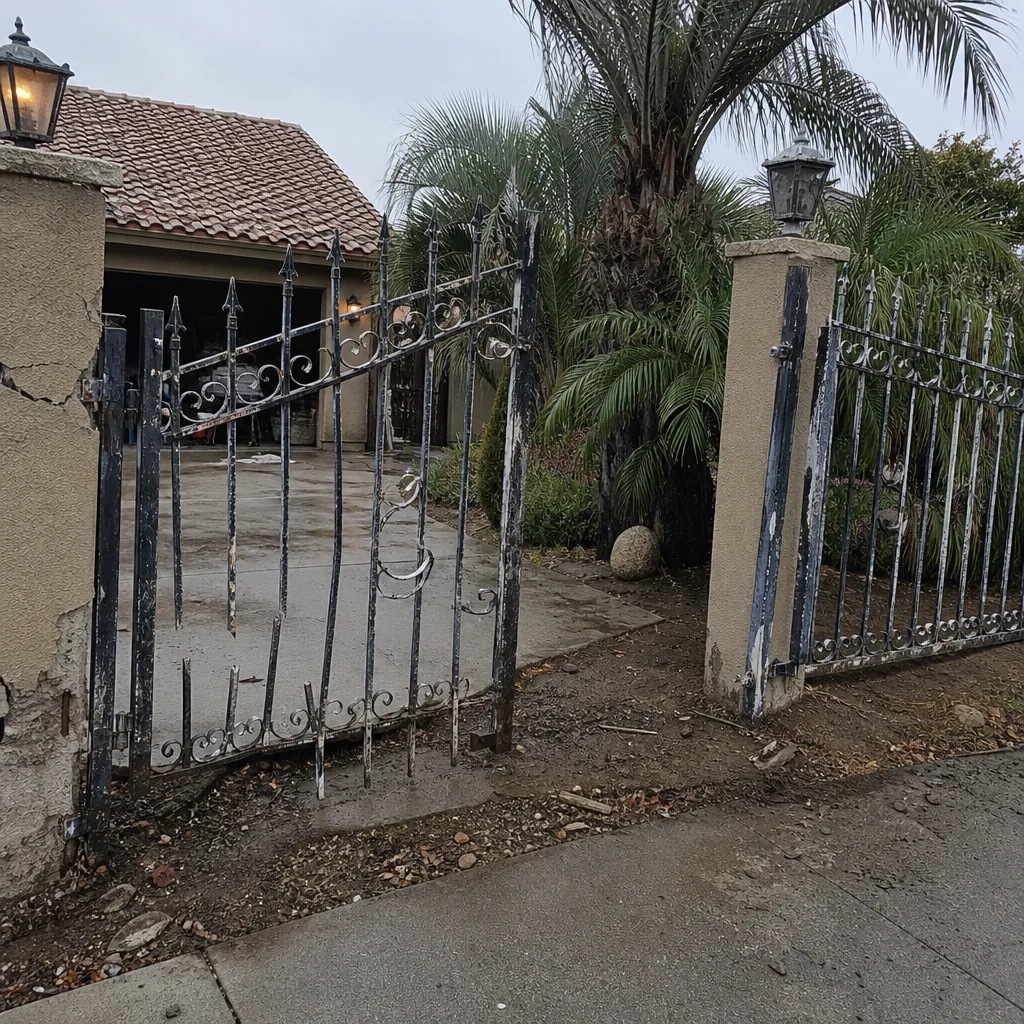 Before
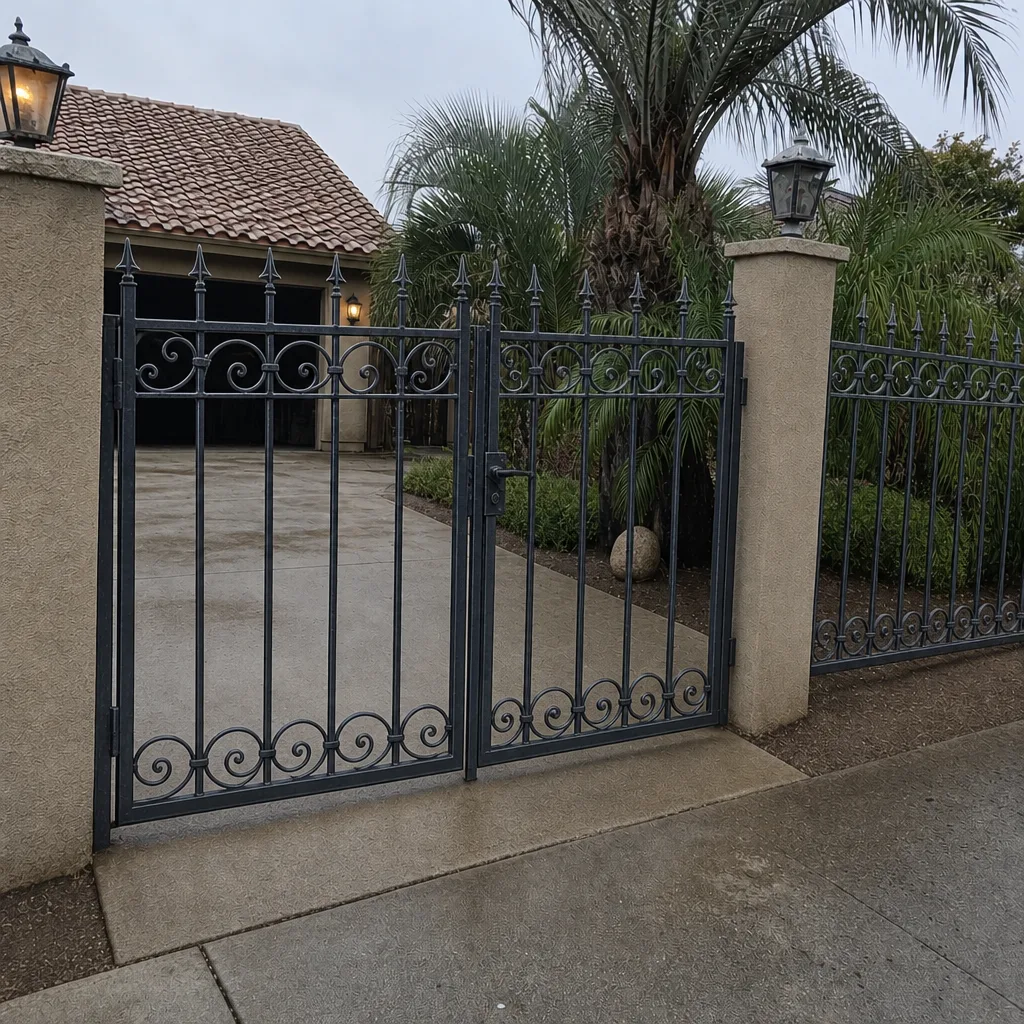 After