
Last updated November 4, 2026
 Wrought iron
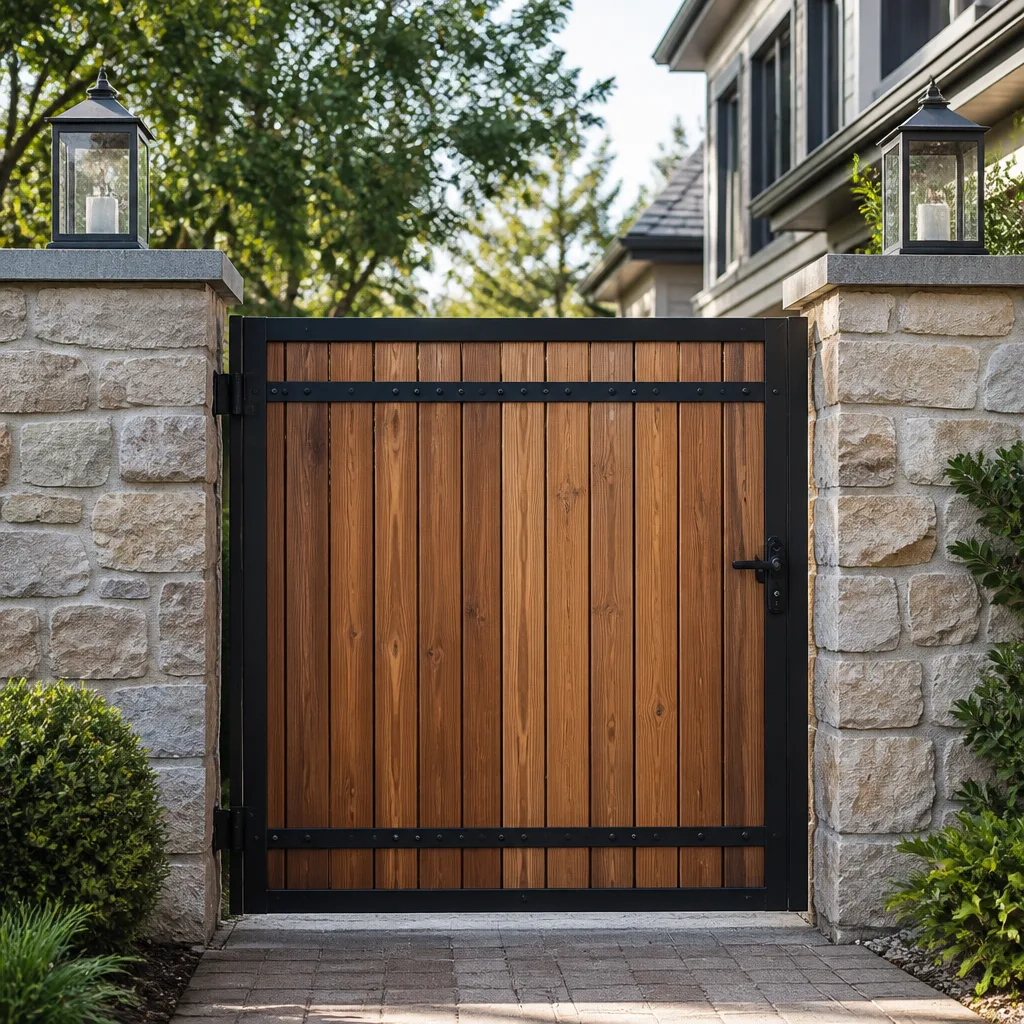 Wood & steel frame
 Farm & ranch
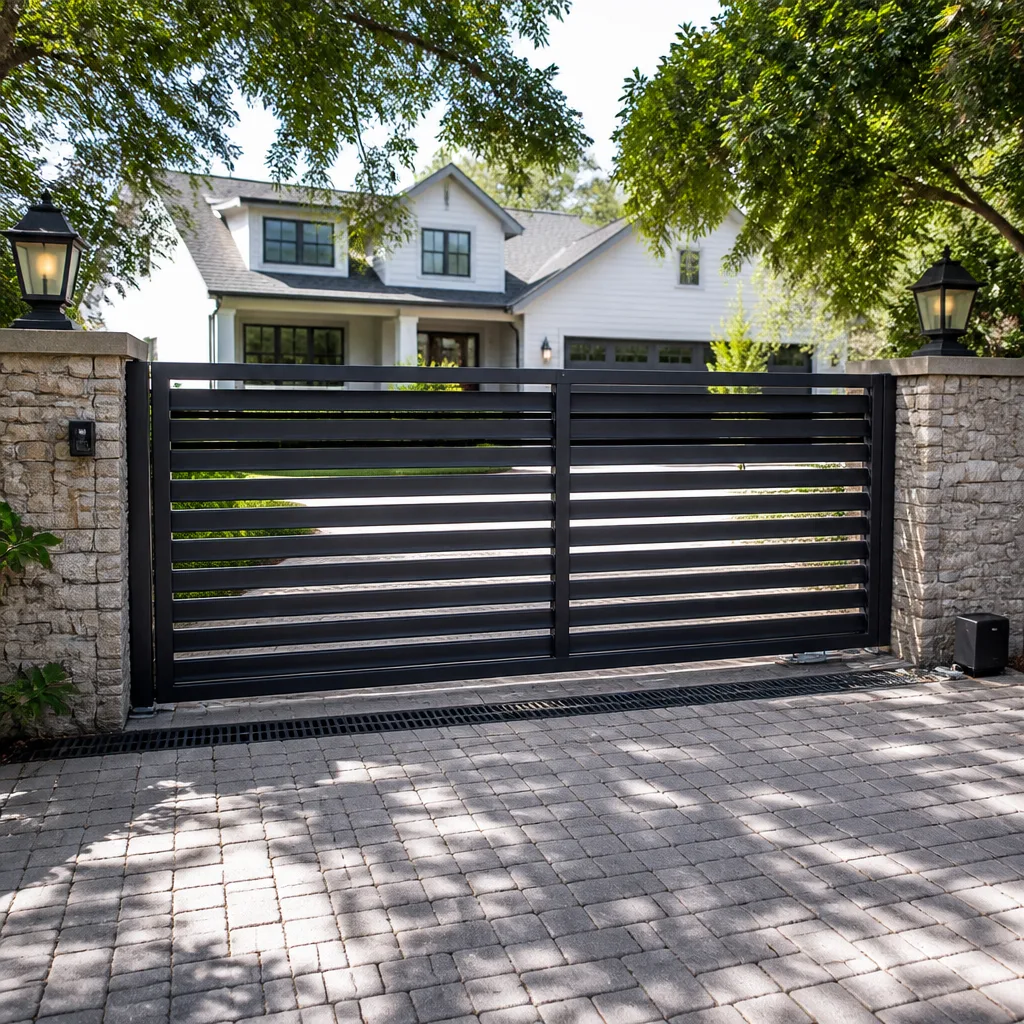 Sliding driveway gates
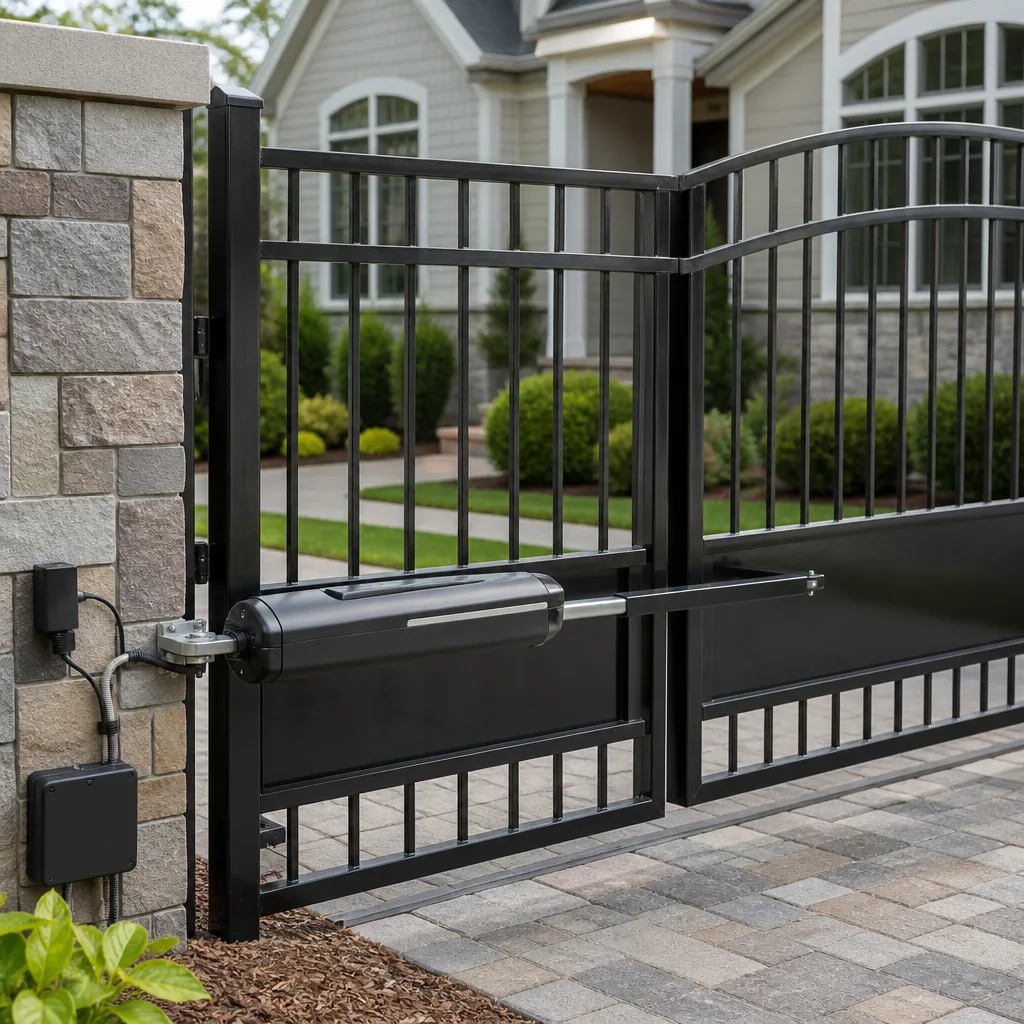 LiftMaster operators
Free on-site gate assessment - hinges, posts, and your LiftMaster or Nice gate operator checked before anything is quoted
The assessment is free and the quote is the invoice.
Get your free estimateGate Repair Troubleshooting in Laguna Niguel: Common Problems and How to Fix Them
A gate that reverses before closing and a gate that won’t open at all look like different problems. They’re often the same one. Chasing symptoms instead of causes is why many gates get repaired twice in the same season. This guide walks you through a systematic elimination process developed from years of field work across Laguna Niguel driveways and commercial access points. You’ll learn how to place your gate’s symptom into one of four root-cause categories, which checks you can safely do yourself, and exactly where to stop and call a specialist.
Styles & brands we work with
- Wrought iron
- Wood & steel frame
- Farm & ranch
- Sliding driveway gates
- LiftMaster operators
Quick Answer
Gate repair troubleshooting in Laguna Niguel comes down to identifying which of four root causes is at play: a power or signal interruption, a mechanical obstruction, worn hardware, or an operator failure. Most homeowners can safely eliminate the first two categories in about ten minutes. Anything involving control boards, high-voltage wiring, or a gate off its track needs a trained technician.
Table of Contents
- The Four Root Causes Behind Most Laguna Niguel Gate Failures
- Power and Signal: The First Category to Check
- Mechanical Obstruction: What’s Blocking the Path
- Hardware Wear: Hinges, Wheels, and Tracks in South Orange County
- Operator Failure: Control Boards, Limit Switches, and Safety Loops
- The Two-Minute Check: Electrical Symptom or Mechanical Misalignment
- Safety First: What Never to Attempt Yourself
- Common Mistakes to Avoid
- When to Call a Professional
- Frequently Asked Questions
- The Bottom Line
The Four Root Causes Behind Most Laguna Niguel Gate Failures
Every gate failure we see in Laguna Niguel fits into one of four categories. The trick is placing your symptom in the right one before you start replacing parts or adjusting settings. The categories are: power and signal, mechanical obstruction, hardware wear, and operator failure. Here’s how each one typically presents.
Power and signal problems show up as a gate that’s completely dead, works intermittently, or only responds to certain remotes. Think dead battery in the remote, tripped breaker, a disconnected wire, or interference on the frequency your opener uses.
Mechanical obstruction is exactly what it sounds like. A branch, rock, or debris in the gate’s path. A warped panel catching on the ground. A vehicle sensor blocked by a trash can. These failures are often mistaken for electrical faults because the gate behaves erratically before stopping altogether.
Hardware wear accumulates over months or years. Hinges sag. Wheels flatten. Track fasteners loosen. In Laguna Niguel’s dry climate, lubricant breaks down differently than in humid coastal zones, and metal-on-metal contact accelerates. A gate dragging on its rear wheel is a hardware problem, not an operator problem.
Operator failure is the fourth category and the one most people assume first. It includes the control board, limit switches, capacitors, and the motor itself. Operators do fail, but in our experience they’re blamed for roughly twice as many problems as they actually cause. A systematic check of the other three categories often saves you the cost of an unnecessary board replacement.
Understanding which category you’re in before you call anyone means a faster diagnosis, a more accurate quote, and no second service visit for the same symptom. That’s the whole point of this guide. Our gate repair approach starts with this same elimination method, because it works.
Power and Signal: The First Category to Check
Start here because it’s the fastest category to rule out and the most common cause of a completely unresponsive gate. What follows is a safe, logical sequence. No tools beyond maybe a flashlight.
- Check the remote first. Replace the battery. A weak battery produces exactly the same symptom as a failed receiver: the gate does nothing. If you have a keypad or a second remote, test it. If one device works and another doesn’t, the problem is the device, not the gate.
- Check the breaker. Gate operators run on a dedicated circuit in most Laguna Niguel homes. Locate the breaker, confirm it hasn’t tripped, and reset it if it has. If it trips again immediately, stop and call a technician. That indicates a short, not a nuisance trip.
- Check the power switch on the operator itself. Most residential operators from LiftMaster and Mighty Mule have a clearly marked power switch or disconnect. It can get switched off during landscaping work or by a curious child. This is a two-second check that solves more dead-gate calls than you’d expect.
- Look for visible wire damage. Walk the run from the operator housing to the gate. Exposed wiring, chew marks from rodents, or a connector that’s pulled loose will all interrupt power or signal. Do not touch any wire you find. Call for service and describe what you see.
If the gate has power and the remote works but the gate still won’t move, go to the obstruction and hardware checks below. If the gate has no power at all and the breaker is fine, you’ve isolated a problem inside the operator or the supply line. That’s a stop point. For electric gate repair, a technician needs to trace voltage and test the board.
A note on signal issues specific to newer Laguna Niguel installations: wireless accessories, solar inverters, and even some LED bulbs can create interference on the 318MHz and 433MHz bands many operators use. If your gate started misbehaving right after you installed a new device nearby, that’s a strong clue. Try moving or unplugging the suspect device before assuming the receiver has failed.
Mechanical Obstruction: What’s Blocking the Path
Slide gates are especially prone to obstruction failures because they travel along a defined track. In Laguna Niguel’s dry season, small rocks and compacted dirt build up along the bottom rail. A single stone in the wrong spot will make the gate reverse, stall, or throw its safety sensor into a loop.
Here’s what to inspect, in order of likelihood:
- The track itself. Look along the full travel path. Rocks, sticks, acorns, and accumulated dirt. Clear anything you can safely move with a broom or gloved hand while the gate is in manual mode or fully powered down.
- The gate wheels and guide rollers. A wheel that’s seized or a roller that’s come off its guide creates exactly the same symptoms as a bad motor: slow movement, grinding sound, gate stops halfway. Spin each wheel by hand with the gate disengaged. They should rotate freely.
- The photo-eye sensors. Both slide and swing gates use safety beams to detect obstructions. A sensor that’s been bumped out of alignment, covered in dust, or blocked by a plant will prevent the gate from closing. Clean the lens and make sure the two eyes are pointed at each other. If one eye has no power light, that’s an electrical fault, not a cleaning issue.
- The gate’s physical path through the arc or slide. A gate that used to work and now catches on the ground usually means a hinge has sagged or a wheel has worn. Look for fresh scrape marks on the concrete or trail. That tells you where the contact is happening.
If you find and clear an obstruction and the gate works normally, you’ve solved the problem. If the gate still hesitates, reverses, or stops at the same point even with a clear path, move to hardware wear.
Hardware Wear: Hinges, Wheels, and Tracks in South Orange County
Laguna Niguel’s climate is dry most of the year, which slows some types of corrosion but speeds up another: dust-driven abrasion. Fine dust gets into hinge barrels, wheel bearings, and track grooves. It acts like a mild grinding compound. Lubricant that would last a year in a humid environment breaks down faster here because it absorbs dust and turns into paste.
The hardware on a gate is the most neglected part of the system. Operators get the attention because they’re electronic and they beep. The hinges, wheels, and track bolts quietly wear out.
Hinges on a swing gate carry the entire weight of the leaf every time it moves. A sagging hinge changes the gate’s swing geometry. The leaf drags on the ground at the far end. The operator, which was sized for a balanced gate, now has to work against the added friction. It runs hot, cycles slower, and eventually trips its overload protection. The symptom looks like operator failure. The cause is a worn hinge barrel or a bent hinge pin.
Wheels on a slide gate are similar. Nylon wheels wear flat over time. When a wheel is flat on one side, the gate pulses or jerks as it travels. The operator’s current draw spikes each time the flat spot is at the bottom. This shortens the life of the board and the motor. Replacing a $30 wheel before it forces an $800 board replacement is the whole argument for routine inspection.
Track fasteners work loose in any gate that cycles daily. In Laguna Niguel, the thermal expansion between hot afternoons and cool nights is enough to gradually back out concrete anchors. A loose track section lets the gate drift sideways. The gate then binds against its guide rollers, and the operator strains to push through the misalignment.
What you can check at home: with the operator disengaged (most have a manual release handle), push the gate by hand through its full travel. It should move smoothly with steady, even resistance. Any point where it catches, drags, or has to be muscled through is a mechanical issue, not an electronic one. Note where it binds and describe it when you call for service.
Prairie Gate Repair works across residential and commercial hardware every week. We’re familiar with the specific wear patterns on Elite slide gate wheels, the hinge geometry on common swing gates in this area, and the track systems most often specified in Laguna Niguel. When we say the hardware is done, we mean the measurements and the movement tests confirm it, not a guess.
Operator Failure: Control Boards, Limit Switches, and Safety Loops
Once you’ve ruled out power, obstruction, and hardware, what remains is the operator itself: the control board, the limit switches, the capacitor, the motor, or the safety loop and sensor circuits. Some of these you can inspect. None of them you should attempt to repair without training, and this is where the line between troubleshooting and dangerous territory gets drawn clearly.
Limit switches: what they do and how to test them safely
Limit switches tell the operator where the gate is in its travel. On a slide gate, there’s usually one for the fully open position and one for fully closed. On a swing gate, the limits are set by the arm’s internal cams or magnetic stops. When a limit switch fails or drifts out of adjustment, the gate stops early, overtravels, or reverses before it should.
You can observe limit behavior without opening the operator housing. Run the gate through a full cycle and watch where it stops. If it stops short of the closed position and reverses every time, the close limit is either misadjusted or failing. If it slams into the end stop and keeps pushing for a second or two, the limit switch is not registering at all. Both findings are worth reporting to a technician. Do not open the housing to adjust the switch yourself. The control board side of most operators carries 120V or 240V, and probing the wrong terminal can be fatal.
Safety loops and photo-eyes: the hidden triggers
Most automated gates in Laguna Niguel use one or more induction loops cut into the driveway plus a pair of photo-eye sensors. The loop detects the metal mass of a car. The photo-eye detects anything in the beam path. When either one malfunctions, the gate’s safety logic takes over and refuses to close, or reverses immediately after starting to close. This is the system working as designed, even though it presents as a broken gate.
A loop that’s been cut (common after driveway resurfacing or utility work) will make the operator think a car is always present. A photo-eye in direct afternoon sun can false-trigger from glare. These are diagnosable with the right meters and a loop detector, but they’re not DIY-friendly. If your gate reverses every time it starts to close and you’ve cleaned the photo-eye lenses, the next step is a service call.
Control board failure: the most misdiagnosed part
Control boards do fail. Power surges, lightning strikes, moisture intrusion, and sometimes simple component aging will kill a board. But boards are also the most common unnecessary replacement in our industry. Before a board gets condemned, the technician should verify incoming voltage, test the accessory connections, and confirm the limits and loops are functioning. We’ve replaced boards in FAAC and LiftMaster operators where a $40 limit switch was the actual fault. We’ve also seen boards genuinely fried by a power event. The difference only shows up with a proper diagnostic sequence, not a parts-swapping guess.
If you’re experiencing a symptom that points to the operator and you’re in Laguna Niguel, describe exactly what the gate does: whether it hums, clicks, moves a few inches, or does nothing. Those details are diagnostic gold to a technician who knows the brand’s logic. We service LiftMaster, FAAC, Mighty Mule, and Elite systems specifically, among others. Brand fluency means we diagnose by the system’s own behavior patterns, not by generic bench rules.
The Two-Minute Check: Electrical Symptom or Mechanical Misalignment
This is the most valuable diagnostic shortcut in this entire guide. It separates what appears electrical from what is actually mechanical, and it takes two minutes.
- Disengage the operator. Find the manual release. On most slide gates, it’s a pull lever or keyed release on the operator. On swing gates, it’s typically a lever on the arm. If you’re not sure, check the label on the unit or the manual. Don’t force anything.
- Push the gate by hand through a full cycle. Move it exactly as the operator would. Pay attention to resistance. It should feel smooth and consistent.
- Interpret what you feel. Smooth all the way through? The problem is likely electrical: operator, limits, loop, or board. A catch, drag, or bind at any point? That’s mechanical, and the operator was probably fighting it all along.
This check is why so many “electrical” gate repairs turn out to be a worn wheel or a sagging hinge. The gate itself told you the answer in two minutes. The operator was never the problem.
Safety First: What Never to Attempt Yourself
Automated gates are heavy, powerful machines. A slide gate can weigh over 800 pounds. The operator gear train can sever fingers. The capacitor inside the housing stores a charge that can injure you even with the power off. This is not a list of suggestions. This is the line between troubleshooting and the emergency room.
Never attempt these steps yourself, under any circumstances:
- Opening the operator housing and working on internal wiring or the control board. The board side carries line voltage.
- Adjusting limit switches inside the operator. The exposed terminals and moving gears are live and dangerous.
- Repairing or splicing any wire connected to the operator or safety circuit. Call an electrician or a gate technician.
- Working on a gate that has come off its track or is leaning significantly. A gate in that condition can fall or shift without warning.
- Attempting to weld or straighten a bent hinge or panel in place. The heat can damage nearby wiring and the gate needs proper support before any cutting or welding happens.
Gate repair is a trade where the difference between a $200 fix and a $2,000 injury is often a matter of knowing where the dangerous parts are. The checks we’ve described above are safe because they happen outside the energized system. Everything inside the housing belongs to a trained professional.
Common Mistakes to Avoid
- Replacing the control board before checking the limit switches. We’ve seen perfectly good boards swapped out for $600 because a limit switch had drifted. The new board doesn’t fix the limit, and the gate still misbehaves. Test the cheap parts first.
- Lubricating everything with WD-40. WD-40 is a solvent, not a lasting lubricant. It washes away whatever grease was there and then evaporates. On gate wheels and hinges, use a proper lithium or silicone grease made for the material. Wrong lubricant actually accelerates the wear it’s meant to prevent.
- Ignoring a gate that’s slowly getting louder. A gate that grinds a little more each week is telling you a wheel is dying or a hinge is dry. By the time it fails completely, the repair is bigger. Noise is the early warning system.
- Forcing the gate to keep working after it trips its overload. The overload protection exists to prevent a fire or a burned-out motor. A gate that trips it once is signaling a problem. Resetting and running it repeatedly turns a small mechanical fix into an operator replacement.
- Assuming the problem is electrical because the symptom is intermittent. Intermittent failures are often mechanical. A wheel with a flat spot only binds in one orientation. A hinge that’s binding only catches in certain weather. The two-minute check exists for exactly this situation.
- Letting landscape growth creep into the gate path and sensor beam. In Laguna Niguel’s growing season, a branch that was clear in May can be in the photo-eye path by July. Trim back anything within 18 inches of the gate’s full travel and the sensor line.
When to Call a Professional
Call a professional when the problem is inside the operator housing, when you’ve found damaged or exposed wiring, when the gate is off its track, or when you’ve completed the safe checks above and the problem persists. Those are the honest stop points. A reputable technician will not encourage you to probe a live board or adjust anything under tension.
Prairie Gate Repair offers free estimates in Laguna Niguel. If you’ve worked through this troubleshooting guide and you’re still stuck, call (855) 382-6561. What you describe from this guide will help us diagnose faster when we arrive. We answer 24/7. Fast dispatch from 7am to 7pm, Sunday through Friday.
Frequently Asked Questions
A gate that reverses before closing is responding to a safety input: either the photo-eye sensors are blocked or misaligned, the induction loop is falsely detecting a vehicle, or the close limit switch is tripping early. Clean the sensor lenses and clear the gate path first. If it still reverses, the loop or limit circuit needs a technician’s diagnostic tools.
Gate repair costs in Laguna Niguel depend entirely on the root cause and the parts involved. A sticking wheel or a limit adjustment runs at the lower end of the spectrum. A control board replacement for a commercial operator runs higher. The written estimate sets the price before any work starts, and Prairie Gate Repair provides free estimates so there’s no guessing. Call (855) 382-6561 for a number specific to your gate and your symptom.
The safe answer is no for anything inside the operator housing. You can check the breaker, the remote battery, and the visible wiring. You can disengage the operator and push the gate by hand to test for mechanical binds. Opening the housing and working on the board or limit switches exposes you to line voltage and moving gears. That work is for a licensed technician.
Intermittent operation usually points to one of three things: a failing remote battery, a loose wire connection, or a mechanical bind that only catches in certain positions. Test the remote first. Then run the two-minute manual check described above. If the gate binds by hand, the problem is mechanical. If it moves smoothly by hand, the intermittent fault is likely in the operator or its signal circuit.
Yes. Prairie Gate Repair services LiftMaster, FAAC, BFT, Linear, Viking, Ghost Controls, DoorKing, Elite, and Mighty Mule systems. We diagnose by the brand’s own logic, so a Mighty Mule residential install gets the same brand-specific attention as a FAAC commercial operator.
Go through the sequence in this guide before you call: check the remote battery, check the breaker, clear the gate path, clean the photo-eye lenses, and push the gate by hand with the operator disengaged. The information you gather from those steps helps the technician diagnose the problem faster and often saves you a second visit. Then call (855) 382-6561 with what you found. We answer 24/7. Fast dispatch from 7am to 7pm, Sunday through Friday.
The Bottom Line
Most gate failures in Laguna Niguel trace back to one of four root causes: power or signal, mechanical obstruction, hardware wear, or operator failure. Placing your symptom in the right category before you call anyone saves time, money, and the frustration of the same problem recurring. The safe homeowner checks are the remote, the breaker, the gate path, the photo-eyes, and the manual push test. Everything inside the operator housing is a professional’s job. If you’ve worked through the sequence and the gate still isn’t right, Prairie Gate Repair provides free estimates and fast dispatch from 7am to 7pm, Sunday through Friday. Call (855) 382-6561. We answer 24/7.
Written by the team at Prairie Gate Repair, serving Laguna Niguel since 2013.
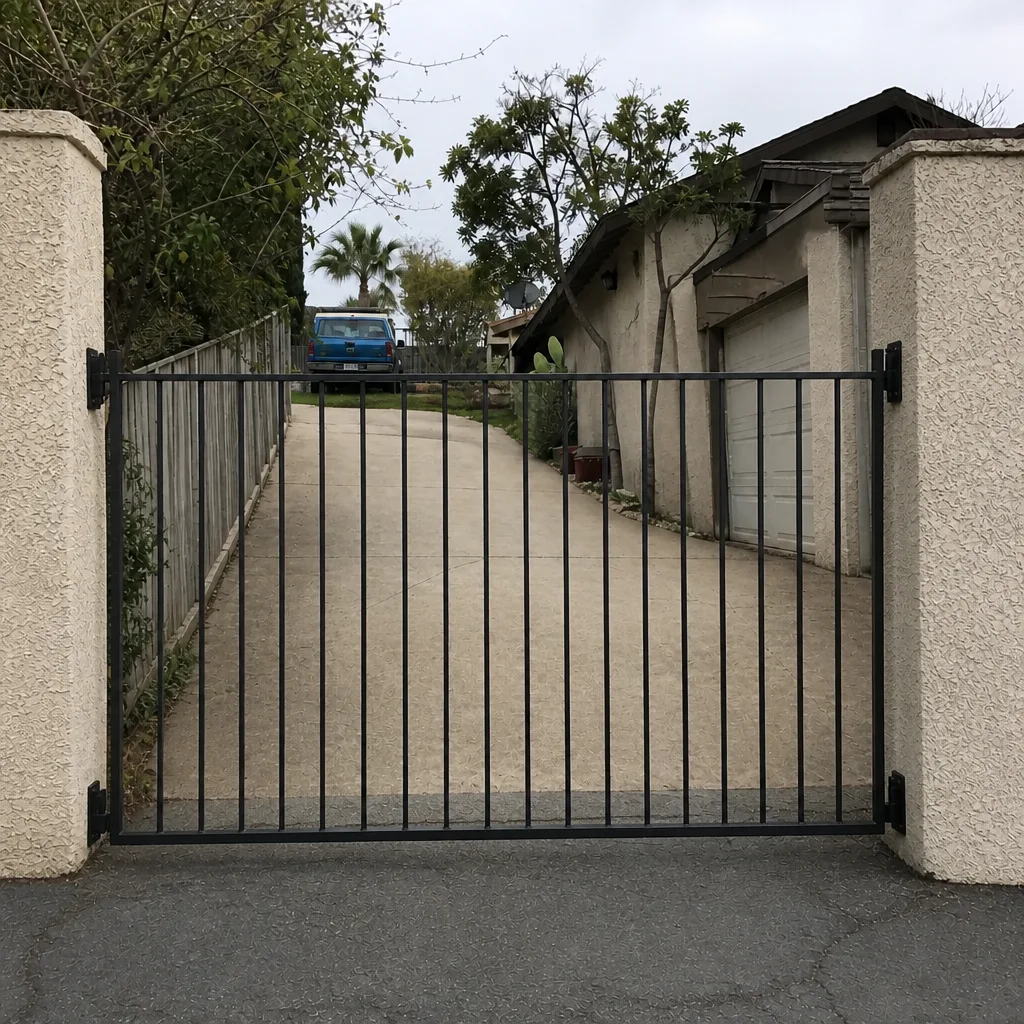
See the difference
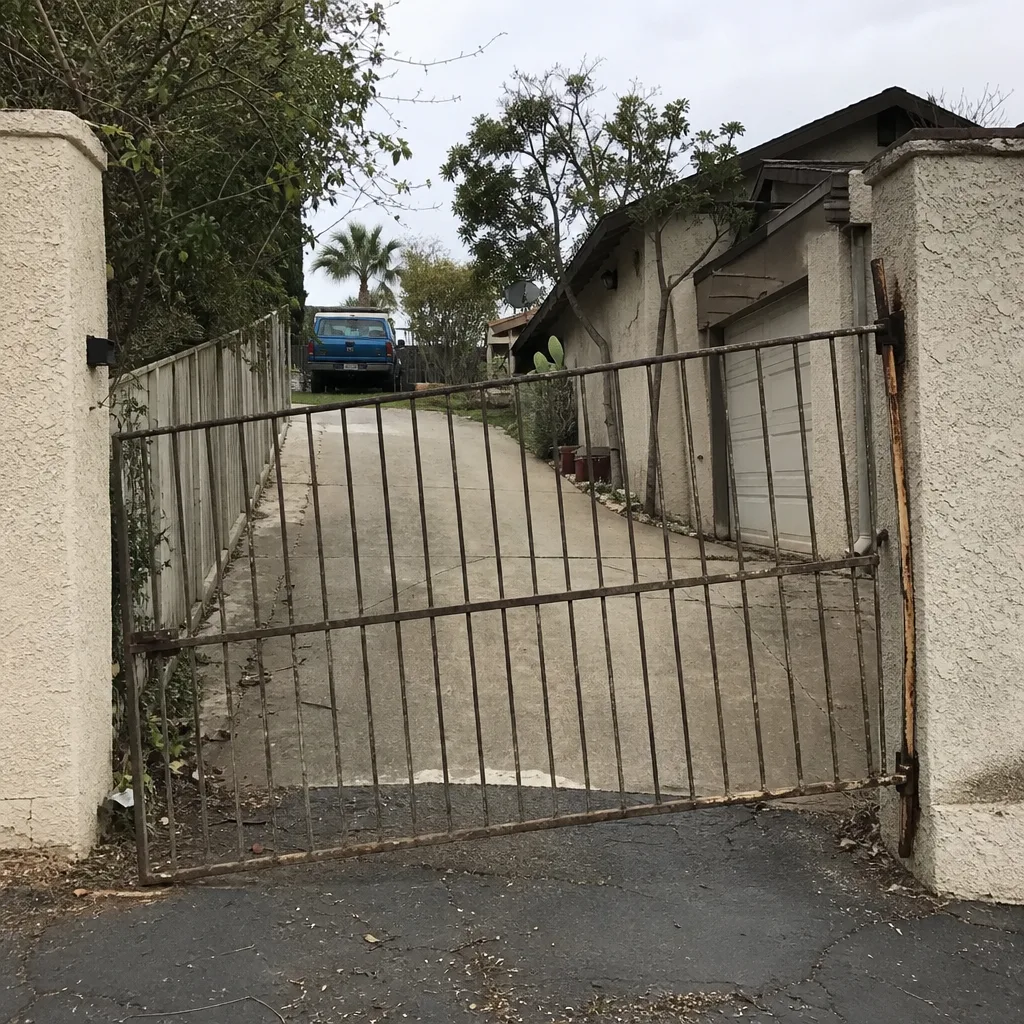 Before
 After
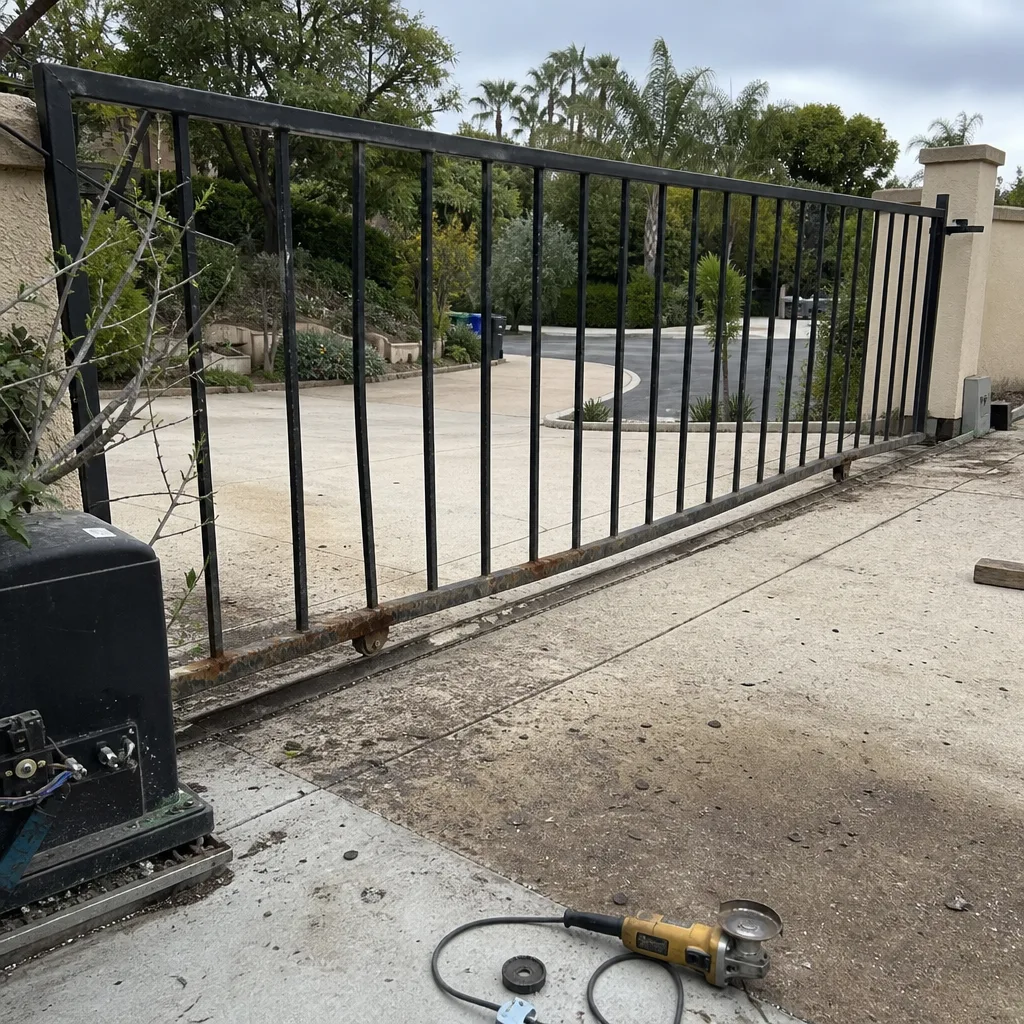 Before
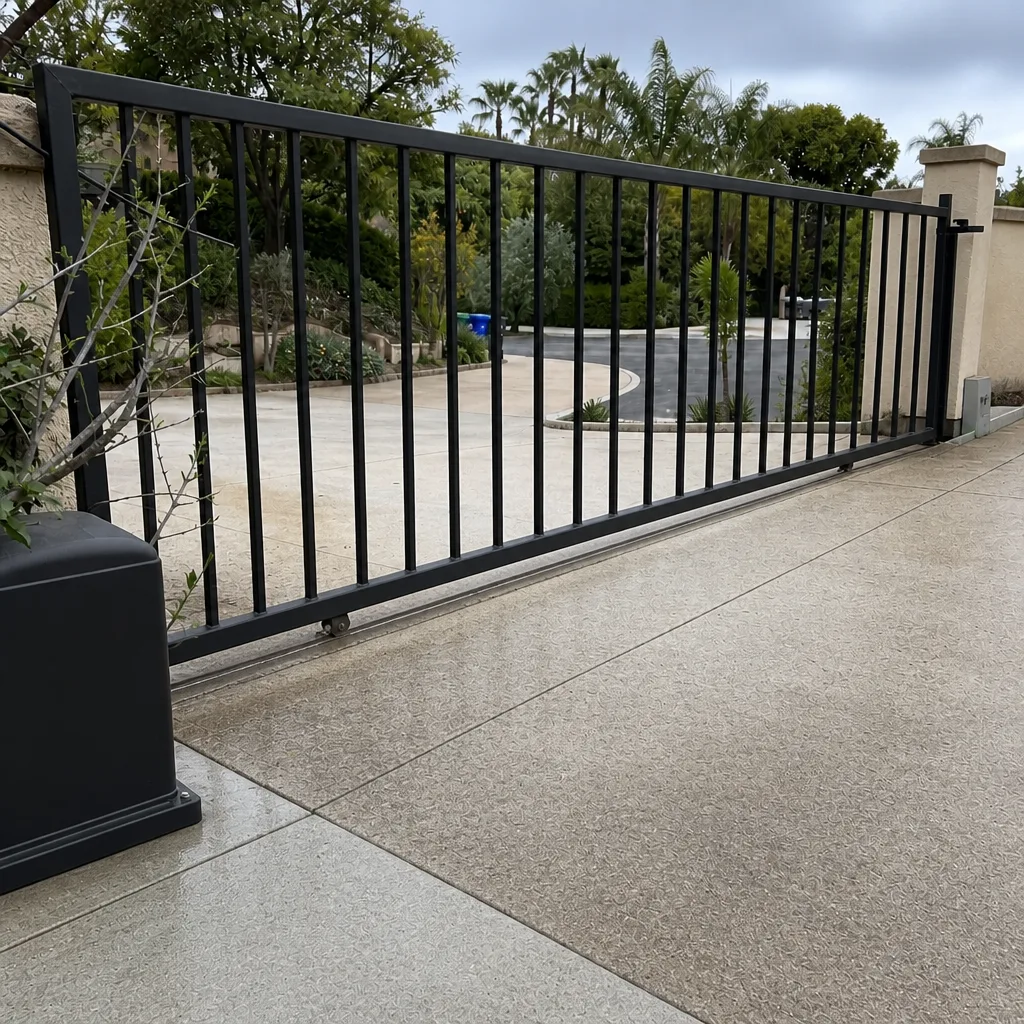 After
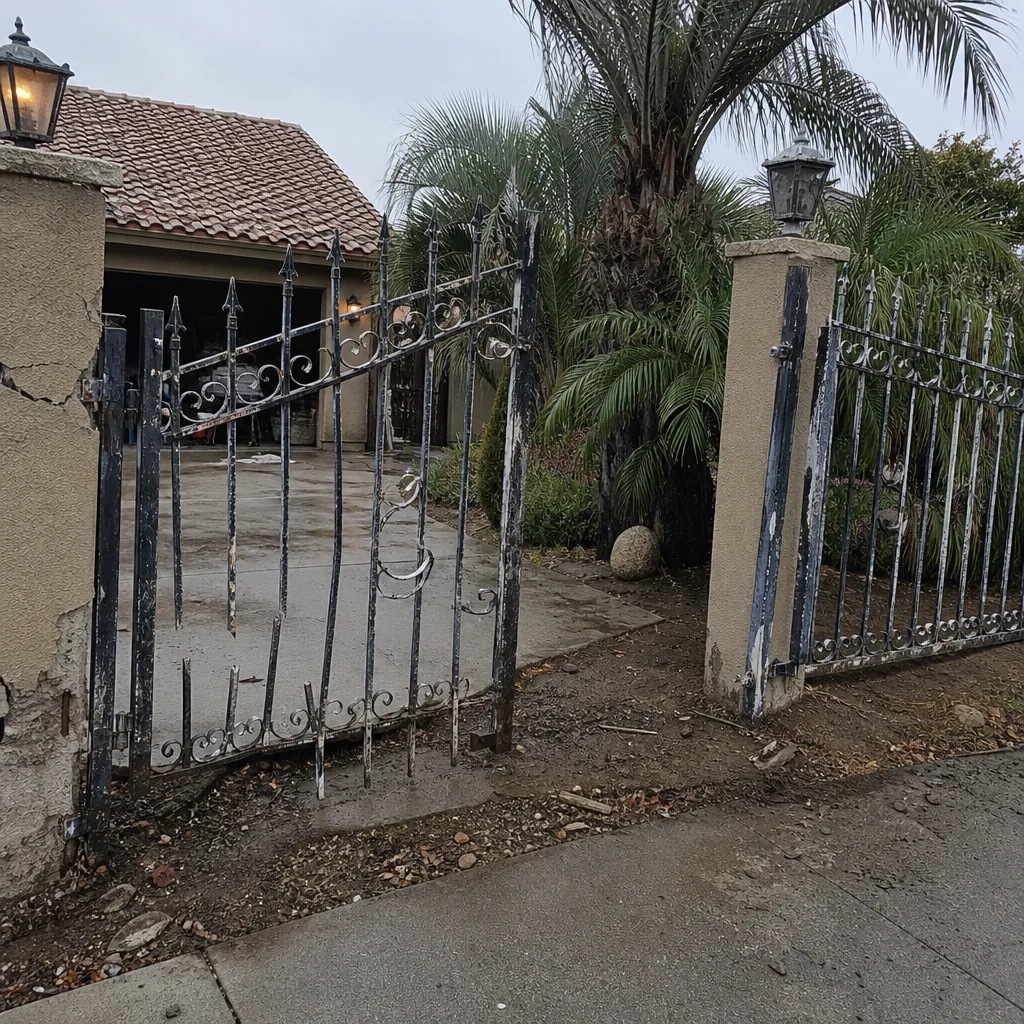 Before
 After